
DEXA Scan: What Bone Density and Body Composition Numbers Actually Tell You
Most fragility fractures happen in people whose bone density falls in the "osteopenic" range, not the "osteoporotic" range that typically triggers treatment. That means millions of people with moderate bone loss are breaking bones while their numbers sit in a gray zone most doctors don't act on.
A DEXA scan (dual-energy X-ray absorptiometry) is the test that generates those numbers. It's the gold standard for measuring bone mineral density, diagnosing osteoporosis, and estimating fracture risk. But DEXA does more than bones: it also provides the most accurate non-invasive measurement of body fat and lean mass available, revealing things a scale and BMI calculation simply can't.


How a DEXA Scan Works
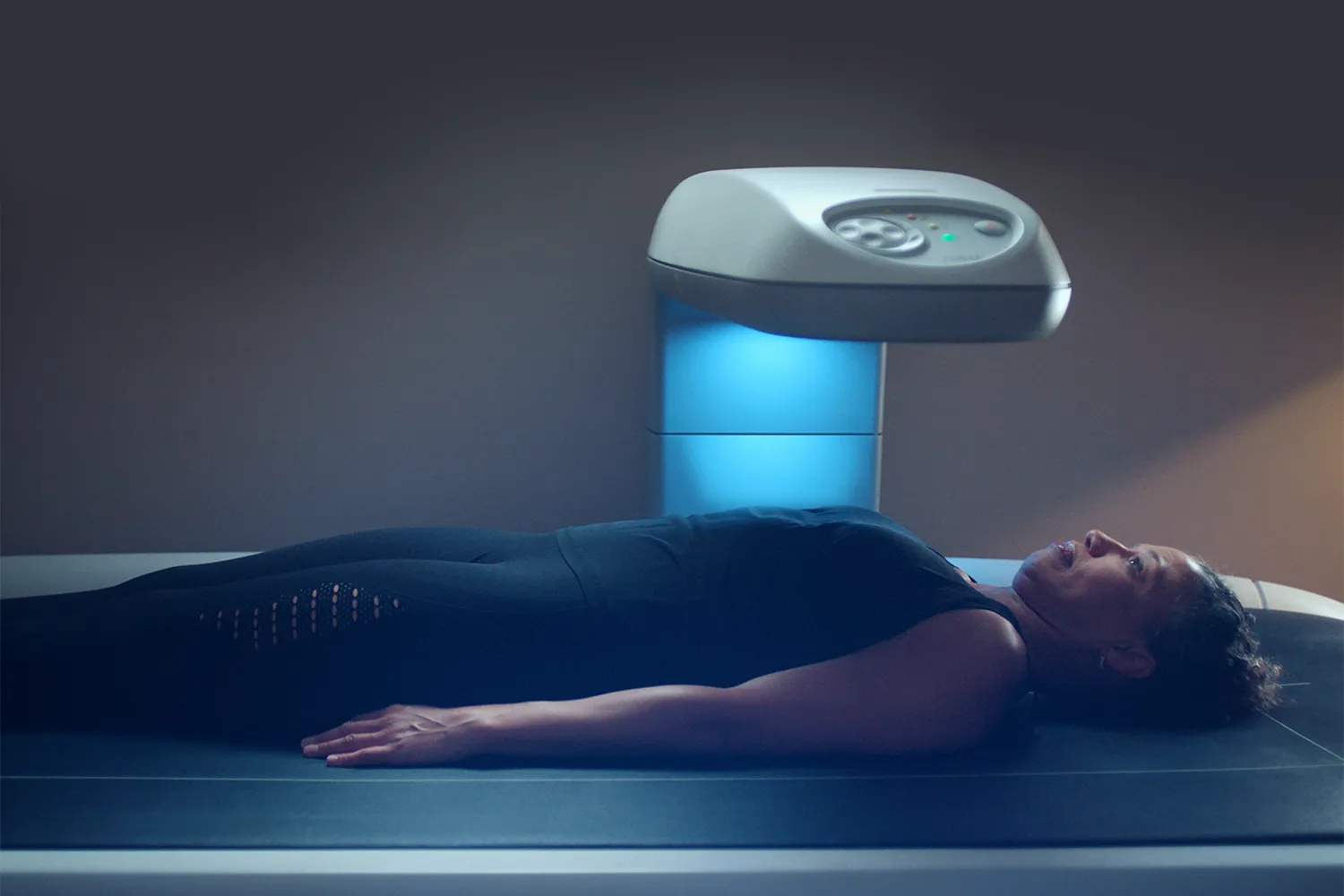
DEXA uses two low-dose X-ray beams at different energy levels. Bone, fat, and lean tissue each absorb these beams differently, letting the scanner separate all three in a single pass. The radiation dose is tiny, roughly one-tenth of a standard chest X-ray.
For bone density, the scan focuses on the hip and lumbar spine, the two sites that best predict fracture risk. For body composition, it captures the whole body and breaks down fat, lean mass, and bone mineral content by region: arms, legs, trunk, and android (abdominal) versus gynoid (hip) zones.
The result is a detailed map of what's under your skin, not just a single number.
Reading Your T-Score
Your DEXA report centers on the T-score, which compares your bone density to a healthy 30-year-old of the same sex. The World Health Organization defines the thresholds:
- Normal: T-score of -1.0 or above
- Osteopenia: T-score between -1.0 and -2.5
- Osteoporosis: T-score of -2.5 or below
These cutoffs are useful but incomplete. A T-score of -2.4 (just above the osteoporosis threshold) carries nearly the same fracture risk as -2.6 (just below it), yet only the latter triggers an automatic diagnosis. And as the data on fractures in osteopenic patients shows, the T-score alone misses a lot of people at real risk.
That's why clinicians increasingly pair DEXA with other tools. FRAX, a widely used online calculator, combines your T-score with clinical risk factors (age, prior fractures, steroid use, smoking, family history) to estimate your 10-year probability of a major fracture. Current guidelines suggest considering treatment when FRAX shows a 10-year hip fracture risk of 3% or higher, or a major osteoporotic fracture risk of 20% or higher, even if the T-score alone falls in the osteopenic range.
Trabecular Bone Score: What DEXA Doesn't Capture on Its Own
Standard DEXA measures how dense your bone is, but density isn't everything. Two people with identical T-scores can have very different fracture risk depending on their bone microarchitecture, the internal lattice-like structure that gives bones their resilience.
Trabecular bone score (TBS) addresses this gap. Derived from the same lumbar spine DEXA image (no extra scan needed), TBS analyzes the texture pattern to estimate microarchitectural quality. A meta-analysis of 17,809 people across 14 cohorts found that each standard-deviation decrease in TBS increased major fracture risk by 44%, even after adjusting for FRAX probability. When TBS was factored into FRAX, it meaningfully shifted treatment decisions for patients in the osteopenic gray zone, those with borderline T-scores who might otherwise be told to wait and watch.
TBS doesn't replace the T-score. It refines it, catching the patients whose bones look adequate on density but are structurally compromised.
No referral needed. Results reviewed by a physician.
Beyond Bones: Body Composition
DEXA's second major application is body composition analysis, and here it exposes a well-known blind spot in medicine: BMI.
BMI divides weight by height squared. It can't distinguish fat from muscle, so a 170-pound person could be lean and muscular or carrying excess visceral fat and get the same category.
DEXA resolves this by directly measuring fat mass, lean mass, and their regional distribution.
The discrepancy matters clinically. An NHANES analysis of nearly 5,000 older adults found that BMI was a "suboptimal marker for adiposity" in this age group, systematically undercounting obesity compared to DEXA-measured body fat percentage. The problem worsens with age: older adults lose lean mass and gain fat, so their weight (and BMI) can stay stable while their actual body composition shifts toward higher risk.
DEXA also measures regional fat distribution. Android (abdominal) fat and the ratio of trunk to limb fat relate more strongly to cardiometabolic risk than total body fat alone. Someone with a normal BMI but high abdominal fat, a pattern DEXA catches and BMI misses, may carry more metabolic risk than their weight suggests.
On the lean mass side, DEXA quantifies appendicular lean mass (arms and legs), the primary measure used to identify sarcopenia, the age-related loss of muscle mass linked to falls, fractures, and mortality.
Who Should Get a DEXA Scan
Screening guidelines converge on two main groups:
- Women 65 and older and men 70 and older: routine screening recommended regardless of risk factors
- Postmenopausal women under 65 and men 50-69: screening if risk factors are present (prior fracture, steroid use, low body weight, smoking, family history of hip fracture, rheumatoid arthritis)
For adults under 50, DEXA isn't a routine screen. It's reserved for people with conditions or medications that accelerate bone loss: long-term corticosteroid therapy, inflammatory bowel disease, celiac disease, or cancer treatments that affect hormones.
Several high-risk groups are consistently under-screened. People with HIV, for example, face elevated fracture risk, but screening rates lag behind guidelines. The same pattern holds for people on chronic steroids, where bone loss can be rapid and early DEXA changes management.
Instalab's DEXA Scan covers both bone density and full body composition in a single appointment, without a referral.
What Happens After an Abnormal Result
An osteoporosis diagnosis (T-score at or below -2.5) typically leads to pharmacological treatment, usually a bisphosphonate, along with calcium and vitamin D optimization. The evidence for fracture reduction with bisphosphonates is strong, particularly at the hip and spine.
Osteopenia is where decisions get harder. The T-score alone doesn't warrant medication for most people. But combined with FRAX, some patients in this range do qualify, particularly those with prior fractures, steroid use, or a TBS showing degraded microarchitecture. The risk is that a T-score label of "osteopenia" can discourage treatment even when overall risk is high.
For body composition findings, DEXA results can prompt targeted interventions: resistance training for low lean mass, dietary changes for excess visceral fat, or follow-up metabolic testing when fat distribution suggests insulin resistance.
When to Repeat a DEXA
There's no universal consensus on repeat intervals. For untreated patients with normal or mildly low bone density, repeating every two to five years is common practice. For patients on osteoporosis medication, follow-up DEXA at one to two years helps confirm the treatment is working, with hip T-scores around -2.0 or higher associated with markedly lower fracture risk on therapy.
Body composition scans are typically repeated based on clinical goals: tracking lean mass during a training program, monitoring fat distribution changes with weight loss, or following up after a metabolic intervention.
The scan itself takes about 10 to 20 minutes, involves no fasting or preparation, and delivers less radiation than a cross-country flight.