
Do GLP-1 Patches Work?
It is easy to understand the excitement. Weekly injections are effective but inconvenient. Oral formulations such as Rybelsus, which contains semaglutide, offer more comfort but still require careful dosing and often have gastrointestinal side effects. A GLP-1 patch could, in theory, offer steady absorption, fewer stomach problems, and far greater convenience. Unfortunately, the physics and biology of the skin make that dream extremely difficult to achieve.


Scientific Roadblocks
The human skin is designed to keep large molecules out. GLP-1 analogs are complex peptides that weigh around 3,000 to 4,000 daltons, while the typical upper limit for skin penetration is about 500 daltons. On top of that, native GLP-1 breaks down within minutes when exposed to natural enzymes.
The reason injectable GLP-1 drugs like semaglutide and liraglutide work is that they are chemically modified versions of the hormone. These modifications make them resistant to enzymatic breakdown and allow them to remain active for hours or days once injected into body tissues.
The oral version of semaglutide also depends on a specialized absorption enhancer that temporarily alters the stomach lining to allow uptake into the bloodstream. Without such protection, almost all of the peptide would degrade before it could act.
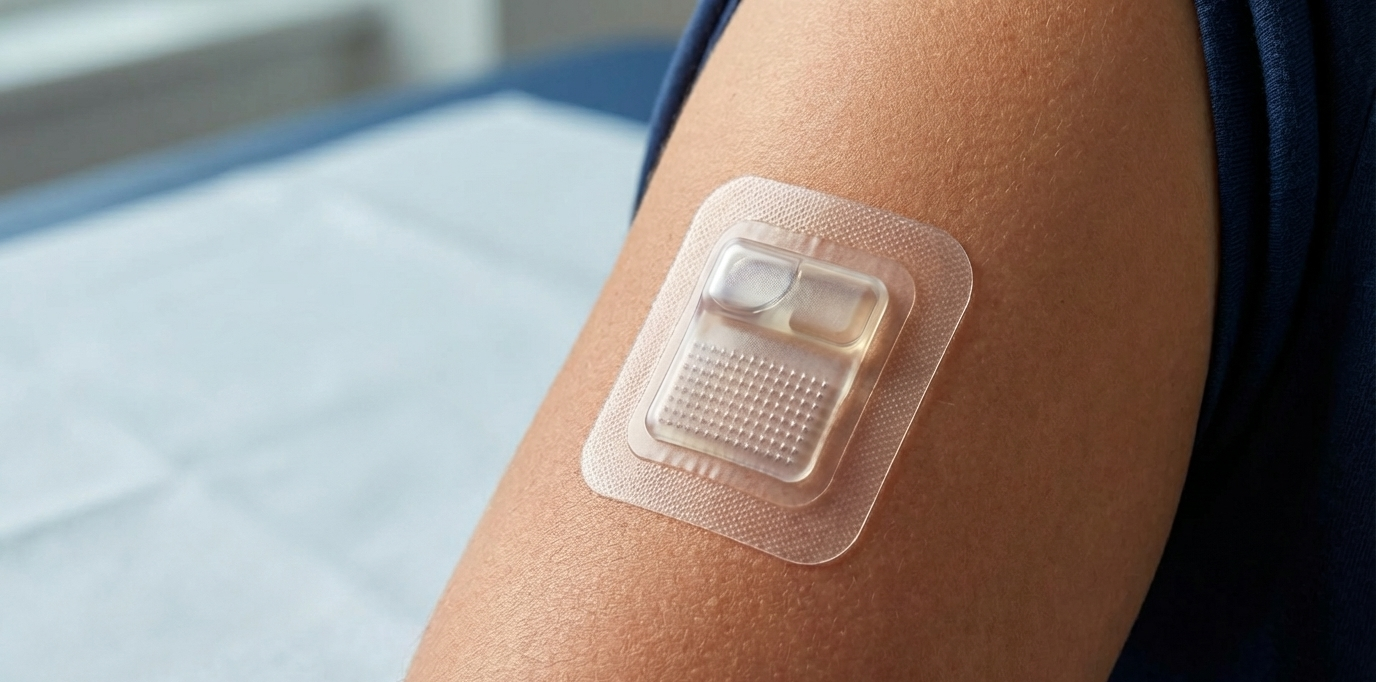
That is why no flat transdermal patch can currently deliver GLP-1 effectively. Even experimental microneedle patches have yet to prove they can release consistent, therapeutically meaningful doses in humans.
Unregulated “GLP-1 Patches”
Despite the scientific challenges, “GLP-1 patches” are being sold online and in beauty clinics as cosmetic or “detox” products. Many advertise “GLP-1-like effects” or claim to “mimic Ozempic.” None of these products contain authentic, pharmacologically active GLP-1 analogs. Most are herbal, caffeine-based, or contain vague “metabolic peptides” with no peer-reviewed evidence. Some may include unregulated peptide fragments that are not tested for safety.
Such products can be misleading or even risky. Because authentic GLP-1 analogs are prescription-only drugs requiring medical supervision, any over-the-counter patch claiming equivalent results should be viewed with skepticism. Until a patch is tested in controlled trials and approved by regulatory agencies, there is no reason to believe it can replicate the effects of true GLP-1 medications.
Why Non-Injectable Delivery Fails
To understand why this barrier is so persistent, it helps to look at the pharmacology. The success of GLP-1 receptor agonists depends on maintaining a stable concentration of active peptide in the bloodstream. Skin, however, is not a passive surface. It contains layers of lipids and keratin that repel water-soluble molecules. GLP-1 analogs are water-soluble and large, which means they cannot diffuse easily. Even if a patch could temporarily increase skin permeability, controlling the rate of delivery and maintaining the peptide’s stability would be a daunting task.
Microneedle systems may eventually solve part of this problem. By creating microscopic channels, they can bypass the outer barrier and deposit drugs directly into the dermis. Studies in animals have shown promising results for insulin delivery using this technique. Researchers are now exploring whether similar systems could deliver GLP-1 analogs. Still, these approaches are in laboratory testing, not clinical practice.
Existing GLP-1 Evidence
While the dream of a patch remains theoretical, the evidence for injectable and oral GLP-1 drugs is remarkably robust. Meta-analyses and head-to-head clinical trials consistently show that GLP-1 receptor agonists outperform other diabetes treatments in reducing HbA1c and body weight. They also carry a lower risk of hypoglycemia compared with insulin and have demonstrated cardiovascular safety and benefits.
Beyond blood sugar control, GLP-1 drugs influence appetite, taste preference, and even reward processing in the brain. These effects explain why patients often experience reduced cravings and a natural decline in caloric intake. Researchers are also studying GLP-1 analogs for potential roles in fatty liver disease, Parkinson’s disease, and addiction treatment. Across these areas, results remain preliminary but encouraging.
What all this research has in common is the delivery method: injections or specialized oral forms. There is not a single statistically rigorous human trial demonstrating successful transdermal absorption of a GLP-1 drug.
What Patients Should Know
If you see a “GLP-1 patch” for sale online or at a wellness clinic, treat it the same way you would treat an unverified supplement. There is no clinical evidence that any transdermal or cosmetic GLP-1 patch can meaningfully affect blood sugar, appetite, or weight. None have been tested in randomized human studies, and none are approved by the FDA or European Medicines Agency.
That does not mean the technology will never exist. Microneedle patches are an active area of research. They may one day provide a safe, controlled way to deliver complex peptides without injections. But until then, the patches available to consumers are unregulated products with unproven claims.
If you are considering GLP-1 therapy, the medically supported options remain the injectable or oral prescription forms. These have undergone years of large-scale trials and are monitored for safety and quality.