
Do Repatha Side Effects Go Away? When Injection Reactions Fade and What Stays
In a real-world registry of patients on PCSK9 inhibitors, 71.1% of all reported side effects resolved during follow-up. That's not a marketing claim. It's the headline finding from a Dutch pharmacovigilance dataset that tracked what actually happened to people who flagged a problem with the drug.
If you just started Repatha (or are about to), this is the question that matters: will the sting at the injection site, the muscle ache, the flu-like feeling stick around, or pass? The answer depends on which side effect, but the data is reassuring across most of them. Long-term trials following patients for up to 8.4 years on Repatha show that adverse event rates don't climb over time, and in some cases actually decline.


The Most Common Side Effects and How Long They Last
Three side effects make up the bulk of what patients report on Repatha: injection-site reactions, flu-like symptoms, and muscle aches. Here's how each tends to play out.
| Side Effect | How Common | Typical Course | Resolves? |
|---|---|---|---|
| Injection-site reaction (redness, swelling, bruising) | Up to 33.8% in real-world cohorts; main excess vs placebo in trials | Mild, typically hours to days | Yes; rates decline with continued use |
| Flu-like illness (fever, sore throat, chills) | 27.9% in real-world cohort | Hours to a few days | Yes, in most patients |
| Muscle pain or aches | 12.8% in pharmacovigilance data; rates similar to placebo in trials | Variable; rarely leads to stopping | Yes; lower discontinuation than statins |
| Cognitive symptoms | Under 1% across trials, no excess vs placebo | No measurable change in formal testing | N/A; no signal to resolve |
The 71.1% resolution rate from real-world data is the most direct answer to whether side effects go away. Of the 29% that didn't resolve, most were ongoing rather than dangerous, and only 7% of patients in that cohort stopped the drug because of side effects.
Injection-Site Reactions: The Most Predictable One
The local reaction at the injection site is the side effect most clearly linked to Repatha versus placebo. Across pooled trials of more than 6,000 patients, this was the main excess seen with evolocumab compared to control. In real-world cohorts, about a third of patients report some kind of injection-site reaction at least once.
The good news is that these reactions are nearly always mild, and they fade quickly. Most resolve within hours to a few days.
Long-term data from the OSLER-1 extension trial show that injection-site reaction rates do not increase with continued use, and the body does not develop neutralizing antibodies to the drug over years of treatment. That is the opposite of what you'd expect if the immune system were building up sensitivity.
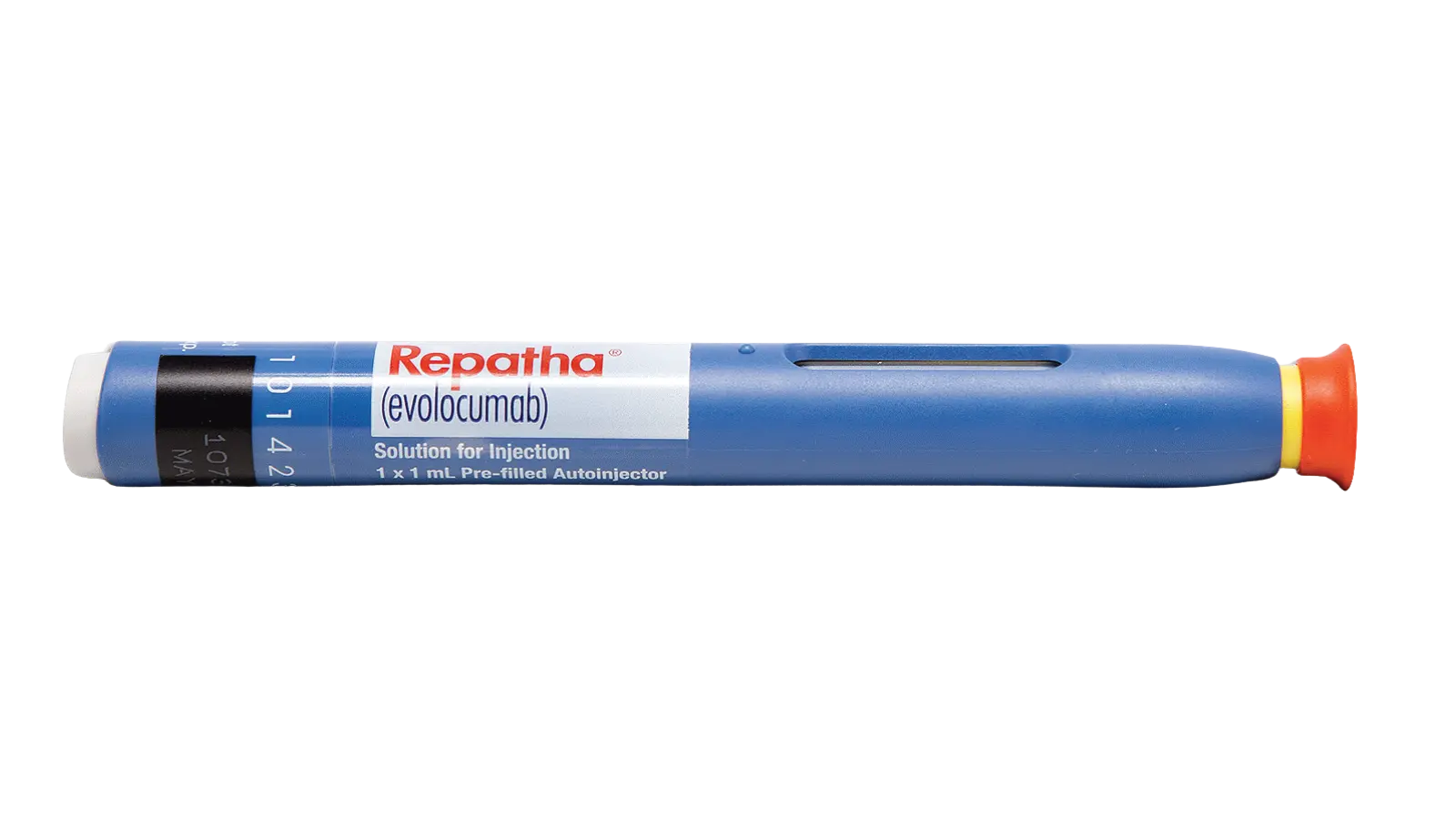
A few practical things shift the odds. Letting the injection warm to room temperature before use, rotating sites, and pinching the skin before injecting all reduce local reactions. If you switch from the autoinjector pen to the prefilled syringe (or vice versa), reactions may temporarily change.
Flu-Like Symptoms: Common but Brief
Flu-like illness, including fever, sore throat, runny nose, cough, and chills, shows up in about a quarter of real-world patients on Repatha. In pooled trial data, the rate is similar between Repatha and placebo or standard of care, suggesting some of what gets reported is background respiratory illness that would have happened anyway.
When these symptoms are linked to the injection, they typically come on within a day or two and resolve within a few days. They rarely lead to stopping the drug. In the long-term FOURIER open-label extension, no increase in flu-like or general symptoms was seen with cumulative exposure over years.
Muscle Pain: The Statin Comparison
Muscle pain is the side effect that confuses people most, partly because so many of them landed on Repatha after statins gave them muscle problems. The trial data here is genuinely encouraging.
In the GAUSS-3 trial, which enrolled 511 patients with documented muscle-related statin intolerance, muscle symptoms occurred in 20.7% of those randomized to Repatha versus 28.8% of those randomized to ezetimibe. Only 0.7% of Repatha patients (1 out of 145) stopped the drug for muscle symptoms; the comparable rate on ezetimibe was 6.8%.
A meta-analysis of 35 trials with 45,539 patients found no significant increase in myalgia on PCSK9 inhibitors versus control (odds ratio 0.95). A separate meta-analysis of 39 trials with more than 66,000 patients reached the same conclusion: no increased risk of rhabdomyolysis or muscle-related events compared with control.
What this means in practice: muscle aches do happen on Repatha, but at rates similar to placebo. Most resolve, and the chance of having to stop the drug for muscle symptoms is roughly 1%.
What About Cognitive Side Effects?
The fear that very low LDL cholesterol from PCSK9 inhibitors could damage cognition was tested directly in the EBBINGHAUS trial, where 1,204 FOURIER participants underwent formal cognitive testing using the Cambridge Neuropsychological Test Automated Battery for a median of 19 months. The result: no measurable difference between Repatha and placebo on executive function, working memory, episodic memory, or psychomotor speed.
In the larger FOURIER cohort, 22,655 patients reported on their own cognition at the end of the study. Self-reported cognitive decline was nearly identical: 3.7% on Repatha versus 3.6% on placebo. Even among patients whose LDL dropped below 20 mg/dL, the rate was 3.8%.
In the FOURIER open-label extension, with patients followed for a median of 5 years on Repatha and a maximum exposure of 8.4 years, neurocognitive event rates did not exceed those seen in the original placebo group and did not climb over time. So if cognitive symptoms haven't shown up in formal testing across thousands of patients followed for years, they're unlikely to be a real concern that needs to "resolve."
Prescribed by a licensed physician. Sent to your pharmacy.
The Long-Term Picture: Rates Don't Climb
The most important finding for anyone worried about cumulative damage: side effect rates don't get worse with longer use. The FOURIER open-label extension followed patients for a maximum of 8.4 years on Repatha. Serious adverse events, muscle events, new-onset diabetes, hemorrhagic stroke, and neurocognitive events all stayed at or below the rates seen in the original placebo group, and did not increase over time.
OSLER-1 followed a separate cohort for up to 5 years, with 79% of patients still on the drug at the end. Yearly serious adverse event rates ranged from 6.9% to 7.9%, comparable to the 6.8% rate among standard-of-care patients in year 1.
Discontinuation due to adverse events occurred in 5.7% of patients over the entire 5-year window. No neutralizing antibodies to Repatha were detected, meaning the body doesn't develop resistance or hypersensitivity to the drug over time.
That stability is the real answer to the underlying question. If you've been on Repatha for six months and tolerated it, the odds that something new and serious will appear in year two or year five are very low.
When Side Effects Don't Go Away
A small minority of patients have side effects that persist or are bothersome enough to stop the drug. In the OSLER-1 cohort, 5.7% discontinued for adverse events over 5 years. In real-world Dutch pharmacovigilance data, 7% of patients stopped Repatha for side effects. These numbers are similar to discontinuation rates seen in placebo groups in clinical trials, which is part of why most analyses conclude there's no real signal of intolerance.
If you're at month two or three and a side effect is still there, that's worth a conversation with your prescriber. Sometimes the fix is technical (injection technique, site rotation), sometimes it's a switch in dosing schedule (140 mg every two weeks versus 420 mg monthly), and sometimes it's worth waiting another cycle or two. If the symptom is genuinely intolerable or escalating, switching to a different LDL-lowering approach is reasonable. There's no virtue in toughing out a drug that isn't working for you.
Repatha is a prescription medication, and starting it through a physician-supervised program means dose adjustments and side effect troubleshooting are built in. Instalab's Repatha Program ($99) pairs you with a licensed physician who handles the prescription, monitors your LDL response, and adjusts your protocol if side effects show up. That's especially useful in the first three months, when side effects are most likely and most likely to resolve with small adjustments.
What to Expect If You Just Started
For most people, the side effect timeline looks something like this. The first one or two injections may produce some redness or stinging at the site, fading within days. Mild flu-like symptoms or muscle aches in the first month are common and usually resolve within a few cycles. By month three to six, the body has typically settled into a stable pattern, and the side effects that were going to fade have faded.
The data on what comes next is unusually good. Across more than 27,000 patients followed for over 8 years on Repatha, the answer to "do side effects go away" is, for most people, yes. And for those that linger, they almost never get worse with time.