
Why Beta-Alanine Makes You Itch: Inside the Tingle, and How to Make It Go Away
A 1.6-gram dose of beta-alanine triggers pins-and-needles tingling on the arms, neck, and trunk in most people who take it as a powder or solution. Put the same 1.6 grams in a sustained-release tablet and the tingling drops to roughly placebo levels. Same molecule, same dose, very different experience.
The form you take matters more than the amount.
If you take pre-workout, you probably know the feeling: that crawling tingle that hits your scalp, ears, or upper chest a few minutes after the scoop goes down. It is not an allergy and it is not a warning sign. It is one of the cleanest examples in neuroscience of a single molecule activating a single receptor on a specific kind of skin nerve.
Once you know what is going on, the workaround is obvious.


The Itch Is a Receptor, Not a Reaction
Most itches you have experienced come from histamine, the molecule mast cells dump into your skin during allergic reactions. Histamine itch comes with a wheal (a raised red bump) and a flare (the surrounding redness), and antihistamines knock it out.
Beta-alanine itch is different. When researchers injected beta-alanine into human skin, people reported clear itch with no wheal and no flare. Antihistamines do not help, because beta-alanine is acting on a completely different system.
The receptor responsible is called MrgprD, short for Mas-related G protein-coupled receptor D. It sits on a specific subset of unmyelinated C-fiber sensory neurons that innervate only the outer layer of your skin. These nerves respond to beta-alanine, heat, and noxious mechanical stimuli but not to histamine.
When researchers genetically deleted MrgprD in mice, the scratching response to beta-alanine almost disappeared. Add beta-alanine to a dish of cultured skin neurons and you can watch the cells fire faster in real time, an effect that vanishes when MrgprD is knocked out.
This whole pathway is a parallel itch system that runs alongside the histamine one. Researchers have identified small subpopulations of skin-innervating neurons in the dorsal root ganglion that, when activated, produce itch behavior without the pain or wheal-and-flare you get from histamine. The MrgprD-bearing neurons that beta-alanine activates belong to this broader histamine-independent itch system, bypassing mast cells and the immune system entirely.
That is why the tingle feels strange. It is not warmth, not pain, not exactly itching, more a buzzing pressure that crawls. Your skin is reporting a signal it almost never gets from anything else.
Dose and Form: The Two Levers That Matter
The intensity of the tingle tracks plasma beta-alanine concentration almost in lockstep. The faster the molecule rushes into your blood, the higher the peak, and the louder MrgprD shouts at your skin. That gives you two ways to dial it down: smaller individual doses, or formulations that release the dose slowly.
| Single oral dose (rapid-release) | What most people feel | Source |
|---|---|---|
| Up to about 500 mg | Usually nothing | |
| Around 800 mg | Mild flushing or tingling in some | |
| Around 1.6 g | Significant pins-and-needles in most | |
| 2 to 3 g | Moderate to unpleasant tingling, common |
This pattern is consistent across reviews and the largest position statement in sports nutrition: a single rapid-release dose above roughly 800 milligrams is where the tingling kicks in for most people, and dose-splitting or sustained-release formulations attenuate it.
The cleanest demonstration comes from comparing 1.6 grams in solution versus 1.6 grams in a slow-release tablet. The solution produces noticeable paresthesia; the slow-release tablet produces sensations indistinguishable from placebo, even though the total dose is identical.
The drug is the same. The receptor is the same. Only the rate of absorption changes.
This also explains the individual variation people notice. Plasma peak concentration correlates with symptom intensity, and the rate of absorption is what drives the peak. Body composition, gastric emptying speed, what you ate before the dose, and individual differences in metabolism all shift how fast beta-alanine spikes in your blood. Same dose, different curve, different itch.
How to Take It Without the Tingle
If the tingle bothers you, there are basically two reliable fixes:
- Split the dose. Most position statements recommend keeping single doses at or below 1.6 grams and taking the full daily amount across 2 to 4 servings spread through the day. A reader hitting a 4.8 g daily target as 3 separate 1.6 g doses gets dramatically less paresthesia than someone slamming the same total in one shot.
- Use a sustained-release form. Slow-release or controlled-release formulations are designed precisely to flatten the plasma curve. Across multiple human trials, sustained-release tablets at 1.6 grams produced paresthesia scores no different from placebo, and chronic protocols at 6 to 12 grams per day in sustained-release form caused minimal tingling while still loading muscle carnosine.
- Time it around food. Taking the dose with a meal slows gastric emptying and blunts the plasma peak. This is less well studied than the formulation effect but lines up with the general dose-rate principle.
- Wait it out if you do feel it. Tingling onset tracks plasma beta-alanine: it rises within minutes of dosing and resolves as plasma levels fall back to baseline, typically within an hour or two. The receptor desensitizes, plasma levels drop, and the tingle ends. There is no lingering effect.
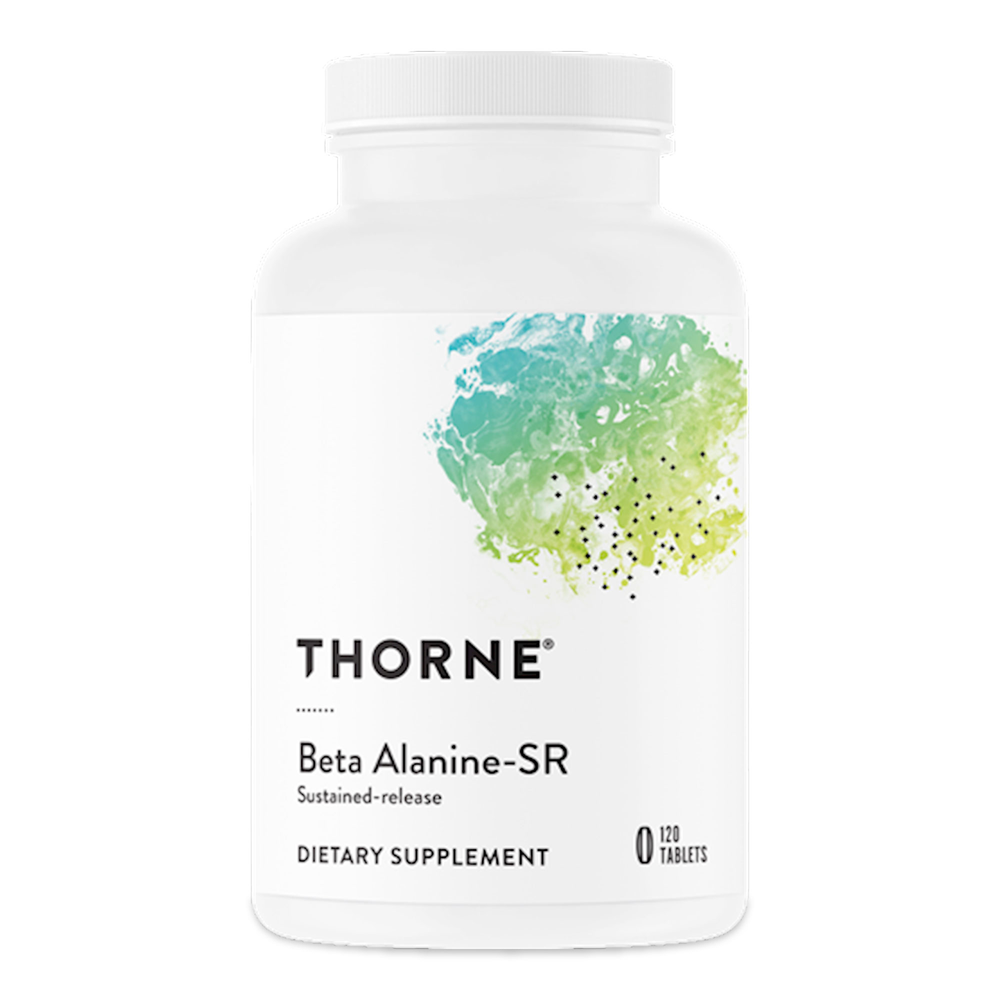
The product category itself matters here. Some retail beta-alanine powders are pure rapid-release, sold without dosing guidance, and marketed for the "pre-workout tingle" specifically. Others use sustained-release tablets engineered to fix this exact problem. Instalab carries beta-alanine supplements if you want to skip the powder route and start with a formulation built to minimize the paresthesia.
Clinically studied. Shipped to your door.
Is the Tingle a Sign It's Working?
A common belief in gym culture is that the itch means the supplement is "kicking in." That is not exactly right.
The itch tells you that beta-alanine has reached your bloodstream and is binding MrgprD on your skin nerves. It says nothing about whether the molecule is also being shuttled into your muscles to do its actual job, which is loading carnosine.
Carnosine is the reason people take beta-alanine in the first place. It is a dipeptide that builds up in fast-twitch muscle fibers and acts as a pH buffer when lactic acid floods in during high-intensity work. Beta-alanine is the rate-limiting precursor your body needs to make it.
Across well-controlled trials, daily beta-alanine supplementation reliably increases muscle carnosine: 4.8 grams per day for four weeks raises carnosine in the soleus by about 47 percent and in the gastrocnemius by about 37 percent in trained sprinters. Ten weeks of consistent dosing pushes carnosine up by roughly 80 percent in the vastus lateralis, and total work done in a cycle capacity test goes up about 13 percent at four weeks.
The 2016 meta-analysis pooling 40 studies and 1,461 participants found a clear performance benefit for high-intensity efforts in the 30-second to 10-minute range, with stronger gains for exercise capacity than for performance time-trials. Outside that window, beta-alanine does little: it does not improve maximal strength or VO2 max, and the evidence for endurance beyond 25 minutes is sparse.
Crucially, the carnosine elevation is slow. It takes weeks of consistent daily dosing to build up, and once you stop, levels decline at about 2 to 4 percent per week, returning to baseline only after roughly 9 weeks.
The tingle, by contrast, kicks in within minutes of every single dose. The two timelines are not connected. You can feel the tingle on day one and have done nothing for your muscle carnosine yet, and you can finish a long supplementation cycle and still feel the same tingle on the very last dose.
The Safety Picture
Paresthesia is the only consistent side effect of beta-alanine supplementation that has been reported in published trials. The ISSN position stand concluded the supplement is safe at recommended doses (4 to 6 grams daily) in healthy populations, with paresthesia being the lone reported adverse effect. The one caveat: most trials enrolled healthy adults, so people with kidney disease, taurine abnormalities, or those who are pregnant should run it past a clinician rather than relying on the sports-nutrition literature.
Worth flagging: Beta-alanine and taurine are thought to share a common transporter, raising a theoretical concern that very high chronic doses might affect taurine status, though in a 10-week trial plasma taurine stayed unchanged.
What This Means If You're Considering Beta-Alanine
The tingle is not a bug. It is a quirk of how beta-alanine engages a specific skin-nerve receptor, and it is harmless, time-limited, and almost entirely controllable through dose form and dose splitting.
If you decided not to use beta-alanine because of the itch, you were optimizing the wrong variable. If you are using it and the tingle is the part you want, fine. Either way, the receptor doing the talking is not telling you anything about whether the supplement is reaching your muscles.
For that, you need consistency: 4 to 6 grams per day, split into smaller doses or in sustained-release form, for at least 4 weeks. The carnosine builds slowly, but the data on its effect on short, hard efforts is some of the strongest in the supplement world.