
Does Repatha Cause Weight Loss? Why a PCSK9 Inhibitor Isn't a GLP-1
In a trial of 27,564 patients followed for over two years, evolocumab (Repatha) cut LDL cholesterol by 59% and lowered major cardiovascular events by 15%, with no meaningful difference in adverse events versus placebo aside from a small uptick in injection-site reactions. Weight loss was not on the list of effects, then or in any subsequent analysis.
If you have heard that an injectable drug helps with weight, you are probably thinking of a different class. Wegovy, Zepbound, Ozempic, and Mounjaro are GLP-1 receptor agonists, designed specifically to drive weight loss. Repatha was designed for cholesterol.
They are all injections, administered weekly or monthly, and all expensive. They do not do the same thing.


What Repatha Was Built to Do
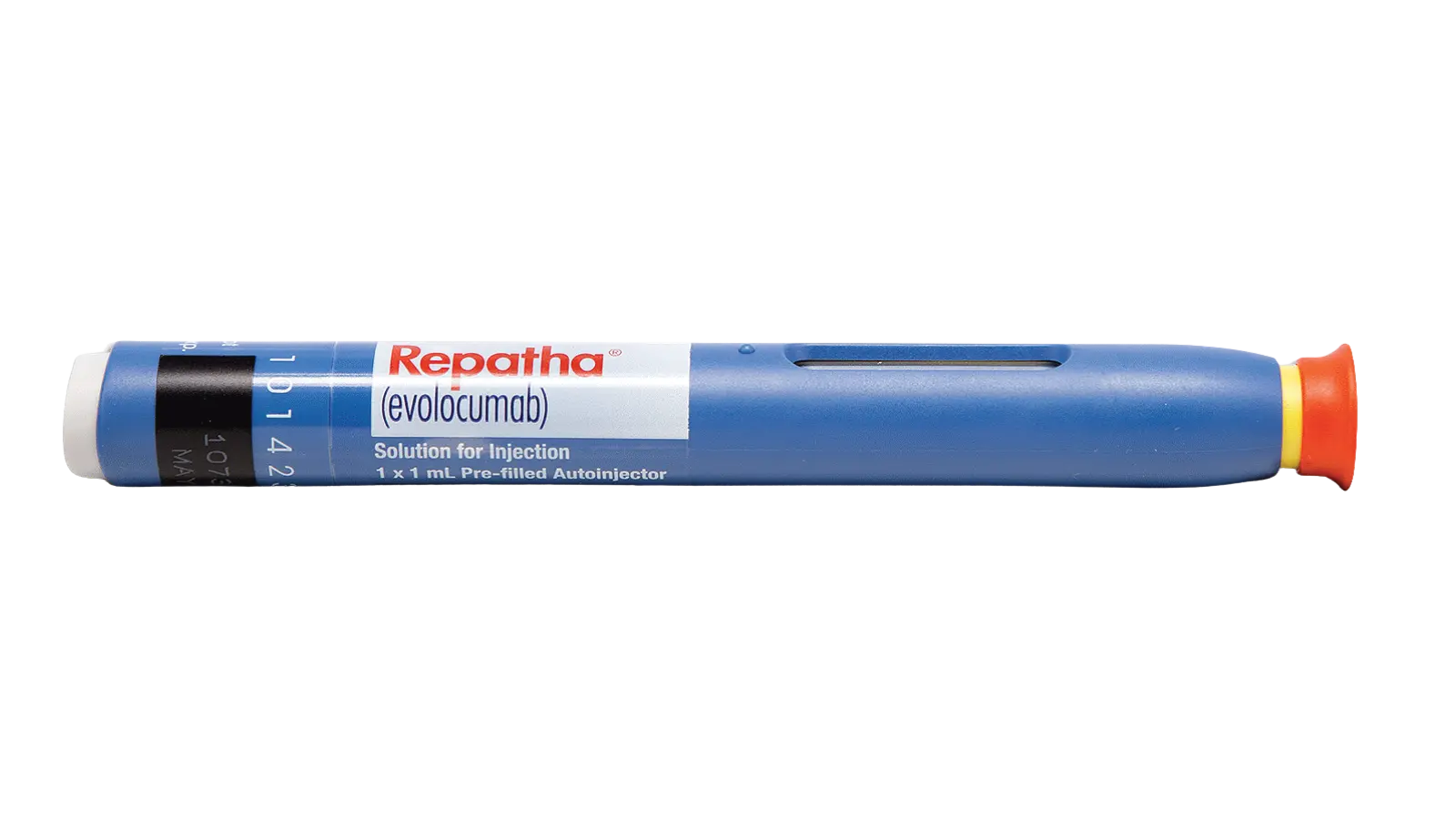
Repatha is a monoclonal antibody that blocks PCSK9, a protein your liver uses to recycle LDL receptors. With PCSK9 out of the way, your liver pulls more LDL cholesterol out of your bloodstream. The clinical effect is dramatic: LDL drops by roughly 60% across multiple trials.
That LDL reduction translates into fewer cardiovascular events. The FOURIER trial randomized 27,564 patients with established heart disease to evolocumab or placebo on top of statins. Over 2.2 years of follow-up, the drug cut the combined risk of cardiovascular death, heart attack, stroke, hospitalization for unstable angina, or coronary revascularization by 15%. When researchers later counted all events instead of just first events, the reduction grew to 18%, with heart attacks down 26% and strokes down 23%.
The long-term extension followed FOURIER patients for up to 8.4 years and saw a 23% lower risk of cardiovascular death in those started on evolocumab early versus delayed. A meta-analysis of 39 trials and 66,478 patients found PCSK9 inhibitors reduced the risk of myocardial infarction by 20% and stroke by 22%, with no signal for new-onset diabetes.
What none of these trials report is meaningful weight change.
What the Trials Actually Measured for Body Weight
When pharmaceutical companies test a drug, they track adverse events systematically. If a drug were causing patients to lose or gain meaningful weight, it would show up in the safety data. For Repatha, it does not.
A pooled safety analysis of 6,026 patients across 12 phase 2 and 3 trials found nearly identical overall adverse event rates between evolocumab and control groups, 51.1% versus 49.6%. Across FOURIER and its long-term extension, weight was not flagged as a meaningful difference between treatment arms. A real-world pharmacovigilance analysis covering over 15,500 patients on PCSK9 inhibitors identified injection-site reactions, flu-like illness, and muscle aches as the dominant complaints, with no weight signal in any subgroup.
| What evolocumab does | Magnitude | Evidence |
|---|---|---|
| Lowers LDL cholesterol | About 60% reduction | Multiple RCTs, n>27,000 |
| Reduces major cardiovascular events | 15 to 18% relative reduction | FOURIER and FOURIER-OLE |
| Lowers stroke risk | About 22% reduction | Meta-analysis of 39 trials |
| Causes weight loss | No measurable effect | Pooled safety, RCTs, real-world data |
| Causes weight gain | No measurable effect | Same evidence base |
Where the Confusion Comes From
A few things make people wonder if Repatha touches body weight.
First, Repatha is an injection. So is Wegovy, so is Mounjaro. The shared delivery method makes it easy to lump newer injectable drugs together, but the targets are completely different.
PCSK9 inhibitors act on LDL receptor recycling. GLP-1 receptor agonists slow stomach emptying and reduce appetite. They treat different problems through different biology.
Second, some patients on statins report weight gain or appetite changes. When they switch to or add Repatha, anything that improves can get attributed to the new drug.
Anecdotal reports do exist, but they are not the basis for clinical understanding. The systematic data, across tens of thousands of patients, shows no consistent weight effect.
Third, when people ask "does Repatha cause weight loss," they are often hoping the answer is yes. It would be convenient if a drug your insurance might cover for cholesterol also helped with weight. But the trials, the meta-analyses, the long-term extensions, and the real-world databases all say the same thing.
Prescribed by a licensed physician. Sent to your pharmacy.
What You Will Notice on Repatha
The actual side-effect profile is well-mapped. In the FOURIER trial, the only side effect significantly more common with evolocumab than placebo was injection-site reactions, at 2.1% versus 1.6%. In real-world settings, the rates are higher because patients pay attention to anything unusual: about 34% of patients in a hospital registry reported injection-site reactions, and 28% reported flu-like illness, with most events mild and resolving on their own.
Muscle and joint aches show up across the literature, but a meta-analysis of 35 trials found no statistically significant difference in myalgia between PCSK9 inhibitors and control. Liver enzymes, creatine kinase, and neurocognitive events are similar to placebo. The diabetes question has been examined repeatedly: a small bump in fasting glucose of about 1.9 mg/dL appears across PCSK9 inhibitor trials, but FOURIER's prespecified analysis found no increase in new-onset diabetes and no worsening of glycemia versus placebo.
Over 8 years of continuous exposure in the FOURIER long-term extension, rates of serious adverse events, muscle events, new-onset diabetes, hemorrhagic stroke, and neurocognitive events did not exceed those seen during the original placebo period.
If Weight Loss Is What You Are After
If your reason for searching this question is that you want to lose weight and you are already taking or considering Repatha, the honest answer is that you will need a different drug for that goal. The GLP-1 receptor agonists, semaglutide and liraglutide, and tirzepatide, a GLP-1/GIP dual agonist, are designed for weight loss.
For comparison, in a phase 3 trial of tirzepatide for weight maintenance, the average overall weight reduction over 88 weeks was 25.3% in patients who continued treatment. A separate trial found an additional 18.4% weight loss with tirzepatide on top of intensive lifestyle intervention versus 2.5% with placebo. PCSK9 inhibitors do not produce these numbers because they do not target the appetite or stomach-emptying pathways the GLP-1 class works through.
Many people have legitimate medical reasons to take both. Heart disease and obesity often travel together, and a patient on Repatha for stubborn LDL might also be on tirzepatide for weight. They are prescribed for different problems and do not substitute for each other.
What This Means If You Are on Repatha
Repatha is a cholesterol drug. It cuts LDL by roughly 60% and reduces the risk of heart attacks and strokes in people with established cardiovascular disease, with a side-effect profile largely indistinguishable from placebo aside from a slightly higher rate of injection-site reactions.
It does not cause weight loss. It does not cause weight gain. If you have recently started Repatha and you are seeing your weight move in either direction, the cause is almost certainly something else: dietary changes, other medications, fluid shifts, or lifestyle.
If you are considering Repatha for cholesterol that has not responded to a statin, ongoing lab monitoring matters more than the brand of the drug. Instalab's Repatha program ($99) pairs you with a licensed physician who handles the prescription, monitors your LDL response, and adjusts treatment based on your follow-up labs.
The drug is doing one job, very well. Your physician's job is making sure it is the right job for you.