
Does Semaglutide Expire?
Semaglutide usually expires within two years from the date of manufacture when stored properly in the refrigerator. Always check the packaging and only use it within the expiration date to ensure safety and effectiveness.


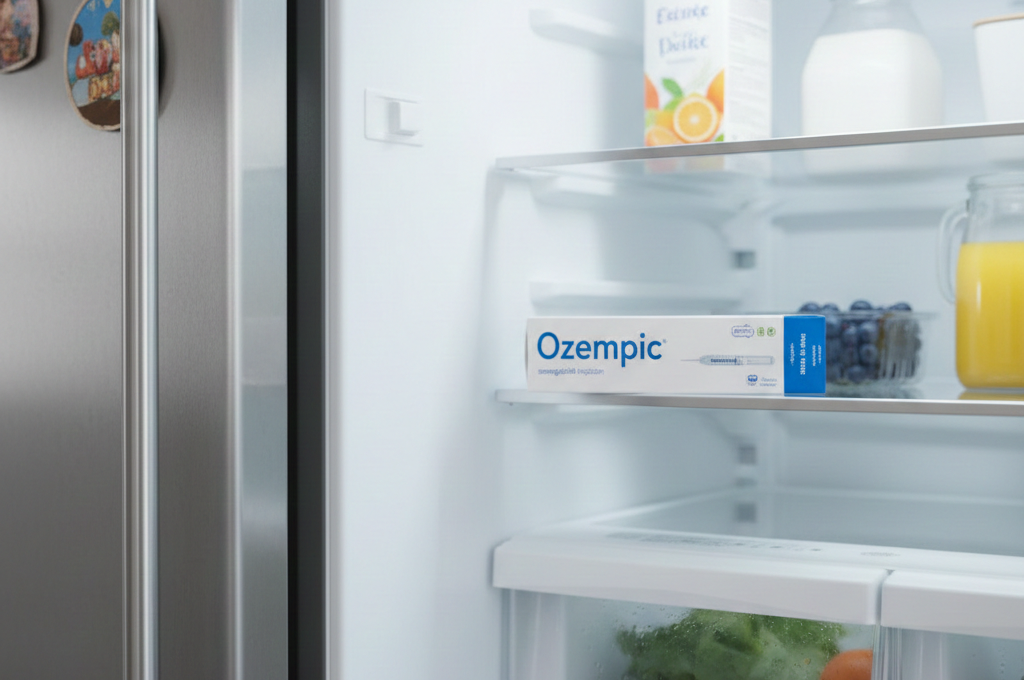
Semaglutide belongs to a class of medications known as peptide-based drugs. Peptides are short chains of amino acids that act like miniature proteins. They are highly effective because they mimic natural hormones in the body, but they are also chemically fragile. Peptides are sensitive to temperature, pH, and moisture, which means their stability can change quickly if stored incorrectly.
Typical Shelf Life
Commercially available semaglutide products are generally assigned a shelf life of up to 24 months from the date of manufacture, provided they are stored at refrigerator temperature (36–46°F). This two-year limit is consistent with best practices for other peptide-based pharmaceuticals.
Once a semaglutide pen is opened and begins to be used, its effective life shortens significantly. Most manufacturers recommend discarding the pen after 56 days, even if it still contains medication. At this point, gradual degradation can reduce potency and may lead to unpredictable dosing.
The Chemistry of Degradation
Why does semaglutide lose effectiveness over time? The explanation lies in chemistry. Peptides like semaglutide rely on a delicate three-dimensional structure to interact correctly with receptors in the body. Over time, environmental conditions can cause that structure to unravel or break apart.
Temperature is one of the most critical factors. Elevated temperatures accelerate a process known as hydrolysis, where water molecules slowly cleave the peptide bonds that hold semaglutide together. Even modest temperature increases can double or triple the rate of this degradation.
pH also plays a role. Semaglutide is most stable in a neutral to slightly basic environment (around pH 7–8). In acidic or highly basic conditions, the rate of degradation increases dramatically. This is why the drug is always formulated with buffering agents that maintain an optimal pH range during storage.
The molecule can also undergo oxidation, particularly at amino acid residues that are sensitive to oxygen or light exposure. Over time, this can alter the chemical structure in ways that reduce receptor binding and effectiveness.
What Happens if Semaglutide Expires?
When semaglutide passes its expiration date, several things may happen at the molecular level:
- Loss of potency: The drug may still appear clear and colorless, but the concentration of active peptide molecules decreases as degradation progresses.
- Altered absorption: Especially for oral formulations, degradation of the protective components may result in reduced absorption through the gastrointestinal tract.
- Formation of aggregates: In injectables, peptides may clump together into aggregates, which can block needles or cause local irritation at the injection site.
- Loss of sterility: Over extended time, the preservatives in injectable formulations may weaken, increasing the risk of bacterial contamination.
Even if expired semaglutide does not appear spoiled, these invisible chemical changes mean it may no longer deliver the expected therapeutic dose. In some cases, degraded peptides could even trigger mild immune reactions.
Expiration Dates Are Mandatory
Pharmaceutical expiration dates are not arbitrary. They are determined through long-term stability testing that simulates real-world conditions over months or years. The expiration date marks the point at which the manufacturer can no longer guarantee that the drug maintains at least 90% of its labeled potency.
For semaglutide, this testing includes exposure to temperature cycles, light, and humidity. The results are analyzed using high-performance liquid chromatography (HPLC) and other sensitive methods that detect even minor breakdown products. The two-year shelf life reflects a conservative, evidence-based threshold beyond which degradation becomes more likely.
Proper Storage
Proper storage is the key to ensuring your medication remains safe and potent throughout its intended life:
- Keep it refrigerated between 36°F to 46°F until first use.
- Do not freeze or expose to direct sunlight.
- After opening, use within 56 days and store at room temperature below 86°F.
- Always check expiration dates printed on the pen, carton, or blister pack.
- Avoid travel-related heat exposure by using insulated medication transport pouches with cooling packs.
- Do not use if the solution appears cloudy, discolored, or has particles.
These precautions are simple but essential. Even brief periods of improper storage, such as leaving a pen in a hot car, can significantly shorten its effective lifespan.
Lessons from Peptide Science
Semaglutide’s stability story is not unique. It illustrates the broader challenges of developing and maintaining peptide-based medications. Compared with traditional small-molecule drugs, peptides require far more delicate handling. Their structure is both their strength and their weakness: it allows precise biological activity but makes them vulnerable to their environment.
Fortunately, modern pharmaceutical science has developed robust strategies to extend shelf life. Chemical modifications, careful buffering, and specialized packaging all contribute to making semaglutide one of the most stable peptide drugs available. Still, no formulation can defy the basic laws of chemistry forever and using the medication beyond its expiration date is not recommended.