
Galleri Blood Test: What 50+ Cancer Types in One Draw Actually Means
A single blood draw that detected cancer signals across more than 50 tumor types with a false positive rate under 1% sounds like it shouldn't exist yet, but a clinical validation study of over 4,000 participants showed exactly that. The Galleri test, developed by GRAIL, uses DNA methylation patterns in cell-free DNA to find cancer signals that standard screening was never designed to catch.
It's not a replacement for mammograms or colonoscopies. It's aimed at the cancers that have no screening test at all, the ones that tend to show up late and kill quickly.
So what does the science actually support, and where does the test fall short?


How Methylation Patterns Flag Cancer
Traditional liquid biopsies look for genetic mutations in circulating tumor DNA. The Galleri test takes a different approach: it reads methylation signatures, chemical tags on DNA that change when cancer is present. Tumor cells shed fragments of their DNA into the bloodstream, and those fragments carry methylation patterns distinct from healthy tissue.
A machine learning classifier analyzes those patterns to answer two questions: is there a cancer signal, and where in the body is it coming from? In validation studies, the test identified the tissue of origin correctly in about 89% of true positive cases. That matters because it tells doctors where to look first, cutting down on months of diagnostic workups.
The approach covers cancers that shed enough DNA into the blood to be detected. That includes many solid tumors but excludes some low-shedding cancers like certain brain and kidney tumors, where circulating DNA levels tend to be minimal.
What the CCGA Trial Found
The Circulating Cell-free Genome Atlas (CCGA) study is the largest clinical validation behind the Galleri test. In its final substudy, researchers tested over 4,000 participants (2,823 with cancer, 1,254 without) and measured how well the test performed.
Specificity was 99.5%, meaning that among people without cancer, fewer than 1 in 200 received a false positive. For a screening test, that's critical. A test that cries wolf too often generates anxiety, unnecessary procedures, and erodes trust.
Overall sensitivity was 51.5% across all cancer types and stages. That number deserves context: sensitivity varied dramatically by stage, climbing from about 18% in stage I to 93% in stage IV.
For the 12 cancer types responsible for about two-thirds of U.S. cancer deaths (including lung, colon, pancreas, ovary, and liver), stage I through III sensitivity reached 67.6%.
The test caught more cancers at later stages because advanced tumors shed more DNA. But even catching a fraction of early-stage cancers matters when those cancers currently have no screening option at all.
The PATHFINDER Trial: Testing in the Real World
The CCGA study tested known cancer patients against healthy controls. The PATHFINDER trial asked a harder question: what happens when you use this test to screen people who don't know whether they have cancer?
Researchers enrolled 6,662 adults aged 50 and older with no signs or symptoms of cancer. A cancer signal was detected in 1.4% of participants. Of those 92 people flagged, 35 turned out to have cancer (true positives) and 57 did not (false positives).
That 38% positive predictive value is lower than the specificity numbers might suggest, and it reflects a basic math problem in screening: when cancer prevalence is low in the tested population, even a highly specific test will produce some false alarms. For every person correctly identified with cancer, roughly 1.6 people went through additional testing unnecessarily.
The diagnostic workup took a median of 57 days for true positives and 162 days for false positives. Most participants with a cancer signal underwent lab tests and imaging. Fewer had invasive procedures, and only one person with a false positive had surgery.
What Galleri Catches and What It Misses
The test doesn't perform equally across all cancer types. Cancers that shed large amounts of DNA into the bloodstream, like liver, pancreatic, and ovarian cancers, tend to be detected at higher rates. These are also some of the deadliest cancers, often diagnosed only after symptoms appear.
Stage matters enormously. In the CCGA validation, sensitivity for all cancers was about 18% at stage I, 43% at stage II, 81% at stage III, and 93% at stage IV. A separate analysis confirmed this pattern: stage I detection remains the weakest link in any cfDNA-based approach.
The test also doesn't replace existing screening. It wasn't designed to detect cervical cancer (Pap smears handle that) or to compete with mammography for breast cancer. Its strength is the long list of cancers with no current screening: pancreatic, ovarian, liver, esophageal, stomach, and many others.
One important caveat: a negative Galleri result doesn't mean you're cancer-free. With overall sensitivity around 50%, the test misses roughly half of existing cancers, especially early-stage ones. A negative result is reassuring but not definitive.
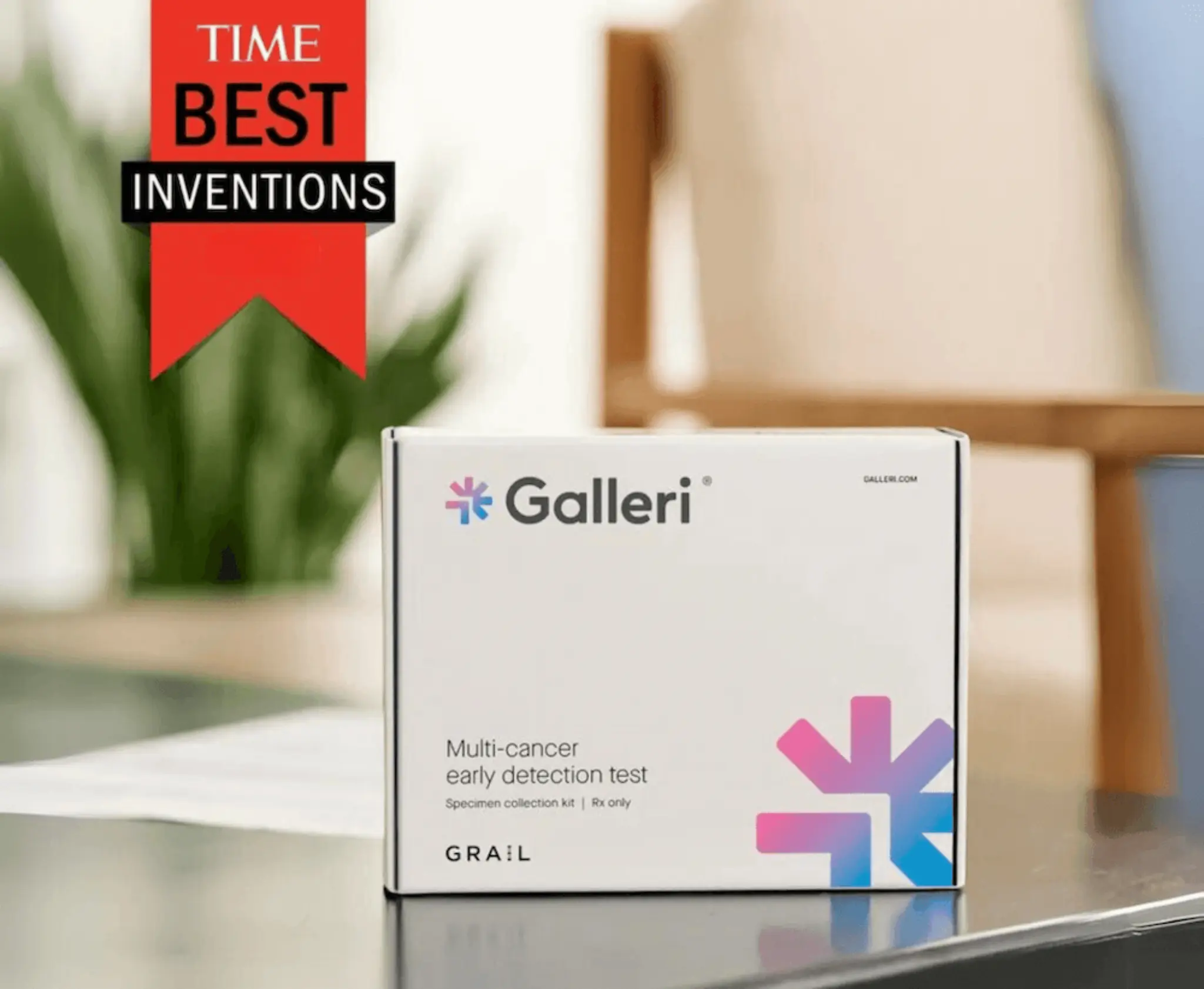
No referral needed. Results reviewed by a physician.
The False Positive Problem, in Perspective
A 0.5% false positive rate sounds tiny, but when millions of people take a screening test, small percentages create large numbers. If 10 million Americans took the test, roughly 50,000 would get a false cancer signal.
Each false positive means weeks or months of follow-up imaging, blood work, and anxiety. The PATHFINDER data showed that false positive workups took longer to resolve (median 162 days) than true positive cases (57 days), because doctors had to rule out cancer rather than confirm it.
That said, 0.5% is remarkably low for a cancer screening test. Standard mammography, by comparison, is estimated to produce false positives in roughly 10% of screening rounds. The Galleri test's specificity is one of its strongest features, and the tissue-of-origin prediction helps focus the diagnostic workup on a specific area rather than triggering a full-body search.
Who Should Consider the Test
The Galleri test is FDA-designated as a laboratory-developed test and is available by prescription. It's aimed at adults 50 and older, the same population studied in PATHFINDER. It's not a replacement for standard cancer screenings but an add-on for the cancers those screenings don't cover.
People with elevated cancer risk, whether from family history, prior cancer, or environmental exposures, may benefit most. But the data so far comes primarily from average-risk populations, so the test's performance in high-risk groups isn't as well established.
Instalab offers the Galleri Multi-Cancer Early Detection Test for $849, ordered without a referral.
The annual repeat question is still open. GRAIL recommends annual testing, reasoning that a cancer missed in year one might be caught in year two as it grows and sheds more DNA. One study demonstrated that blood-based cancer detection can identify tumors up to four years before conventional diagnosis, suggesting that serial testing could catch cancers as they progress and shed more DNA. Large randomized trials now underway aim to answer whether annual screening actually reduces late-stage cancer diagnoses and improves survival.
What Remains Unproven About Multi-Cancer Screening
The biggest unanswered question is whether finding cancer earlier through this test actually saves lives. Detection is not the same as outcome improvement. Some cancers detected early are treatable; others are aggressive regardless of when they're found. And some early detections may represent overdiagnosis, finding cancers that would never have caused symptoms or death.
ESMO has cautioned that ctDNA-based screening in asymptomatic people is not yet recommended for routine clinical practice, and expert reviews have noted that clinical utility for population-level screening remains to be established. The technology works. The question is whether using it at scale produces more benefit than harm.
The clinical data so far is encouraging but incomplete. The CCGA and PATHFINDER trials demonstrate that the test can find real cancers with high specificity. What they haven't yet shown is that finding those cancers earlier leads to better survival compared to the current standard of care.
For cancers like pancreatic and ovarian, where late detection is nearly synonymous with death, even imperfect early detection could be transformative. For other cancers with slower progression, the calculus is less clear. The NHS-Galleri trial and ongoing real-world studies will fill in these gaps over the coming years.