
Methylcobalamin vs Cyanocobalamin: Why the Form You Pick Matters Less Than the Label Suggests
About 14.5% of older adults have a vitamin B12 deficiency, and standard blood tests miss many of them because serum B12 stays in the "low-normal" range while methylmalonic acid and homocysteine quietly climb. Once the diagnosis is finally made, almost everyone arrives at the same question: methylcobalamin or cyanocobalamin?
The supplement aisle pushes methylcobalamin hard. Bottles list it as the "active" or "natural" form, often at two to four times the price of cyanocobalamin, and mainstream clinical guidance treats both as acceptable for general B12 supplementation.
The actual research, accumulated over more than fifty years, lands somewhere in the middle. The two forms differ in measurable ways inside your body, but for most healthy adults, those differences don't change the outcome.


What Your Cells Actually Do With Each Form
Whatever form of B12 you swallow, your cells process it through a single shared pathway. A cytosolic chaperone called MMACHC strips the cyanide group off cyanocobalamin in a reaction called reductive decyanation, leaving a bare cobalamin core.
Methylcobalamin and adenosylcobalamin go through the same chaperone, which uses glutathione to remove the methyl or adenosyl group. Whatever the starting form, the cell ends up with the same intermediate, then rebuilds it into whichever active coenzyme it needs at that moment for methionine synthase or methylmalonyl-CoA mutase.
This is why mechanistic reviews keep landing in the same place: there is no intrinsic intracellular advantage to starting with methylcobalamin over cyanocobalamin in healthy people. The MMACHC step processes both forms, and once past that bottleneck the chemistry is identical.
A Direct Comparison
| Aspect | Methylcobalamin | Cyanocobalamin | Evidence |
|---|---|---|---|
| Intracellular pathway | Same (via MMACHC) | Same (via MMACHC) | |
| Oral bioavailability | About 2% standard | About 2% standard, up to 5% with SNAC enhancer | |
| RCT data for diabetic neuropathy | Multiple RCTs and meta-analyses | Mostly older trials | |
| Effect in IBD (mouse model) | Neutral | Worsened disease activity | |
| Preferred in renal impairment | Yes, due to thiocyanate concern with cyano | No | |
| Performance in inborn cblC defect | Effective | Poorly responsive | |
| Typical cost | Higher | Lower | n/a |
The classic head-to-head data come from a 1971 study that tracked radioactive cobalt-tagged forms in humans. At physiological oral doses, methylcobalamin and cyanocobalamin showed broadly similar absorption, with some differences in retention emerging at higher doses. Animal studies have since found that cyanocobalamin shows higher urinary loss while methylcobalamin gets retained at higher levels in tissue, though these effects are modest and don't translate cleanly to clinical outcomes in humans.
When the Form Genuinely Matters
A handful of specific situations push the evidence toward methylcobalamin or away from cyanocobalamin.
- Kidney disease. The cyanide group on cyanocobalamin gets converted to thiocyanate, which the kidneys clear. In renal impairment, thiocyanate can accumulate, and at least one analysis argued that high-dose cyanocobalamin may be harmful in patients with reduced kidney function while methylcobalamin or hydroxocobalamin would be safer.
- Long-term metformin use. Metformin blocks B12 absorption in the terminal ileum. In a study of 412 patients with type 2 diabetes, the odds ratio for B12 deficiency in metformin users was 4.72 compared to non-users, and the risk climbed sharply at doses above 2,000 mg/day or use longer than four years. Methylcobalamin is the form studied most directly in this group: a one-year, double-blind trial of 90 patients with type 2 diabetes and neuropathy gave them oral methylcobalamin 1,000 micrograms daily and saw plasma B12 rise from about 232 to 777 pmol/L, with significant improvements in nerve conduction velocity, vibration thresholds, sudomotor function, pain scores, and quality of life.
- Inborn cblC defect. People with this rare inherited condition have a damaged version of MMACHC, the chaperone that processes B12, so they respond poorly to cyanocobalamin specifically because the decyanation step is broken. They need hydroxocobalamin or active forms instead. This isn't a general consideration, but it explains why some clinicians default to methylcobalamin or hydroxocobalamin when the underlying cause of deficiency isn't fully clear.
- Inflammatory bowel disease. A more recent line of research has looked at how B12 forms interact with gut microbiota. In mice with chemically induced IBD, high-dose cyanocobalamin worsened disease activity and shifted the microbiome toward Enterobacteriaceae, while methylcobalamin did not. The mechanism appears to involve how each form binds bacterial riboswitches, and while the same effect hasn't been demonstrated in humans, it gives a mechanistic reason to prefer methylcobalamin if you have IBD.
Clinically studied. Shipped to your door.
What Happens When You Use Either Form for an Ordinary Deficiency
The boring answer is that both forms work. The 1-year RCT of methylcobalamin 1,000 micrograms daily fully normalized B12 status and improved every objective neuropathy measure tested in adults with diabetic neuropathy.
A meta-analysis of 15 randomized trials covering 1,707 patients found that methylcobalamin improved overall clinical efficacy with a relative risk of 1.17 alone and 1.32 in combination, though the same analysis found no significant benefit on pain scores specifically. A broader meta-analysis of 53 studies confirmed that B12, alone or in combinations, reduced peripheral neuropathy symptoms across multiple causes.
Cyanocobalamin has its own deep evidence base. It is the form used in trials that established oral B12 corrects deficiency as effectively as monthly intramuscular shots in elderly patients. It has been the standard supplemental and food-fortification form for decades because it's chemically stable, cheap to manufacture, and your body converts it. The mechanistic argument that cyanocobalamin is somehow inferior in healthy people doesn't hold up against the kinetic and clinical data.
The one absorption-side caveat: standard oral cyanocobalamin tablets only deliver about 2% of the dose into circulation. A formulation that pairs cyanocobalamin with an absorption enhancer called SNAC roughly doubled that to 5.09% in a 20-person pharmacokinetic study. Most over-the-counter cyanocobalamin doesn't include SNAC, but the data show the limit isn't the molecule, it's the formulation.
Practical Picks at the Supplement Counter
For maintenance in healthy adults, both forms work at similar doses. Most B12 supplements deliver 100 to 1,000 micrograms per day, well above the basic dietary requirement, because passive intestinal absorption captures only a small fraction of any oral dose once intrinsic factor is saturated.
If you're standing in front of a wall of B12 bottles:
- Pick methylcobalamin (or hydroxocobalamin) if you have known kidney disease, are on long-term metformin, have IBD, or have been told you have an inborn error of B12 metabolism.
- Pick whichever is cheaper and easier for you if you're a healthy adult correcting a typical dietary or absorption-related deficiency. Both will work.
- If you've taken cyanocobalamin for years and your B12 and methylmalonic acid are normal, the form is doing its job. Don't switch unless you have a specific reason.
- If you have a malabsorption condition or pernicious anemia, oral high-dose B12 of either form can replace monthly injections, but discuss the route and starting dose with your clinician before switching.
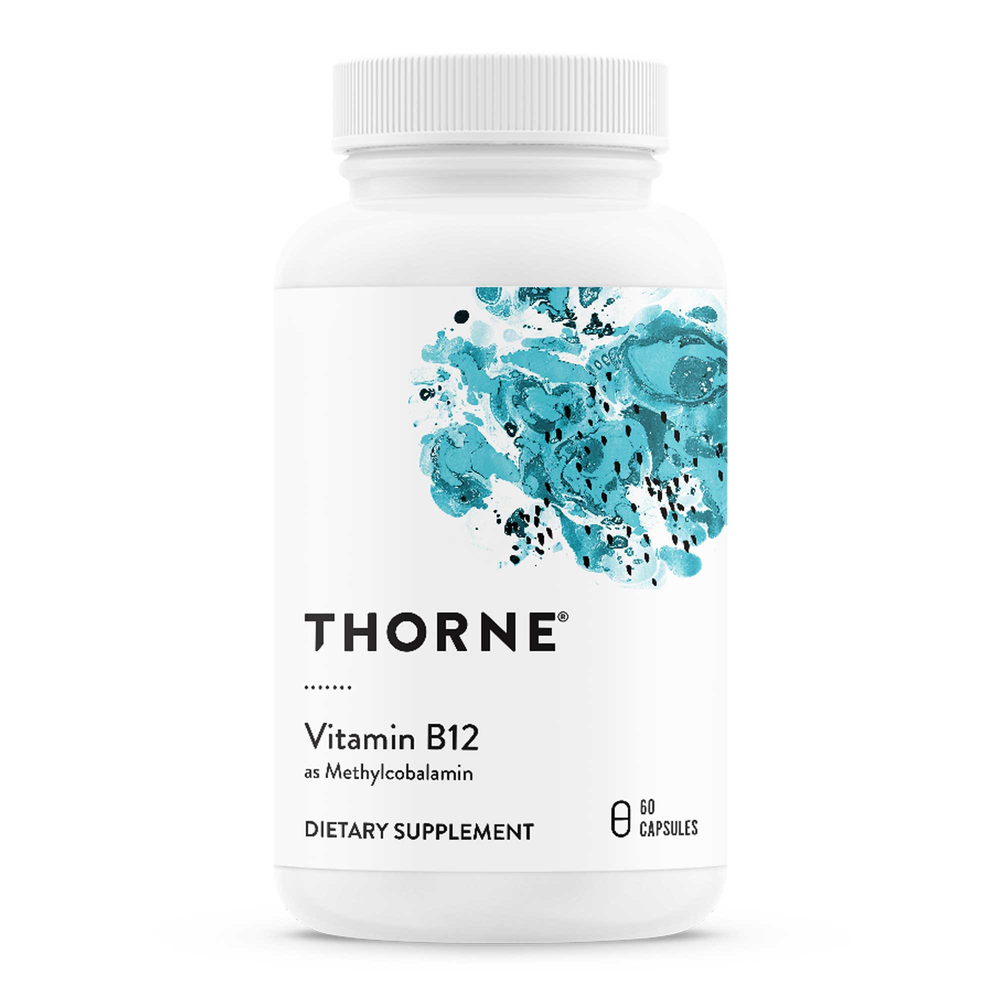
Instalab's Vitamin B12 supplement collection carries both methylcobalamin (Thorne, Klaire Labs, Ortho Molecular) and adenosyl/hydroxy formulations from clinical brands like Pure Encapsulations, so you can match the form to your situation rather than to the marketing on the bottle.
What This Means If You're Choosing a B12 Form Today
A few things hold up across the research. Your cells process both forms through the same intracellular pathway and end up with the same active coenzymes, and the measurable kinetic differences between forms are real but small in healthy people with intact B12 absorption.
A handful of specific situations, especially renal impairment, IBD, the cblC defect, and long-term metformin use, do push the evidence toward methylcobalamin or hydroxocobalamin. The oral route, in either form, now has enough trial data behind it that monthly injections aren't the only option for correcting deficiency.
For everyone else, the form on the label matters less than whether you take it consistently and whether you're addressing a real deficiency in the first place. If your B12 is borderline, the more useful question is whether your methylmalonic acid and homocysteine confirm a true metabolic deficiency, since serum B12 alone misses many cases. Get that question settled before you spend extra money on the "active" form.