
Ozempic to Mounjaro Conversion Chart: Why You Don't Convert, You Restart at 2.5 mg
In the largest real-world comparison published so far, 18,386 propensity-matched adults split between tirzepatide and semaglutide tracked their weight for a year, and tirzepatide users were more than three times as likely to hit a 15% drop (hazard ratio 3.24).
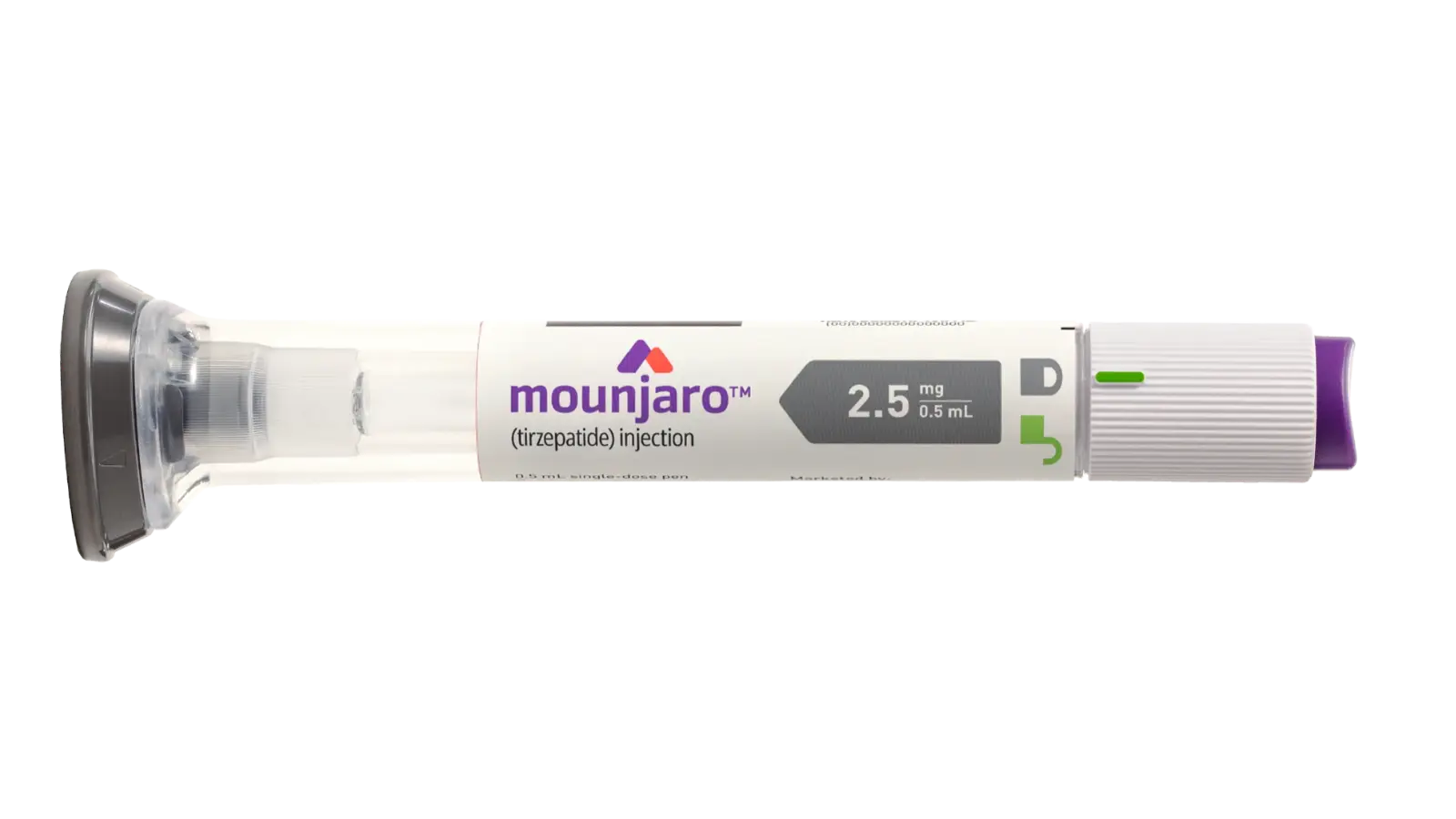
If you're already on Ozempic and Googling for a conversion chart, that's probably the number that drew you in. The harder question is what dose to start Mounjaro at, and the honest answer surprises most people: there is no 1:1 conversion. You restart from the bottom and titrate up.


How Every Tirzepatide Trial Started Switchers
Across the Phase 3 tirzepatide program, the titration schedule is the same: start at 2.5 mg once weekly, then increase by 2.5 mg every four weeks until you reach the target maintenance dose. Anyone who had been on semaglutide enrolled the same way as someone who had never touched a GLP-1.
This is the closest thing to a conversion chart that exists, and it isn't a conversion at all. It's a titration schedule.
| Step | Tirzepatide Dose | Weeks on Dose | What It Does |
|---|---|---|---|
| 1 | 2.5 mg weekly | 4 | Starting dose, not a maintenance dose |
| 2 | 5 mg weekly | 4 | First true maintenance option |
| 3 | 7.5 mg weekly | 4 | Still titrating up |
| 4 | 10 mg weekly | 4 or ongoing | Common maintenance dose |
| 5 | 12.5 mg weekly | 4 | Still titrating up |
| 6 | 15 mg weekly | Ongoing | Highest approved maintenance dose |
You can stop at 5, 10, or 15 mg, the three approved maintenance levels. If you tolerate the lower step but aren't seeing the weight or A1c result you want, your prescriber moves you up. If a step causes too much nausea or vomiting, the SURMOUNT-3 protocol explicitly allowed dropping back 2.5 mg and re-escalating later.
Why There's No Shortcut
The reason you can't jump from semaglutide 1 mg straight to Mounjaro 10 mg comes down to how the gastrointestinal side effects scale.
In a 2023 meta-analysis of 10 tirzepatide trials covering 6,836 participants, gastrointestinal events (nausea, diarrhea, vomiting) showed a clear dose-response: 39% of people on 5 mg, 46% on 10 mg, and 49% on 15 mg. Discontinuation specifically due to side effects climbed to 10% at 15 mg. Slow titration is what keeps that number in single digits at the lower steps and gives the gut time to adapt.
The intuition that being already on semaglutide buys you a head start is partly right. Both drugs activate GLP-1 receptors, so some of the gut adaptation transfers, but tirzepatide also activates GIP receptors, which adds a different pharmacology that semaglutide didn't pre-acclimate you to.
Skipping ahead doesn't usually crash people, but no Phase 3 protocol has tested it, and the trial data on tolerability all assume the slow climb.
What Switchers Gain
If the schedule looks slow, the trade-off is the size of the eventual weight loss. Across the data, tirzepatide produces consistently more weight reduction than semaglutide at every comparable tier.
In the only head-to-head trial in obesity without diabetes, SURMOUNT-5, 751 adults received 72 weeks of either tirzepatide or semaglutide at maximum tolerated doses. Weight loss at week 72 averaged 20.2% on tirzepatide versus 13.7% on semaglutide. Waist circumference dropped 18.4 cm on tirzepatide versus 13.0 cm on semaglutide.
The diabetes head-to-head, SURPASS-2, told a similar story in 1,879 type 2 diabetes patients: A1c reductions of 2.01 to 2.30 percentage points on tirzepatide (5, 10, 15 mg) versus 1.86 percentage points on semaglutide 1 mg, with 1.9 to 5.5 kg of additional weight loss across the three tirzepatide doses. Real-world data from a 2024 cohort of 18,386 adults backed it up: tirzepatide users were 76% more likely to reach a 5% loss, 154% more likely to hit 10%, and 224% more likely to hit 15% (hazard ratios 1.76, 2.54, and 3.24). At twelve months on treatment, the average difference was 6.9 percentage points more weight lost on tirzepatide.
A 2024 network meta-analysis of 28 trials with 23,622 patients put numbers on the dose-for-dose comparison: on A1c, all three tirzepatide doses landed in the same range as the highest semaglutide dose (2.0 mg), with tirzepatide 5 mg essentially matching it. On weight, tirzepatide pulled clearly ahead, with tirzepatide 15 mg averaging 9.6 kg of loss versus 5.0 kg for semaglutide 2 mg.
If you're moving from Ozempic to Mounjaro and want a physician handling the titration calendar and lab monitoring, Instalab's Mounjaro program ($99) pairs you with a licensed prescriber who orders the medication, tracks your labs, and adjusts your dose through the titration window.
Prescribed by a licensed physician. Sent to your pharmacy.
The First Eight Weeks After Switching
The actual experience of stepping over to Mounjaro depends a lot on which Ozempic dose you came from.
People coming off semaglutide 0.5 mg or 1 mg usually find that 2.5 mg of tirzepatide for the first four weeks feels lighter than where they just were, with appetite suppression dipping slightly. The reason is that 2.5 mg is genuinely a starter dose, not a maintenance dose, and the trials never expected it to drive sustained weight loss on its own. SURMOUNT-1, the original 2,539-person obesity trial, only studied 5, 10, and 15 mg as maintenance doses, all reached after a 20-week escalation.
People coming off semaglutide 2 mg sometimes notice the dip more sharply. The data here are limited, but the SURMOUNT-3 titration design assumes everyone can tolerate stepping down to 2.5 mg before climbing back up. The four weeks at 5 mg matter more for these patients, because that's the first dose that meaningfully overlaps with what semaglutide 2 mg was doing.
The four-week step interval isn't arbitrary. Reviews of how to manage GLP-1 gastrointestinal side effects recommend giving the gut at least three to four weeks at each dose to let nausea fade before the next bump. Faster escalation tends to push people into the discontinuation column.
Maintaining the Loss
One question the trial data answer cleanly is what happens if you stop tirzepatide once you've hit your target weight.
In SURMOUNT-4, 670 adults who had already lost 20.9% of their body weight during a 36-week tirzepatide lead-in were randomly assigned to either continue tirzepatide or switch to placebo for another 52 weeks. The continued-tirzepatide group held their loss and added a small amount more, with weight changing by -5.5% over the 52-week extension. The placebo group regained, climbing 14.0% above the post-lead-in baseline.
Of those who stayed on the drug, 89.5% kept at least 80% of their weight loss, versus 16.6% on placebo.
That's the practical case for finishing the titration rather than parking yourself on 5 mg forever if 10 or 15 mg would actually serve you better. The dose that holds the loss is generally the dose that drove it.
What Ozempic-to-Mounjaro Switching Actually Looks Like
Putting this together, the conversion chart most people are searching for is really four layered pieces of information:
- No equivalence table exists. Mounjaro starts at 2.5 mg regardless of where Ozempic ended.
- The titration schedule. Six possible steps, four weeks at each, ending at one of three maintenance levels.
- The maintenance levels. Three approved options: 5, 10, or 15 mg weekly.
- The expected payoff. Across head-to-head trials and real-world data, tirzepatide produces about 3 to 7 percentage points more weight loss than semaglutide at comparable tiers.
If you've been on Ozempic and you're moving to Mounjaro because the loss has stalled, the schedule above is the schedule your prescriber will follow. The weight you lost on Ozempic doesn't reset, but the dose does. The next four months are about climbing the ladder, and the months after that are about staying on the rung that holds the result.
References
9 studies- Tirzepatide Versus Semaglutide Once Weekly in Patients With Type 2 Diabetes.
- Tirzepatide Once Weekly for the Treatment of Obesity.
- Adverse Events Related to Tirzepatide.
- Subcutaneously Administered Tirzepatide Vs Semaglutide for Adults With Type 2 Diabetes: A Systematic Review and Network Meta-analysis of Randomised Controlled Trials.
- Semaglutide Vs Tirzepatide for Weight Loss in Adults With Overweight or Obesity.