
Repatha Generic Name: Why Evolocumab Costs the Same as the Brand
Evolocumab dropped LDL cholesterol by 59% in 27,564 patients with established heart disease and cut major cardiovascular events by 15% over a median 2.2 years of follow-up. Eight years after that landmark trial, there is still no cheaper generic version of evolocumab on any U.S. pharmacy shelf.
That is the short answer to the question that brought you here: Repatha's generic name is evolocumab. The longer answer is more useful, because the generic name does not unlock the kind of price drop most people expect from a generic. Repatha is a biologic drug, and biologics follow a different cost-curve than small-molecule pills like statins.


The Brand and the Molecule
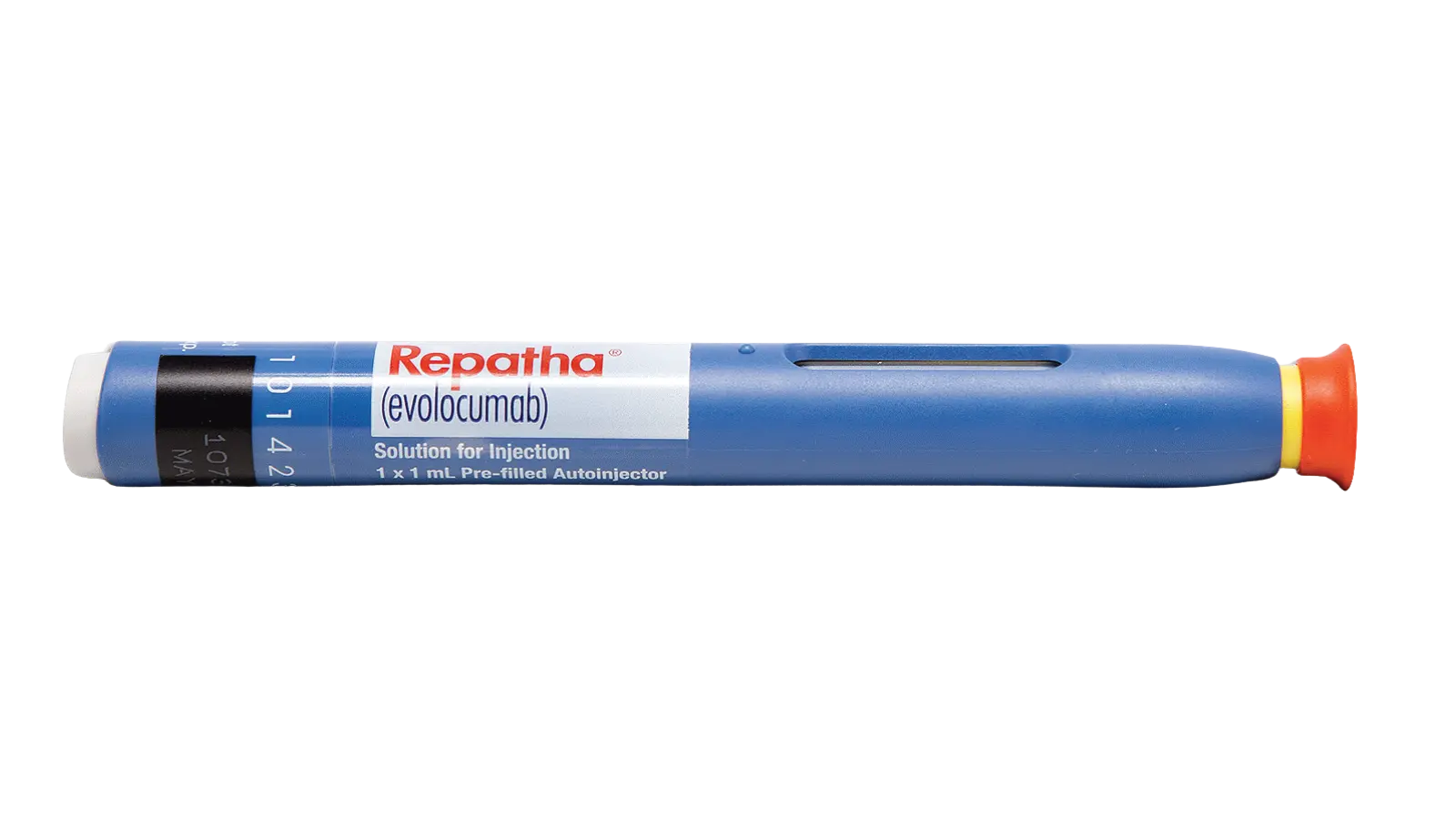
Repatha is the brand name Amgen uses to sell evolocumab in the United States and most other countries. Both names refer to the same monoclonal antibody, a lab-grown protein that latches onto a liver enzyme called PCSK9 and prevents it from destroying LDL receptors. With more LDL receptors active, the liver pulls more LDL cholesterol out of circulation.
Evolocumab's LDL drop is unusually consistent: roughly 55% to 61% across studies that span single doses, multi-year extensions, and a 27,564-patient cardiovascular outcome trial. In FOURIER, the largest of those trials, median LDL fell from 92 mg/dL at baseline to 30 mg/dL on treatment, alongside a 15% reduction in the composite of cardiovascular death, heart attack, stroke, hospitalization for unstable angina, or coronary revascularization.
Long-term safety data has held up too. The FOURIER open-label extension followed 6,635 patients for a median of 5 additional years, with maximum exposure reaching 8.4 years. Rates of serious adverse events, muscle-related events, new-onset diabetes, hemorrhagic stroke, and neurocognitive events on evolocumab did not exceed placebo and did not climb over time.
So the molecule works and the molecule is safe. None of that explains why "evolocumab" on a prescription label costs roughly the same as "Repatha."
Why Biologics Don't Get Cheap Generics
When a small-molecule drug like atorvastatin loses patent protection, generic manufacturers can synthesize the same chemical structure, prove it dissolves and absorbs the same way, and ship a chemically identical product. The FDA approves it under an abbreviated pathway and prices typically fall sharply within the first year.
Evolocumab does not work that way. It is a large monoclonal antibody grown in living mammalian cells, and no two manufacturing runs produce molecularly identical proteins because cells fold and modify them in slightly different ways each time.
The FDA's small-molecule generic pathway does not apply to biologics. Instead, biologics get a separate framework: biosimilars.
A biosimilar is a copy approved on the basis that it matches the reference biologic in quality, safety, and efficacy, even though it is not chemically identical. Biosimilars are generally less expensive than the reference product, but the discount is typically modest compared with the steep drop seen when small-molecule generics arrive. Across European markets, biosimilars have expanded access for some biologic categories, with adoption and discount patterns varying considerably by drug class and country.
The Patent and Biosimilar Landscape
No biosimilar of evolocumab has been approved or launched in the United States as of the most recent published reviews of the PCSK9 inhibitor space. Repatha's primary U.S. patents have not yet expired, and pharmaceutical pipeline timelines for biosimilar entry depend on patent litigation and regulatory review, both of which can shift dates by years.
There is one exception worth knowing. Tafolecimab, a separate PCSK9 monoclonal antibody developed and approved in China, is sometimes mentioned alongside evolocumab and alirocumab as an emerging option in the class, but it is not a biosimilar of evolocumab and is not approved in the United States. A Chinese-market drug does not change what your local pharmacy can dispense.
What Evolocumab Actually Costs
When U.S. researchers ran a cost-effectiveness analysis in 2017 using FOURIER data, evolocumab added 0.39 quality-adjusted life-years at an incremental cost of $105,398 per patient, for an incremental cost-effectiveness ratio of $268,637 per QALY gained. With a 29% rebate, the ratio dropped to $165,689 per QALY.
Both numbers exceeded the $150,000-per-QALY threshold most U.S. analyses use to label a drug cost-effective. Sensitivity analyses produced ratios ranging from about $100,000 to nearly $489,000 per QALY depending on assumptions about long-term mortality benefit and patient risk profile.
That analysis predates a subsequent list-price reduction by Amgen. The published list price has since come down, and most insured patients pay a copay rather than the list price.
Patient assistance programs from Amgen can lower out-of-pocket costs further for eligible patients. Real-world cost varies widely depending on insurance design, prior authorization outcomes, and whether the prescription is filled through retail pharmacy or specialty pharmacy.
The practical takeaway is that the brand-versus-generic distinction does not control your cost. Insurance coverage, prior authorization, and patient assistance programs do.
How Repatha Compares to Other PCSK9 Inhibitors
Evolocumab is one of four PCSK9-targeted therapies identified in recent reviews of the field:
- Evolocumab (Repatha). Monoclonal antibody. 140 mg every 2 weeks or 420 mg monthly by subcutaneous injection. Roughly 60% LDL reduction in studies of patients on background statin therapy.
- Alirocumab Praluent). Monoclonal antibody, mechanistically similar to evolocumab. Pooled trial data show LDL reductions of about 53% on biweekly 50 to 150 mg dosing.
- Inclisiran Leqvio). Small interfering RNA, not a monoclonal antibody. Twice-yearly injection after the initial loading doses. Long-term safety and efficacy have been studied in patients with high cardiovascular risk and elevated LDL.
- Tafolecimab. Monoclonal antibody approved in China but not in the United States. Not available through U.S. pharmacies.
Inclisiran is technically a synthetic RNA, but it follows the biologics framework alongside the monoclonal antibodies. None of the four has a U.S. generic. Praluent and Leqvio are priced in a similar range to Repatha for comparable indications, though specific list and net prices vary by payer.
What This Means If Your Doctor Prescribed Repatha
The answer to "what is Repatha's generic name" is evolocumab, but knowing that name will not save you money at the pharmacy counter. What might save you money is making sure the prescription is filled correctly, that prior authorization documentation reflects your full LDL and cardiovascular history, and that you stay on the dose schedule that the FOURIER and OSLER trials actually used.
A prescription for Repatha is the start of a multi-year therapy, not a one-shot order. The FOURIER-OLE data shows that LDL stays low and cardiovascular events keep dropping for as long as treatment continues, but only if the injections actually happen on schedule. Patients who stop after a few months get the side effects of starting a biologic with little of the long-term cardiovascular benefit.
Instalab's Repatha program connects you with a licensed physician who handles the initial evaluation, the prior authorization paperwork, and the lab monitoring (LDL, ApoB, and Lp(a)) that lets your prescriber confirm you are getting the response the trials predict. The medication itself goes through a specialty pharmacy under your insurance.
The generic name is evolocumab, the molecule has eight years of safety follow-up, and the cost question is mostly an insurance question. Those three facts cover what most patients want to know when they search for "Repatha generic name."
Prescribed by a licensed physician. Sent to your pharmacy.
References
9 studies- Safety and Efficacy of anti-PCSK9 Antibodies: A Meta-analysis of 25 Randomized, Controlled Trials.
- Evolocumab and Clinical Outcomes in Patients With Cardiovascular Disease.
- Long-term Efficacy and Safety of Inclisiran in Patients With High Cardiovascular Risk and Elevated LDL Cholesterol.
- Long-term Low-density Lipoprotein Cholesterol-lowering Efficacy, Persistence, and Safety of Evolocumab in Treatment of Hypercholesterolemia.
- Cost-effectiveness of Evolocumab Therapy for Reducing Cardiovascular Events in Patients With Atherosclerotic Cardiovascular Disease.