
Repatha Pushtronex: How the Monthly On-Body Injector Compared to Every-Two-Week Shots
The monthly 420 mg Repatha dose delivered by Pushtronex packed three times the medication of the every-two-week shot into a single application, and it lowered LDL cholesterol by roughly 55 to 75%, the same range as the every-two-week schedule. That equivalence was the whole reason the monthly dosing option existed in the first place.
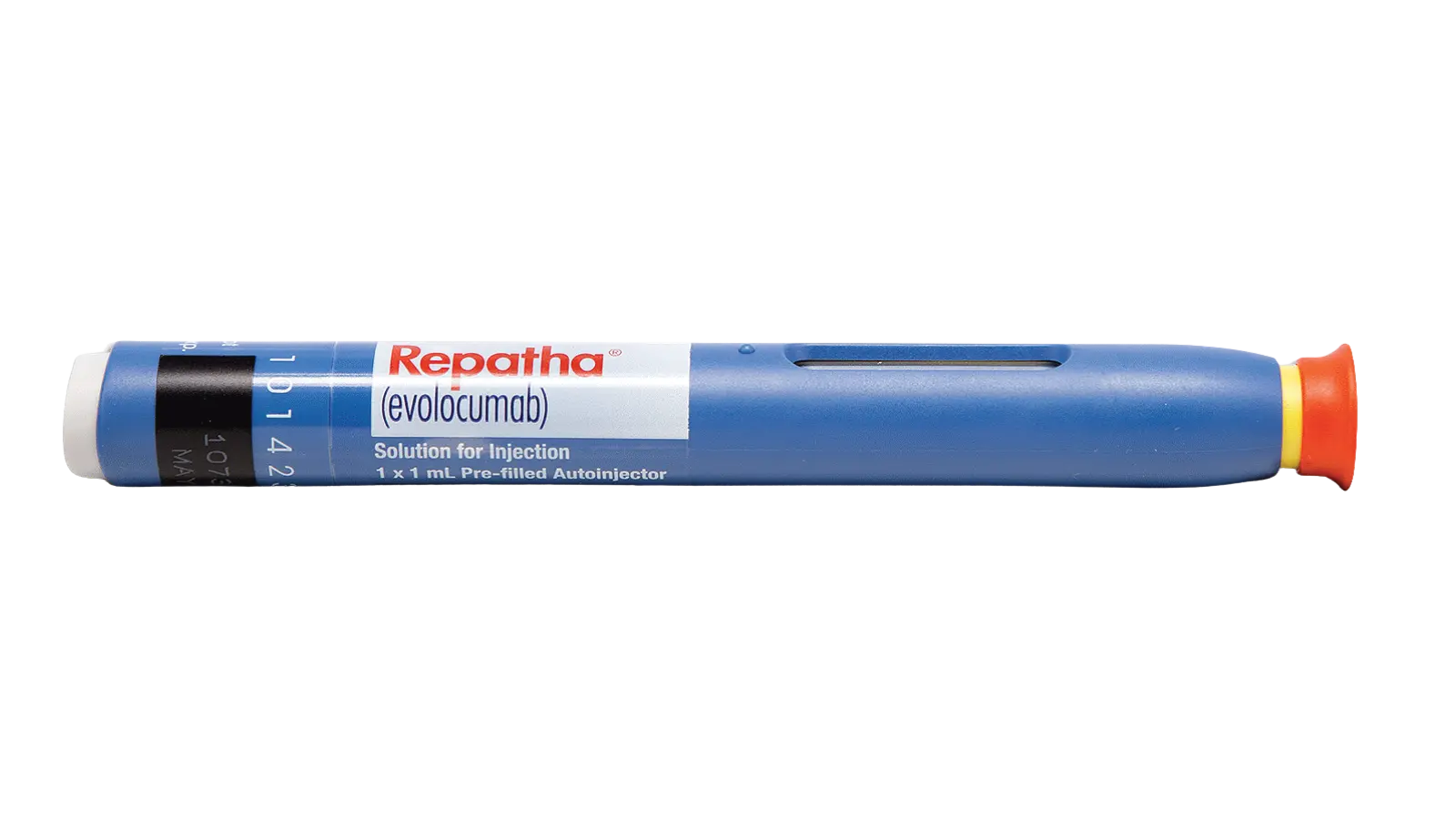
If you remember Pushtronex, you may have used it. If you have not, here is what it was: a hands-free, on-body delivery system that infused the 420 mg monthly dose of Repatha (evolocumab) over a few minutes once you applied it to your stomach or thigh. Amgen has since shifted Repatha distribution toward the SureClick auto-injector and pre-filled syringe formats, but the underlying monthly dosing option that Pushtronex delivered remains.
The question that matters to anyone searching for this is the same now as it was then: did the monthly schedule actually work, and what should you do if you were on it?


What Pushtronex Was Trying to Solve
Pushtronex was the brand name for an automated on-body infusor that delivered the 420 mg monthly dose. The clinical question for any monthly dosing option is whether the drug stays at high enough levels between doses to keep clearing LDL cholesterol from the blood.
Evolocumab has an effective half-life of 11 to 17 days. After a 420 mg subcutaneous dose, peak LDL drops happen about two weeks later, then drift back toward baseline over the rest of the month. Because evolocumab works by binding to PCSK9 in a saturable way, a single big dose is consumed gradually over the month rather than circulating at constant high levels, so the math actually does work for monthly dosing.
Population pharmacokinetic modeling across more than 5,000 subjects confirmed that 420 mg monthly produces similar drug exposure (AUC) and similar LDL reductions to 140 mg every two weeks. No dose adjustment is necessary based on body weight, age, sex, race, hepatic impairment, renal impairment, or whether you are taking statins.
How the Monthly and Every-Two-Week Schedules Compared
| Outcome | 140 mg Every 2 Weeks | 420 mg Monthly | Source |
|---|---|---|---|
| LDL-C reduction | ~55-75% | ~55-75% | |
| Time to peak LDL drop after dose | ~1 week | ~2 weeks | |
| Major cardiovascular events (FOURIER) | HR 0.85 vs placebo (combined) | HR 0.85 vs placebo (combined) | |
| Effective half-life | 11-17 days | 11-17 days | |
| Long-term safety signal at 8 years | None | None |
Because the cardiovascular trials let patients pick a schedule and combined the analyses, the head-to-head answer in randomized trials is that nothing of clinical importance distinguishes them.
Did the Monthly Dose Actually Cut Heart Attacks?
Two large open-label extensions enrolled 4,465 patients off prior phase 2 or 3 studies and randomized them to either 140 mg every two weeks or 420 mg monthly versus standard care. LDL cholesterol fell by about 60% across the monthly and every-two-week groups through 11 months of follow-up. This was the OSLER program, and it was the first long-term test of monthly dosing.
The bigger answer came from FOURIER, a randomized trial of 27,564 patients with established atherosclerotic cardiovascular disease on statin therapy. Patients were randomized to either 140 mg every two weeks or 420 mg monthly subcutaneous injections, or matching placebo. After a median of 2.2 years:
- Median LDL cholesterol fell from 92 mg/dL at baseline to 30 mg/dL on Repatha, a 59% reduction
- The primary composite (cardiovascular death, heart attack, stroke, hospitalization for unstable angina, or coronary revascularization) was 15% lower on Repatha, with a hazard ratio of 0.85
- The harder secondary endpoint of cardiovascular death, heart attack, or stroke was 20% lower (HR 0.80)
- Adverse event rates were similar to placebo, with the only excess being slightly more injection-site reactions in the Repatha group
The cardiovascular benefit was consistent across patient subgroups, and even patients in the lowest LDL quartile at baseline still benefited. A separate analysis of the 22,351 patients with prior heart attacks found that higher-risk subgroups, including those with multiple prior heart attacks or residual multivessel coronary disease, saw three-year absolute risk reductions over 3% versus about 1% in lower-risk subgroups.
What Eight Years of Follow-Up Looked Like
A common worry with PCSK9 inhibitors and any infrequent dose is what happens when you sit on the drug for years. Pooled FOURIER open-label extension data, with maximum drug exposure of 8.4 years across 6,635 patients, told a clear story. Median LDL cholesterol stayed around 30 mg/dL, and 63% of patients hit LDL below 40 mg/dL.
Serious adverse events, muscle-related events, neurocognitive events, and new-onset diabetes did not exceed the placebo rates from the parent trial and did not increase over time. Patients originally randomized to Repatha had a 23% lower risk of cardiovascular death (HR 0.77) compared to those originally on placebo.
OSLER-1, a separate four-to-five-year extension of the phase 2 program, reached similar conclusions. LDL cholesterol stayed reduced by about 56 to 57% across years 2, 3, 4, and 5 of the trial. Discontinuation due to adverse events over up to 5 years was 5.7%.
Prescribed by a licensed physician. Sent to your pharmacy.
What the Drug Did to Lp(a)
Lipoprotein(a), or Lp(a), is a genetically determined heart-disease risk factor that statins barely touch. In FOURIER, evolocumab reduced Lp(a) by a median of 26.9% at 48 weeks. The reduction translated into incremental cardiovascular benefit: patients with baseline Lp(a) above the median saw a 23% reduction in the risk of coronary heart disease death, heart attack, or urgent revascularization (HR 0.77), versus 7% in those at or below the median.
A controlled mechanistic study of 63 men with elevated Lp(a) showed how evolocumab gets that reduction. As monotherapy, evolocumab cut Lp(a) production by 36%; combined with high-dose atorvastatin, it accelerated Lp(a) clearance by 59% instead. The dual mechanism is unusual among lipid-lowering drugs.
Why People Liked Monthly Dosing
Long-term persistence with Repatha was a recurring theme across the extension trials. In OSLER-1, only 5.7% of patients discontinued evolocumab for adverse events over up to 5 years, and the LDL reduction stayed steady the whole time. The 4-year follow-up confirmed sustained LDL drops of 57 to 61% across the cohort.
A 2019 review of self-injection device design across multiple monoclonal antibodies argued that giving patients a choice of devices, including pre-filled pens, pre-filled syringes, electronic injection devices, and on-body systems, improves adherence by letting people pick what fits their lifestyle. The Pushtronex on-body infusor was Repatha's contribution to that portfolio for patients who wanted one needle event per month instead of two.
What's Available Now and What to Bring to Your Doctor
Repatha is currently sold through the SureClick auto-injector and pre-filled syringe, both of which can deliver either the 140 mg every-two-week or 420 mg monthly dose. The clinical evidence underlying these formats is the same as it was for Pushtronex, because the molecule and the dose have not changed.
If you are considering starting Repatha and the monthly schedule appeals to you, the question to bring to your prescriber is no longer "Pushtronex or every-two-week?" but rather "monthly or every-two-week, with the device options available today?" The trial answer continues to be that the cardiovascular benefit is essentially the same.
Instalab's Repatha program pairs the prescription with physician evaluation, lab monitoring of LDL and Lp(a) over time, dose adjustments based on your response, and clinician follow-up. The program supports either dosing schedule.
What This Means If You Used Pushtronex
If you were on the monthly 420 mg schedule via Pushtronex and your LDL response was good, the case for staying on monthly dosing through whichever current device your insurance and pharmacy support is clear. The LDL drop and the cardiovascular benefit both came from the dose and the molecule, not the on-body infusor.
If your LDL never quite hit the target you and your clinician wanted, the more promising lever is your statin regimen or whether your Lp(a) needs a separate treatment plan. Neither depends on which Repatha device you use.