
Repatha SureClick 140 mg/mL: Inside the Pen That Cuts LDL by Two-Thirds
The Repatha SureClick is a thumb-sized prefilled autoinjector that delivers 140 milligrams of evolocumab in a single click every two weeks, and within four weeks of the first injection LDL cholesterol drops by roughly two-thirds. That reduction is durable: in a four-year extension trial, patients who stayed on the drug held a 57% LDL reduction at year four.
The numbers translate into fewer heart attacks and strokes. In the largest cardiovascular outcomes trial, evolocumab cut total cardiovascular events by 18% over a median of 2.2 years on top of statin therapy.
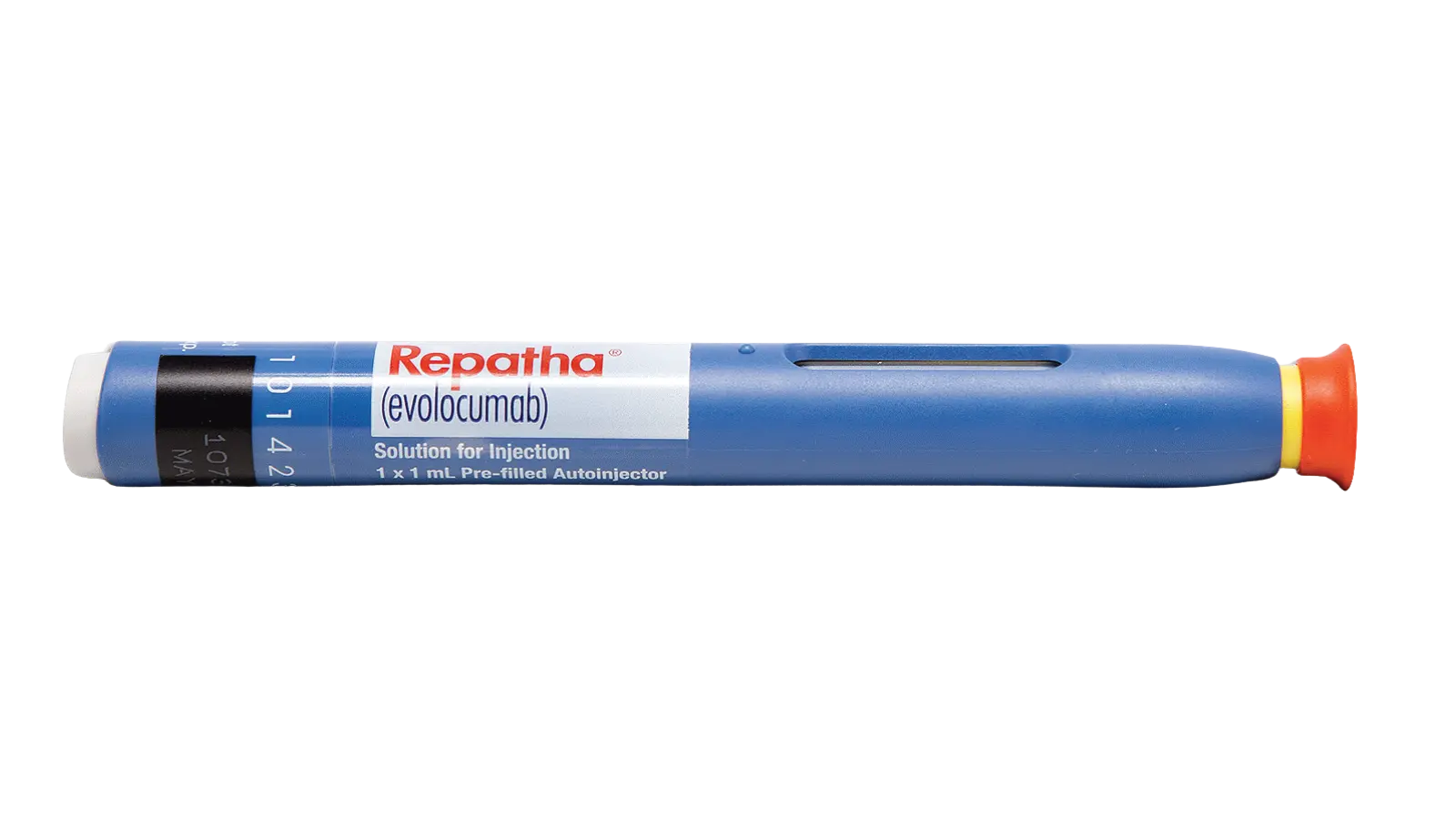
The pen itself is small (a thumb-length white plastic injector), but the protection it offers is real. Knowing what's in it, how to use it, and what to expect matters for anyone about to start the regimen.


What's Actually in the Pen
The "140 mg/mL" on the label means each SureClick contains 140 milligrams of evolocumab in one milliliter of solution. Evolocumab is a fully human monoclonal antibody, an immune protein engineered to bind and disable PCSK9, a circulating protein that controls how many LDL receptors your liver displays on its cell surface. When PCSK9 is blocked, the liver puts more LDL receptors out, and those receptors pull more cholesterol particles out of your bloodstream.
The injection itself is one milliliter pushed into the fat layer just under the skin. The recommended sites are the abdomen (avoiding the area right around the navel), the front of the thigh, or the back of the upper arm if someone else is helping. Each pen is single-use; you press it against the skin, hold while the spring drives the dose in, and dispose of it after the audible click and the visible green plunger confirm full delivery.
What 140 mg Every Two Weeks Does to LDL
A 12-week trial in 421 adults with type 2 diabetes on a maximum-tolerated statin found evolocumab dropped LDL by 65% on average compared to placebo, with similar reductions in non-HDL cholesterol and other apoB-containing lipids. A secondary analysis of 21,768 patients from the FOURIER trial reported a median 66% LDL reduction at week 4, and 99.5% of patients had at least some response. Only 0.5% had no apparent reduction in their LDL.
The magnitude of LDL lowering looked the same across age, gender, race, ethnicity, region, glucose tolerance, and baseline cardiovascular risk.
Pharmacokinetic studies fill in the timing. After the first injection, evolocumab binds and clears circulating PCSK9 within four hours, and LDL hits its lowest point about a week later. Because the half-life is 11 to 17 days, the second injection at week 2 keeps the level steady; by month one most people are at the long-run reduction their individual biology will sustain. Patients who take the pen for four years see roughly 57% LDL reduction at year four (the year-one reduction was 61%, so the drift over time is small).
How the SureClick Q2W Compares to the Monthly Dose
Repatha is dosed at two equivalent regimens: 140 mg every two weeks (one SureClick) or 420 mg once monthly (three SureClicks given back-to-back at the same visit). Both produce similar LDL reductions.
In the HUA TUO trial of 241 patients in China, the placebo-adjusted LDL drop was 70.7% with 140 mg every two weeks and 69.7% with 420 mg monthly. The PROFICIO pooled analysis of 3,146 patients across four phase 3 studies found the same pattern: comparable response across both schedules, regardless of subgroup.
| Regimen | Dose Per Visit | Frequency | LDL Reduction (placebo-adjusted) | Pen Burden |
|---|---|---|---|---|
| SureClick Q2W | 140 mg (1 mL) | Every 2 weeks | ~70% | 1 pen, 26 visits/year |
| SureClick Q4W | 420 mg (3 mL across 3 pens) | Monthly | ~70% | 3 pens at once, 12 visits/year |
The biweekly schedule using the 140 mg/mL SureClick by itself is the more flexible option for most people. The cadence is easier to remember, you only do one injection per session, and you only manage refrigerated supply for one pen at a time. The once-monthly schedule trades fewer visits for three injections in a row at each one.
Prescribed by a licensed physician. Sent to your pharmacy.
What the FOURIER Trial Showed Beyond LDL
LDL reduction is a means to an end. The end is fewer heart attacks, strokes, and cardiovascular deaths.
The FOURIER trial randomized 27,564 patients with stable atherosclerotic disease to evolocumab or placebo on top of statin therapy and followed them for a median of 2.2 years. The primary endpoint (cardiovascular death, heart attack, stroke, hospitalization for unstable angina, or coronary revascularization) dropped by 15% in the evolocumab group, with a hazard ratio of 0.85.
When the analysis counted total cardiovascular events instead of just first events, the picture was stronger: an 18% reduction overall, driven by 26% fewer total heart attacks, 23% fewer strokes, and 22% fewer coronary revascularizations. For every 1,000 patients treated for three years, evolocumab prevented 22 first events and 52 total events.
The trial also asked whether the cardiovascular benefit depends on starting LDL or background statin intensity. It doesn't. Patients who entered FOURIER with LDL already below 70 mg/dL still got the same benefit (hazard ratio 0.80) as those who started higher.
Patients on the highest-potency statin (atorvastatin 80 mg or rosuvastatin 40 mg) got the same benefit (hazard ratio 0.86) as those on lesser statin doses. For high-risk patients, the SureClick adds real event reduction on top of whatever statin regimen is already in place.
The GLAGOV trial gave a complementary look at what's happening inside the arteries. In 968 statin-treated patients with documented coronary disease, 76 weeks of monthly evolocumab combined with serial intravascular ultrasound imaging showed plaque actively regressing, with 64% of evolocumab patients losing percent atheroma volume compared to 47% on placebo. The drug isn't just slowing progression; it's reversing some of it.
Safety, Side Effects, and the Long-Term Picture
The longest open-label follow-up of evolocumab is OSLER-1, which kept 1,255 patients on the drug for up to four years. The annual rate of adverse events did not climb with cumulative exposure, no neutralizing antibodies were detected, and 79% of patients persisted with treatment. The most commonly reported side effects across trials are mild injection-site reactions.
Specific clinical concerns deserve mention. Evolocumab does not cause new-onset diabetes or worsen glycemic control. In the FOURIER metabolic syndrome subgroup of 16,361 patients, evolocumab cut cardiovascular events by 17% with no increase in diabetes incidence.
The BANTING trial in patients with established type 2 diabetes confirmed neutral effects on glucose and HbA1c. Neurocognitive event rates in OSLER-1 were 0.4% on evolocumab versus 0% on standard care, a difference too small to suggest a real signal. The drug requires no dose adjustment for kidney impairment, liver impairment, age, body weight, race, or sex.
If You're About to Start the SureClick
The pen ships refrigerated and stays in the fridge until 30 minutes before use; cold injections sting more. Most people inject in the abdomen because it's the easiest site to reach yourself, but rotating across thigh and upper arm reduces local tissue irritation. The SureClick has a viewing window so you can confirm the dose was fully delivered after the audible click and the green plunger reaches the bottom.
Starting Repatha is a clinical decision that goes beyond an LDL number. Most candidates fall into one of four buckets: established cardiovascular disease with LDL still above goal on a maximum-tolerated statin, familial hypercholesterolemia, statin intolerance documented across multiple agents, or LDL still elevated despite aggressive statin plus ezetimibe.
A baseline lipid panel before the first injection, a follow-up panel at 4 to 12 weeks, and dose adjustments based on response are the standard pattern. Instalab's Repatha Program pairs you with a licensed physician who reviews your lab data, prescribes the SureClick at the appropriate dose, and tracks your lipid response over time.
References
10 studies- Interindividual Variation in Low-density Lipoprotein Cholesterol Level Reduction With Evolocumab: An Analysis of FOURIER Trial Data.
- Efficacy and Safety of Evolocumab in Individuals With Type 2 Diabetes Mellitus: Primary Results of the Randomised Controlled BANTING Study.
- Long-term Low-density Lipoprotein Cholesterol-lowering Efficacy, Persistence, and Safety of Evolocumab in Treatment of Hypercholesterolemia: Results up to 4 Years From the Open-label OSLER-1 Extension Study.
- Effect of the PCSK9 Inhibitor Evolocumab on Total Cardiovascular Events in Patients With Cardiovascular Disease: A Prespecified Analysis From the FOURIER Trial.
- Clinical Pharmacokinetics and Pharmacodynamics of Evolocumab, a PCSK9 Inhibitor.