
Semaglutide Dosage in Units: Translating the Pen, Vial, and Syringe Numbers
The full Wegovy dose is 2.4 milligrams once a week, and that single number produced a 14.9% body-weight reduction at 68 weeks in the Phase 3 trial that brought the drug to market. The number you almost never see in those trials, though, is "units."
Every Phase 3 study of semaglutide for weight loss reported doses in milligrams. "Units" only enters the picture when someone is drawing semaglutide out of a vial with an insulin syringe, which is how most compounded versions of the drug get dosed at home.
If you've been told to take "10 units" or "25 units" of semaglutide, you're using a measurement that depends on the concentration of your specific vial. Two compounded vials labeled "semaglutide" can deliver very different doses at the same unit mark on the same syringe. This is the most common source of dosing confusion in 2026, and the math behind it is worth understanding before your next injection.


What the STEP Trials Actually Used
Every approved semaglutide product for weight loss escalates the dose slowly. The standard schedule, used across STEP 1 through STEP 8, looks like this: 0.25 mg weekly for 4 weeks, then 0.5 mg for 4 weeks, then 1.0 mg, then 1.7 mg, and finally 2.4 mg starting at week 16. Patients who can't tolerate the next step stay on the previous dose until side effects settle. This 16-week titration is the reason the full effect of the drug takes months to appear.
The 2.4 mg dose isn't arbitrary. A 2018 Phase 2 trial in 957 adults tested daily semaglutide at 0.05, 0.1, 0.2, 0.3, and 0.4 mg and found weight loss kept climbing with dose. The 2.4 mg weekly target carried that dose-response into a once-weekly schedule. Across the five core STEP trials (about 5,000 patients in total), 2.4 mg weekly produced average weight losses of 9.6% to 16.0% depending on the population.
For people whose weight loss stalls on 2.4 mg, a higher 7.2 mg dose was tested in the STEP UP trial (1,407 adults) and STEP UP T2D (512 adults with type 2 diabetes). The 7.2 mg dose produced more weight loss than 2.4 mg, but with more nausea, vomiting, and dysaesthesia. The 7.2 mg dose is investigational and represents the upper end of what's been studied in published Phase 3b trials.
Daily oral semaglutide was tested for weight loss at 50 mg daily in OASIS 1 (667 adults), producing 15.1% weight loss at 68 weeks. The oral dose is roughly twenty times the weekly injected dose, which reflects the much lower bioavailability of swallowed peptide compared to injection.
Pen, Vial, and Syringe at a Glance
| Form | Brand | Typical Dose | How It's Measured | Escalation |
|---|---|---|---|---|
| Pre-set pen (weight loss) | Wegovy | 0.25 to 2.4 mg weekly | Pen click stop | 0.25, 0.5, 1.0, 1.7, then 2.4 mg over 16 weeks |
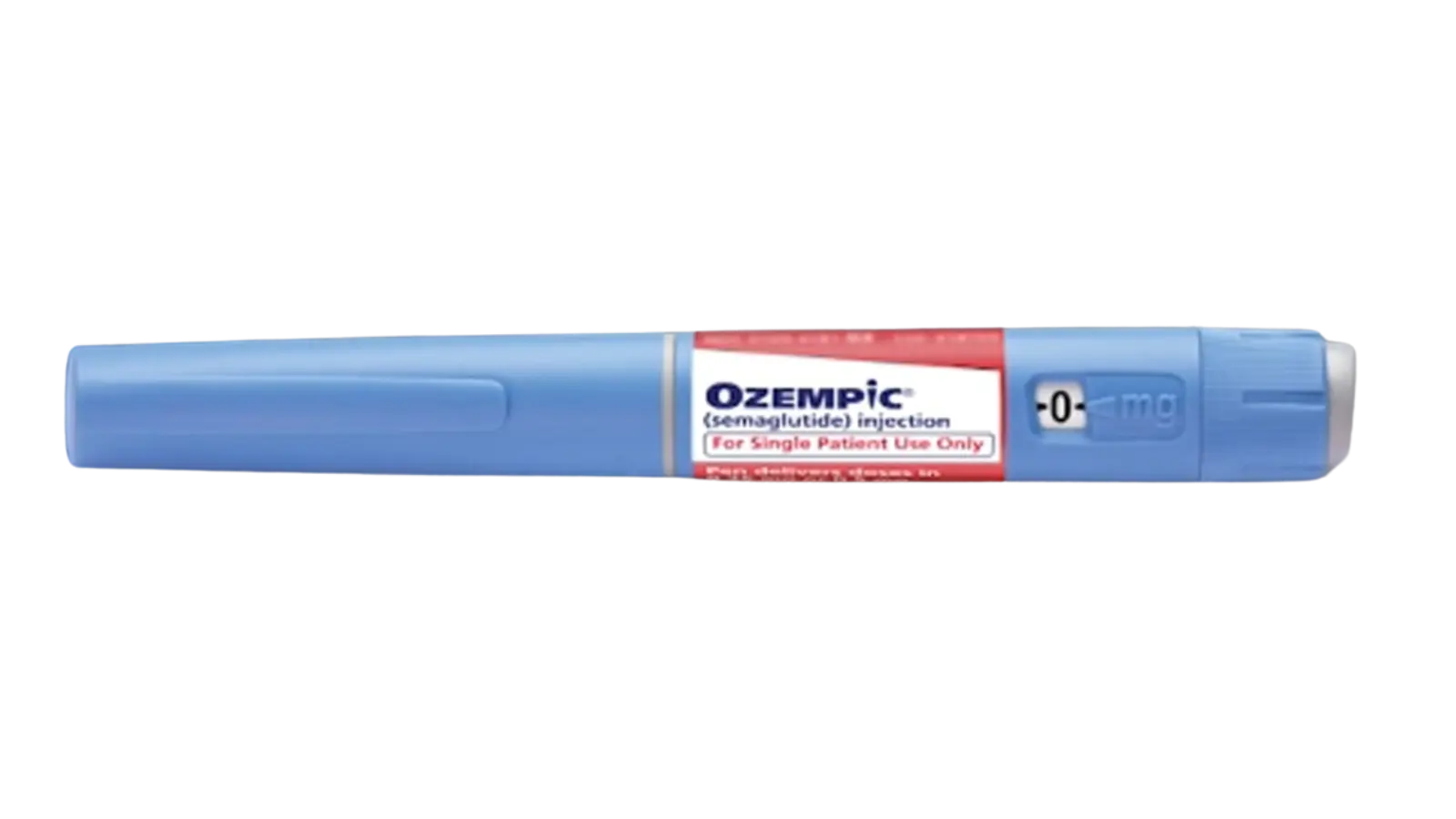
| Pre-set pen (diabetes) | Ozempic | 0.25 to 2.0 mg weekly | Pen click stop | Titrated stepwise to maintenance dose |
| Oral tablet (trial dose) | Investigational | 25 to 50 mg daily | Pill | Weekly step-up to target |
| Compounded vial | (varies) | Drawn in units on insulin syringe | "Units" on syringe | Set by prescribing provider; varies by vial concentration |
| Higher-dose pen (Phase 3b) | Wegovy 7.2 mg | Up to 7.2 mg weekly | Pen click stop | Extended titration past 2.4 mg |
How "Units" on an Insulin Syringe Actually Work
An insulin syringe is calibrated for U-100 insulin, where 100 units equals 1 mL of fluid. The unit marks on the syringe are a volume measurement, not a milligram measurement. One unit equals 0.01 mL, so ten units is 0.1 mL.
So when a compounded semaglutide vial is labeled "5 mg/mL" and your dose card says "draw 25 units," here's the math: 25 units is 0.25 mL of fluid, and 0.25 mL at 5 mg/mL is 1.25 mg of semaglutide.
Different compounding pharmacies use different concentrations. Same syringe, same 25-unit mark, four different doses:
- 1 mg/mL vial: 25 units = 0.25 mg
- 2.5 mg/mL vial: 25 units = 0.625 mg
- 5 mg/mL vial: 25 units = 1.25 mg
- 10 mg/mL vial: 25 units = 2.5 mg
This is why "units" alone tells you almost nothing about the dose. You need the concentration on the vial label, the volume on the syringe, and a calculator (or a dosing card from your prescriber). And it's why mistakes happen most often when patients switch between pharmacies, or when a compounder changes formulation mid-supply.
Translating Your Compounded Dose to a Clinical-Trial Equivalent
If you want to know whether your compounded dose is in the same range as the STEP trials, work it backward. Take the volume in mL (units multiplied by 0.01), multiply by the vial's concentration in mg/mL, then compare the result to the 0.25, 0.5, 1.0, 1.7, or 2.4 mg per week steps.
A few worked examples for a 5 mg/mL vial:
- 5 units (0.05 mL) = 0.25 mg, the starting dose
- 10 units (0.1 mL) = 0.5 mg
- 20 units (0.2 mL) = 1.0 mg, a maintenance dose used in some Ozempic regimens
- 34 units (0.34 mL) = 1.7 mg
- 48 units (0.48 mL) = 2.4 mg, the full Wegovy dose
Note how small the volume is. The full weight-loss dose at a 5 mg/mL concentration is less than half a milliliter, which is one of the reasons insulin syringes work for this purpose; they're designed for accuracy at very small volumes.
Why Clinical Guidance Always Uses Milligrams
Two reasons. First, milligrams measure the active drug. Units measure fluid, and fluid concentration varies. Second, the safety and efficacy data the FDA evaluated were all collected in milligrams. A patient on "30 units" who doesn't know the concentration of their vial can't compare their experience to any published trial.
This is also why pre-set pens (Ozempic and Wegovy) only show milligram markings. The pen mechanically delivers a fixed milligram dose regardless of internal volume changes; the user never has to think about concentration. Compounded vial-and-syringe dosing trades that simplicity for cost and supply flexibility, and shifts the burden of math onto the patient.
Instalab's GLP-1 Program ($99) pairs you with a licensed physician who prescribes branded semaglutide (Ozempic or Wegovy), tracks your labs every few months, and adjusts your dose as you go. Because the prescription is for a pen, you don't need to do unit-to-milligram conversions; the dose marked on the pen is the dose in your body.
When to Double-Check Your Dose
A few situations make a recheck worth the five minutes:
- Concentration changed. If your compounded vial arrives with a different mg/mL than your last vial, your old "units" number no longer means the same dose. Recalculate before injecting.
- Pharmacy switch. Different compounders use different concentrations; a transferred prescription does not automatically transfer the dose math.
- Side effects jumped suddenly. A sudden surge in nausea or vomiting can mean you're injecting more milligrams than you think, especially if a new vial has a higher concentration than the last one.
- Weight loss has stalled. Confirm you're actually at the equivalent of 1.7 or 2.4 mg weekly. Compounded vials at lower concentrations can leave patients sitting at sub-therapeutic doses without realizing it.
The clinical trials made one thing very clear: weight loss scales with dose. In the Phase 2 trial of daily semaglutide, average weight loss climbed from 6.0% at 0.05 mg to 13.8% at 0.4 mg over 52 weeks. In the weekly Phase 3 program, the 2.4 mg dose produced 12.4 percentage points more weight loss than placebo over 68 weeks.
Spending months at a sub-therapeutic dose because of a unit-counting error is the most common reason compounded semaglutide underperforms what the trials reported.
What This Means for Your Next Injection of Semaglutide
Read the vial label, not just the syringe. Confirm the concentration in mg/mL, do the volume math, and compare the result to the standard 0.25, 0.5, 1.0, 1.7, and 2.4 mg escalation. If the numbers don't make sense, or if you're paying for a dose that's well below the trial-tested range, that's a conversation to have with the prescriber, not something to figure out at the kitchen table while holding a syringe.
Prescribed by a licensed physician. Sent to your pharmacy.