
Tirzepatide Before and After: How Fast the Weight Comes Off and What Stays Off
In the largest tirzepatide weight-loss trial, the average person on the highest dose lost 20.9% of their body weight at 72 weeks, with more than half of the 15 mg group dropping at least 20%. That's the headline number people quote. The more useful question is when those changes show up, what they look like along the way, and what happens after.
The "before and after" picture isn't a single before and a single after. It's a curve that starts slowly during dose escalation, accelerates through months three and four, plateaus around the year mark, and reverses sharply if the drug is stopped. If you're considering tirzepatide or already on it, the time-anchored numbers below tell you what to expect.


The Headline Numbers Across the SURMOUNT Trials
Tirzepatide's pivotal trials all run roughly 72 weeks (about 17 months) of treatment. They differ in the population studied and the comparator, but the weight-loss numbers are remarkably consistent.
| Trial | Population | Dose | Duration | Mean weight loss | % reaching ≥5% loss |
|---|---|---|---|---|---|
| SURMOUNT-1 | Obesity, no diabetes | 15 mg | 72 weeks | 20.9% | 91% |
| SURMOUNT-1 | Obesity, no diabetes | 10 mg | 72 weeks | 19.5% | 89% |
| SURMOUNT-1 | Obesity, no diabetes | 5 mg | 72 weeks | 15.0% | 85% |
| SURMOUNT-2 | Obesity + type 2 diabetes | 15 mg | 72 weeks | 14.7% | 83% |
| SURMOUNT-2 | Obesity + type 2 diabetes | 10 mg | 72 weeks | 12.8% | 79% |
| SURMOUNT-3 | Obesity, after lifestyle program | 10/15 mg | 72 weeks | Additional 18.4% | 87.5% |
| SURMOUNT-4 (lead-in) | Obesity, no diabetes | 10/15 mg | 36 weeks | 20.9% | Not reported |
The pattern across trials: people without diabetes lose more than people with type 2 diabetes (about 20% vs 14% on the highest dose), and the response is dose-dependent within both groups. People who already lost some weight through diet and exercise still drop another ~18% on top, which suggests tirzepatide isn't just mopping up easy-to-lose weight.
What you don't see in the table: in SURMOUNT-1, 50% of the 10 mg group and 57% of the 15 mg group lost at least 20% of their starting weight. That's a category of weight loss that, before these drugs existed, was reliably achieved only through bariatric surgery.
What the First Three Months Look Like
The 20%-at-72-weeks endpoint hides a slow start. Tirzepatide doses up gradually to manage gastrointestinal side effects, increasing every four weeks from 2.5 mg to a maintenance dose of 5, 10, or 15 mg. A 15 mg target takes about 20 weeks to reach.
A pre-planned analysis of SURPASS-2 (the type 2 diabetes head-to-head against semaglutide 1 mg) measured how quickly people reached ≥5% body weight loss:
- Median time on tirzepatide 5 mg: 16 weeks
- Median time on tirzepatide 10 mg or 15 mg: about 12.4 weeks
- Median time on semaglutide 1 mg (the comparator): 24 weeks
So the realistic answer to "when will I see results?" is: a few pounds in the first month, more visible loss by month two, and meaningful (≥5%) loss for most people by week 12. The dramatic before-and-after photos people share online tend to come from month six and beyond, not the first eight weeks.
Body Composition: It's Not All Fat
Stepping on a scale only tells you the gross number. The body composition data tells you what kind of weight you're losing.
A SURMOUNT-1 substudy used DXA imaging to measure body composition in 160 participants at baseline and week 72. Across the pooled tirzepatide doses, the trial confirmed that the drug significantly reduces both fat mass and lean mass compared with placebo, with the proportion lost as fat consistently larger than the proportion lost as lean tissue across subgroups by sex, age, and total weight loss tier.
A 2024 meta-analysis of 22 trials covering tirzepatide and other GLP-1 drugs put a number on the ratio: lean mass loss made up about 25% of total weight lost on average, with relative lean mass (the percentage of body weight that is lean tissue) unchanged from baseline. In other words, three-quarters of the lost weight is fat.
That's the same proportion you'd expect from any large weight loss, including diet-only weight loss, so tirzepatide isn't preferentially burning muscle. The meta-analysis still flagged 25% lean loss as a watch-out, calling for strategies (resistance training, adequate protein) to preserve muscle during treatment.
Visceral fat, the deep abdominal kind that's metabolically harmful, drops disproportionately. In a type 2 diabetes MRI substudy, tirzepatide cut liver fat content and visceral abdominal fat substantially more than insulin degludec despite producing comparable weight loss. The fat being lost is the kind you most want to lose.
The Waist Goes Down Faster Than Most People Expect
Waist circumference is the practical "before and after" most people notice in the mirror. Pooled across multiple meta-analyses of tirzepatide trials:
- Tirzepatide 15 mg reduces waist circumference by about 14.6 cm vs placebo
- Semaglutide 2.4 mg, the next-best comparator, reduces waist by about 9.7 cm
- A separate meta-analysis of 12 trials covering 11,758 patients found tirzepatide cut waist circumference by 7.7 to 9.2 cm more than placebo or insulin, depending on the dose comparison
Waist loss tracks weight loss closely but isn't identical: abdominal fat tends to shrink before subcutaneous fat elsewhere on the body, so the waist drops faster than the scale would predict in the early months.
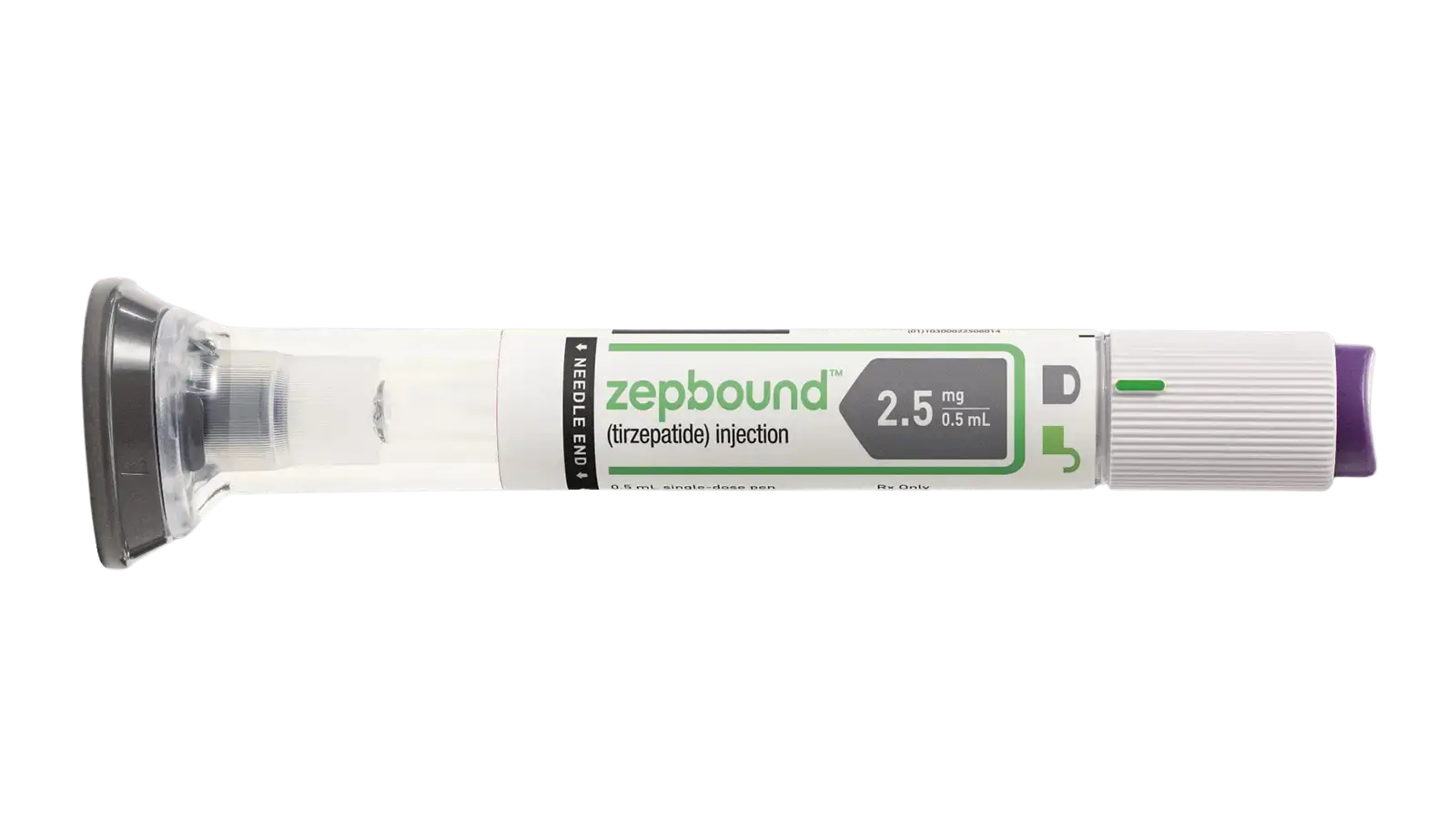
Prescribed by a licensed physician. Sent to your pharmacy.
What Happens If You Stop
This is the part of the before-and-after picture most articles skip. SURMOUNT-4 was designed specifically to answer it.
The trial used a lead-in: 670 participants with obesity took tirzepatide for 36 weeks and lost an average of 20.9%. They were then randomly assigned either to continue tirzepatide or switch to placebo for 52 more weeks. The contrast at week 88:
- Continued tirzepatide: an additional 5.5% weight loss, total of 25.3% from baseline
- Switched to placebo: 14.0% weight regain, total of 9.9% from baseline
Put differently, 89.5% of people who continued tirzepatide kept off at least 80% of their initial loss. Only 16.6% of people switched to placebo did the same.
The metabolic costs travel with the weight. In SURMOUNT-4, placebo-switched participants who regained more weight also saw larger increases in waist circumference, HbA1c, and fasting insulin compared with those who held closer to their lead-in maintenance point. The benefits of tirzepatide reverse roughly in proportion to the weight that comes back.
A 2025 meta-analysis of 8 trials covering GLP-1 and GLP-1/GIP drugs reached the same conclusion across the drug class: people who took semaglutide or tirzepatide regained an average of 9.7 kg after stopping. The pattern is consistent enough that the meta-analysis authors recommend treating these drugs as chronic therapy, similar to how blood pressure medications are managed.
Why Some People Lose 25% and Others Lose 10%
Even within the same trial and dose, weight-loss outcomes vary widely. A pooled analysis of the SURPASS type 2 diabetes trials (3,188 participants) identified the factors that predicted achieving ≥15% weight reduction:
- Higher tirzepatide dose (most consistent predictor)
- Female sex
- Younger age
- White or Asian race
- Lower baseline HbA1c, fasting glucose, and non-HDL cholesterol
- Background metformin therapy
Two of those factors are modifiable (dose and metformin co-treatment); the rest are baseline characteristics. The practical takeaway: people whose metabolic markers are closer to normal at baseline tend to lose more weight on tirzepatide, not less. This isn't because the drug works less in metabolically sicker people, but because severe insulin resistance makes weight loss harder regardless of the intervention.
How Tirzepatide Compares to Semaglutide
A 2025 head-to-head trial of semaglutide 2.4 mg versus tirzepatide for obesity in adults without diabetes showed tirzepatide ahead on every weight outcome. Outside the head-to-head, a pooled meta-analysis of 7 trials covering 5,140 patients gave the cleanest numerical comparison: tirzepatide 10/15 mg cut weight by 19.2% versus placebo, semaglutide 2.4 mg by 12.9%, with tirzepatide reducing waist circumference about 5 cm more on average (14.6 cm vs 9.7 cm vs placebo).
The gap is real but smaller than the headline difference often suggests. Both drugs comfortably outperform older GLP-1 drugs (liraglutide, dulaglutide).
What This Means If You're Considering Tirzepatide
The honest before-and-after picture: substantial weight loss is likely if you can tolerate the drug, but the timeline is gradual (visible loss by month 3, peak loss around month 18) and the changes reverse if you stop. About three quarters of what you lose will be fat, with the deep abdominal kind dropping disproportionately. Your waist will probably drop faster than the scale suggests, and your overall metabolic profile (blood pressure, glucose, lipids) will improve in step with the weight loss.
The "after" is durable only as long as you stay on therapy. SURMOUNT-4 makes the case that this is a chronic medication; people who stopped after a year regained more than half of what they'd lost within a year. If you're starting, plan as if you'll be on it for the long term, and build the muscle-preservation habits (resistance training, adequate protein) that the body composition data suggests matter.
Instalab's GLP-1 Program ($99) handles the prescription side: a licensed physician evaluates you, prescribes tirzepatide if appropriate, and adjusts your dose as you go. Lab monitoring catches the metabolic shifts the trials documented, and the dose escalation follows the same 4-week cadence used in SURMOUNT.
References
13 studies- Tirzepatide Once Weekly for the Treatment of Obesity.
- Tirzepatide Once Weekly for the Treatment of Obesity in People With Type 2 Diabetes (SURMOUNT-2): A Double-blind, Randomised, Multicentre, Placebo-controlled, Phase 3 Trial.
- Tirzepatide After Intensive Lifestyle Intervention in Adults With Overweight or Obesity (SURMOUNT-3).
- Continued Treatment With Tirzepatide for Maintenance of Weight Reduction in Adults With Obesity: The SURMOUNT-4 Randomized Clinical Trial.
- Time to Reach Glycaemic and Body Weight Loss Thresholds With Tirzepatide in Patients With Type 2 Diabetes: A Pre-planned Exploratory Analysis of SURPASS-2 and SURPASS-3.