
What Dose of Zepbound Is Most Effective: How 5, 10, and 15 mg Compare in the Trials
In the trial that got Zepbound approved, the average person on the highest 15 mg dose lost 20.9% of their body weight over 72 weeks. The 10 mg dose was 19.5%, and the 5 mg dose was 15.0%. The highest dose wins on paper, but only by 1.4 percentage points over 10 mg, while gastrointestinal side effects keep rising and discontinuation creeps up.
If you're thinking about Zepbound, the more useful question isn't which dose produces the absolute most weight loss in a trial. It's which dose produces the most weight loss YOU can actually stay on for a year or longer. Those answers can differ.


How the Three Approved Doses Compare
The three maintenance doses tested in the pivotal SURMOUNT-1 trial of 2,539 adults with obesity or overweight without diabetes were 5, 10, and 15 mg, given once weekly by subcutaneous injection after a 20-week dose-escalation period:
| Dose | Weight Loss at 72 Weeks | Lost ≥5% | Lost ≥20% | GI Side Effects | Stopped Due to Side Effects |
|---|---|---|---|---|---|
| 5 mg | -15.0% | 85% | not reported | 39% | 4.3% |
| 10 mg | -19.5% | 89% | 50% | 46% | 7.1% |
| 15 mg | -20.9% | 91% | 57% | 49% | 6.2% |
| Placebo | -3.1% | 35% | 3% | -- | 2.6% |
Weight loss numbers from SURMOUNT-1; gastrointestinal adverse event rates pooled across 10 trials; discontinuation rates from SURMOUNT-1. Most GI events were nausea and diarrhea, were mild to moderate, and clustered during the 20-week dose-escalation period.
The biggest jump is from 5 to 10 mg, where average weight loss climbs by 4.5 percentage points. From 10 to 15 mg, the additional loss is only 1.4 percentage points: the dose-response curve flattens.
Side effects keep rising linearly. Nearly half the people on 15 mg report GI symptoms at some point.
Why 10 mg Is the Sweet Spot for Many People
The pattern in SURMOUNT-1 holds up in longer follow-up. After three years of treatment, weight loss in the same trial was -12.3% on 5 mg, -18.7% on 10 mg, and -19.7% on 15 mg. Again, 10 mg captures most of the effect, with the 15 mg dose adding only one extra percentage point.
The SURMOUNT-2 trial in adults with both obesity and type 2 diabetes saw a similar pattern, though weight loss was lower across the board (people with diabetes typically lose less weight on GLP-1 drugs). At 72 weeks, 10 mg produced -12.8% and 15 mg produced -14.7%. The gap between doses was smaller than the gap between either dose and placebo.
What makes 10 mg attractive isn't just the weight loss. It's that side effects are meaningfully lower than at 15 mg without much loss of effect.
In one meta-analysis pooling 6,836 trial participants, GI events affected 39% of people at 5 mg, 46% at 10 mg, and 49% at 15 mg. Drug discontinuation due to side effects was 10% at the 15 mg dose, the highest of any dose.
For most people seeking weight loss, this means 10 mg is often the dose worth aiming for unless you're tolerating it easily and want to push for the last few percentage points.
When the 15 mg Dose Earns Its Side Effects
There are situations where the 15 mg dose makes more sense.
The first is when 10 mg isn't producing enough weight loss to hit a clinical target. For someone with severe obesity or significant weight-related complications, the extra 1 to 2 percentage points of loss can matter, especially when added up over years. Going from -18.7% to -19.7% at three years sounds small, but for a 250-pound person that's about 2.5 additional pounds.
The second is when the underlying condition responds in proportion to dose. The SURMOUNT-OSA trials in obstructive sleep apnea used the maximum tolerated dose (10 or 15 mg) and found the apnea-hypopnea index dropped by 25 to 29 events per hour. The SUMMIT trial in heart failure with preserved ejection fraction also used up to 15 mg and reduced the risk of cardiovascular death or worsening heart failure by 38%.
These trials specifically pushed to the higher dose because the cardiovascular and metabolic benefits beyond weight loss appeared to scale with exposure.
The third situation is people who simply tolerate it well. Discontinuation at 15 mg is 10%, but that means 90% of people stay on it. If you're in that 90%, the higher weight loss is worth taking.
How Dose Interacts With What You Can Tolerate
All SURMOUNT trials titrated patients up gradually from a low starting dose to their target maintenance dose, with most studies including a roughly 20-week escalation period. Real practice mirrors this: doctors generally start low and increase only if a patient is tolerating each step well.
This matters because the trials measured outcomes at fixed doses, but real practice involves a lot of titration based on side effects. In a real-world cohort study of 18,386 propensity-matched patients on tirzepatide or semaglutide, more than half discontinued the drug within a year.
Most of those discontinuations weren't safety-related; they were tolerability or access issues. So the dose that works best for you is the one you can stay on.
The early dose-finding work supports going slow. A phase 1 study tested three different titration schedules to reach 12 or 15 mg and found that lower starting doses with smaller increments produced fewer side effects. This is the rationale behind Zepbound's mandatory four-week titration steps.
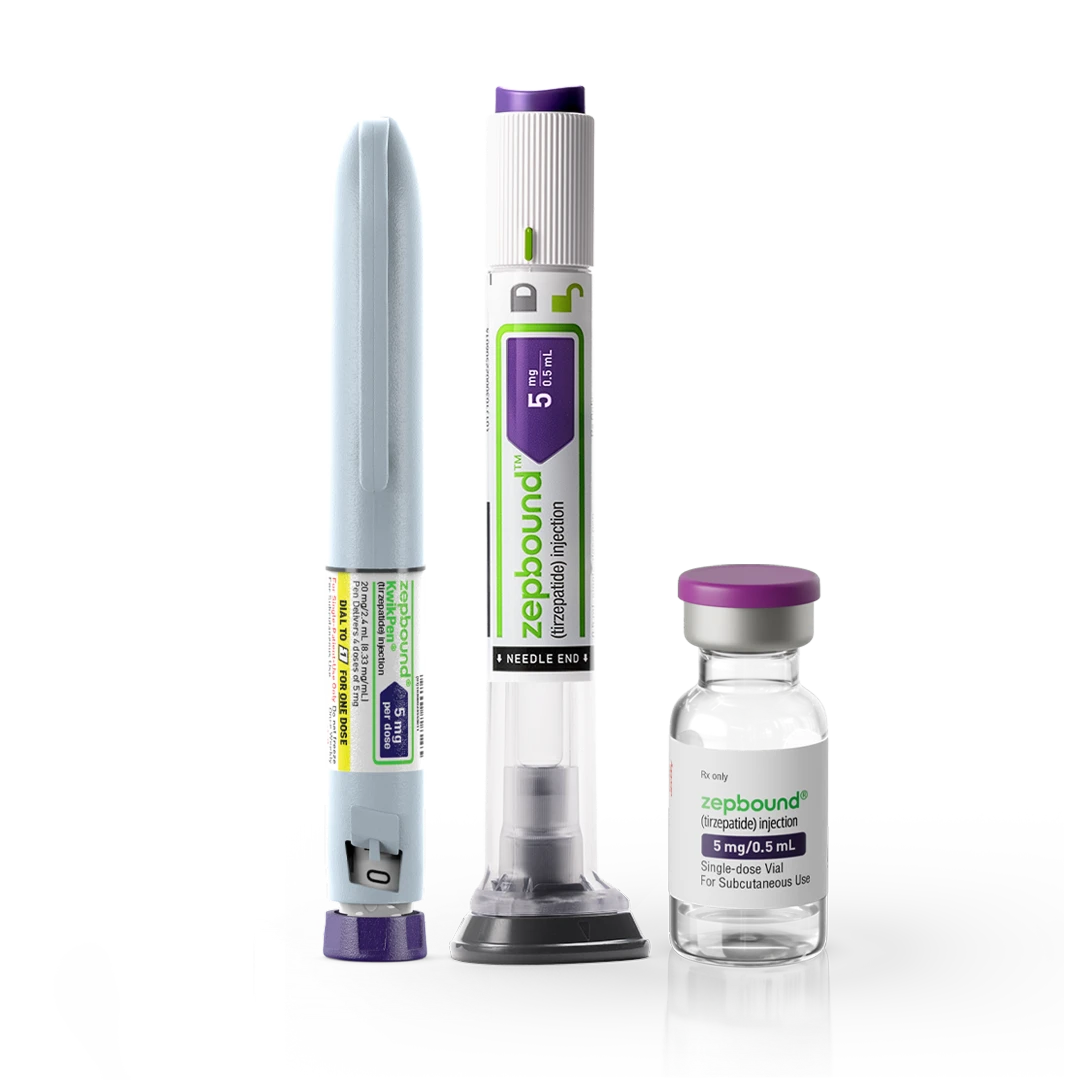
Prescribed by a licensed physician. Sent to your pharmacy.
Comparing Zepbound's Doses Against Semaglutide
The first head-to-head trial in obesity (SURMOUNT-5) compared the maximum tolerated dose of tirzepatide (10 or 15 mg) to the maximum tolerated dose of semaglutide (1.7 or 2.4 mg) over 72 weeks. Tirzepatide produced -20.2% weight loss versus -13.7% for semaglutide.
A real-world cohort study of nearly 18,000 propensity-matched patients found people on tirzepatide were 76% more likely to lose 5% or more, 154% more likely to lose 10% or more, and 224% more likely to lose 15% or more compared to those on semaglutide. Side effect rates were similar between the two drugs.
The point isn't that tirzepatide is universally better. It's that even on the lower-end maintenance doses (10 mg of tirzepatide compared to 2.4 mg of semaglutide), tirzepatide tends to produce more weight loss. This affects how to think about pushing for the 15 mg dose: you may already be ahead at 10 mg.
What Happens If You Stop
The dose question isn't only about how much weight you lose. It's also about whether the loss sticks.
The SURMOUNT-4 trial gave people 36 weeks of open-label tirzepatide titrated to their maximum tolerated dose (10 or 15 mg), then randomized them to either continue or switch to placebo. People who continued on tirzepatide kept losing weight (an additional -5.5% over 52 weeks); those who switched to placebo regained 14.0%, on average. About 90% of those who stayed on the drug maintained at least 80% of their initial weight loss; only 16.6% of those on placebo did.
This pattern matters for dose selection. If you titrate down or stop, weight tends to come back. The dose you settle on isn't a peak; it's likely the dose you'll stay on for years.
Body Composition: Not All Weight Loss Is the Same
A common worry with rapid weight loss drugs is muscle loss. A DXA substudy of 160 participants from SURMOUNT-1 found that pooled tirzepatide doses reduced body weight, fat mass, and lean mass all significantly more than placebo, while the proportion of weight lost as fat versus lean mass stayed similar across age and sex subgroups.
The substudy didn't separate the three doses, so we can't say whether the fat-to-lean ratio of weight loss differs between 5 mg and 15 mg. But across the studied doses, the relationship looks consistent: more total weight off, more fat off, with proportional lean mass changes.
Choosing Your Dose
The most effective Zepbound dose isn't a single number. It's the highest dose that meets three conditions: it's producing enough weight loss to matter clinically, the side effects are manageable for daily life, and you can stay on it long enough to maintain the weight loss.
For most people without specific cardiovascular or sleep apnea indications, that dose is 10 mg. The data show it captures most of the benefit (about 93% of what 15 mg delivers in SURMOUNT-1) with fewer GI symptoms and lower drug discontinuation rates.
For people with severe obesity, persistent weight regain, or comorbidities like obstructive sleep apnea or HFpEF where higher exposure has demonstrated direct organ benefits, 15 mg can be worth the trade-off if tolerated.
The 5 mg dose is best understood as the lowest maintenance dose, useful for people who are sensitive to side effects or who've already lost their target weight and want to avoid further loss while staying on the drug.
Instalab's GLP-1 Program ($99) pairs you with a licensed physician who prescribes Zepbound, helps you titrate to the right dose, and adjusts based on how you tolerate it and how your weight responds over time. The program includes ongoing lab monitoring, which matters because the right dose isn't static; it's the one that fits your tolerance, your goals, and your body's response over months.