
Where to Inject Zepbound: The Three Approved Sites and Why Rotation Matters
Zepbound's pen authorizes three injection sites (abdomen, thigh, and upper arm), and pharmacokinetic data show the drug absorbs about the same regardless of which one you use. The catch is what happens to the skin underneath after weeks of injecting in roughly the same place: a fibrofatty thickening called lipohypertrophy, which affects up to 60% of long-term self-injecting diabetes patients.
If you're holding your first Zepbound pen and wondering which site to use, the answer is: any of the three. The bigger question is what you'll do over the months that follow. Where you keep returning the needle, more than where you start, decides whether the medication still absorbs as expected after dozens of doses.


The Three Approved Sites for Zepbound
Eli Lilly's instructions for the Zepbound auto-injector authorize subcutaneous administration at any of these locations:
| Site | Practical Notes | What to Watch For |
|---|---|---|
| Abdomen | Easiest to see and reach for self-injection. Stay at least 2 inches away from the navel. | Avoid scars, stretch marks, or visibly thinned skin. Absorption through fibrotic tissue is unpredictable. |
| Upper thigh | Use the front or outer side, not the inner thigh. | If you're lean, pinch the tissue up to clear the muscle layer underneath. |
| Back of upper arm | The hardest site to reach yourself. Often easier with help. | A thin upper arm makes accidental muscle hits more likely; this is a common reason people stop using this site. |
Each of these sites has enough subcutaneous fat for the once-weekly dose to absorb reliably. The Zepbound pen uses a fixed needle designed to deliver into the fat beneath the skin, not into muscle. Hitting muscle changes how fast the drug enters circulation and tends to sting more.
Why Sites Look the Same to the Drug
Pharmacokinetic data suggest your site choice doesn't change how Zepbound works in any practical sense. A radiolabeled study tracking how tirzepatide moves through the body found that after a single subcutaneous dose, about 66% of the drug came out in urine and 33% in stool, with the parent compound being the major circulating molecule throughout. The modeling work that followed concluded the drug's absorption follows a two-compartment pattern with a half-life around five days, which is what makes once-weekly dosing feasible. The drug doesn't spike and crash between doses.
Direct head-to-head pharmacokinetic data comparing tirzepatide injected in the abdomen versus the thigh versus the arm hasn't been published in peer-reviewed literature. The closest analog is recent work on a long-acting weekly insulin specifically designed to be tested across the abdomen, thigh, and upper arm in healthy participants. For a drug with a five-day half-life like tirzepatide, small differences in early absorption are unlikely to matter clinically across a dosing week.
The practical takeaway: pick a site that's reachable and free of visible skin issues. Rotate among the three. Avoid bruises, scars, redness, or any patch where the skin already feels firmer than its surroundings.
The Reason to Rotate Sites: Lipohypertrophy
Lipohypertrophy is the soft, lumpy, fibrofatty tissue that forms when the same skin site receives repeated injections. It's not just a cosmetic problem: drugs absorbed through lipohypertrophic tissue show erratic, slowed kinetics, which leads to less predictable effects.
In insulin therapy, where the complication is best characterized, lipohypertrophy is associated with poorer glycemic control, more glucose variability, and unexplained hypoglycemia.
A clinical trial in 60 diabetes patients tested whether teaching a structured rotation protocol could reduce the incidence and grade of lipohypertrophy over six months. The intervention group, who learned an anti-clockwise rotation method, showed a measurable reduction in lipohypertrophy and improved glycemic control compared to controls.
GLP-1 specific lipohypertrophy data is limited because tirzepatide and its peers haven't been on the market long enough to study at insulin's scale. The basic biology of subcutaneous injection isn't drug-specific, though: any large peptide injected repeatedly into the same tissue can trigger a local fibrotic response over time.
A randomized phase 2b trial of weekly semaglutide in 108 people with HIV-associated lipohypertrophy was specifically designed to test what GLP-1 therapy does to adipose tissue distribution in that group. None of this means Zepbound is causing widespread lipohypertrophy. It does mean the standard advice from diabetes care, rotate your injection sites, isn't a relic of insulin's history.
A simple rotation pattern: think of each site as a clock face. Each week, move at least one inch from the previous spot. After eight to twelve injections in one site, switch to a different site.
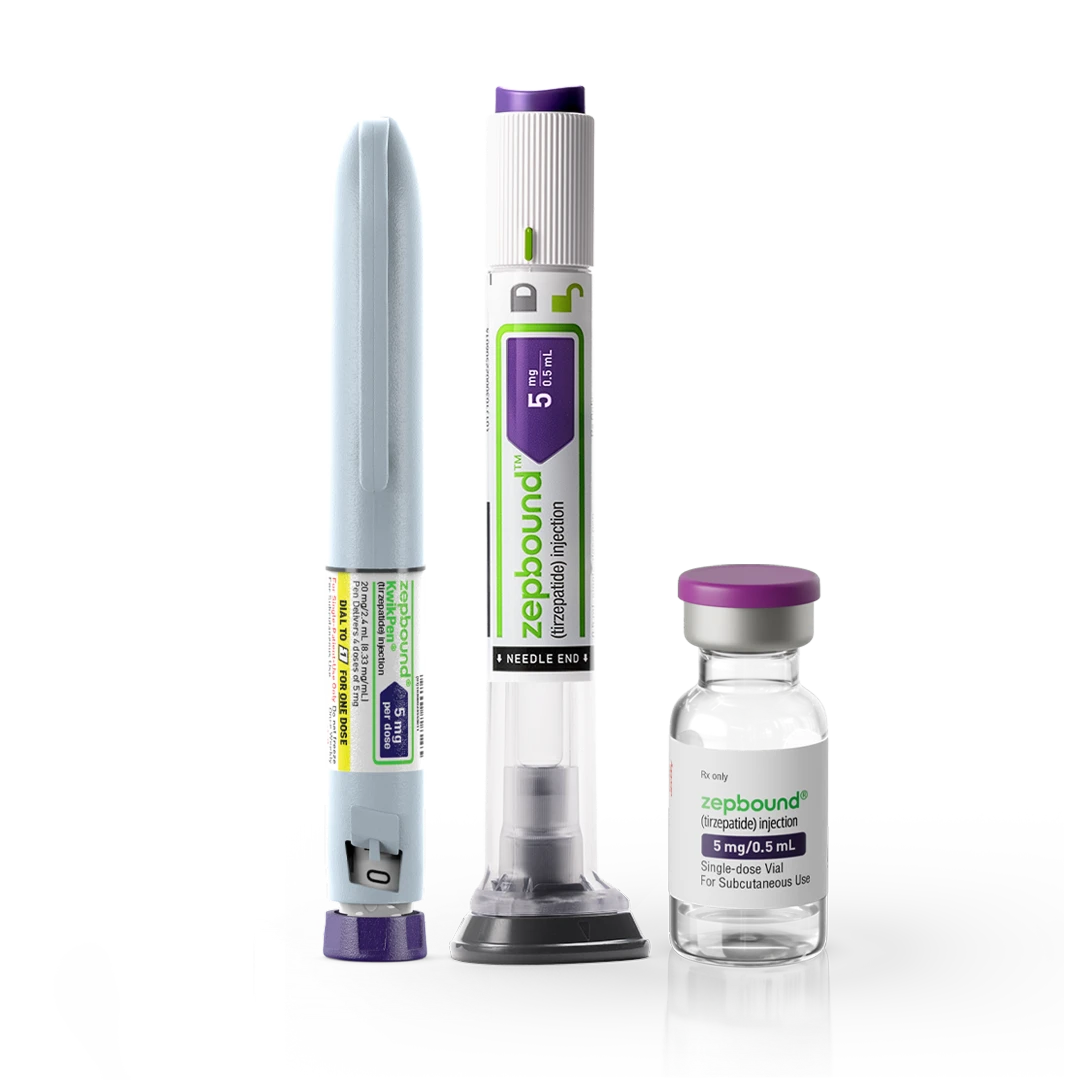
Prescribed by a licensed physician. Sent to your pharmacy.
Technique That Matters More Than Location
The site you pick matters less than getting the technique right at whichever site you use. Common points where home self-injection goes wrong:
- Pinch the skin to lift fat away from muscle. Especially important on lean arms and thighs. The Zepbound pen's needle is short, but a perpendicular jab into a lean upper arm can still hit muscle.
- Inject perpendicular, not at an angle. The pen is designed for 90-degree delivery into the fat layer.
- Let the drug come close to room temperature before injecting. Cold injections sting more. Take the pen out of the fridge 15 to 30 minutes before dosing.
- Don't reuse the same exact spot in consecutive weeks. Even within a single site, vary by an inch or more each time.
- Avoid injecting through bruises, redness, or hard patches. Move at least an inch away from any visible mark or palpable lump.
A 2025 cross-sectional study of 95 patients on weekly injectable dulaglutide and 135 on daily oral semaglutide found that 96.8% of dulaglutide users reported following the package leaflet administration instructions consistently, compared with 90.4% of oral semaglutide users. The gap is small but real, and it points at something specific to once-weekly injectables: the simpler the schedule, the more reliably people get the technique right. Whether that holds for any individual user comes down to clear instructions and the time to follow them.
What This Means for Your Weekly Routine
Two questions decide where to put the needle this week:
- Can I see and reach this site comfortably? If yes, it's a candidate.
- Has the skin in this area been used in the last few weeks, or does it feel different from the surrounding tissue? If yes, pick a different spot.
Adherence is the bigger problem in the GLP-1 category overall. A 2025 systematic review of 54 studies on injectable cardiovascular medications found that once-weekly therapies generally have higher long-term persistence than daily ones, but discomfort, needle anxiety, side effects, and cost still drive a meaningful drop-off. A separate study of 434 patients on once-weekly semaglutide found that only about a third (32.5%) met the threshold for adherent refilling, with the rest using the drug irregularly or stopping altogether.
If you're already on Zepbound, the practical answers to "where to inject" come down to picking from the three approved sites, rotating within and between them, and giving the technique points the same attention you give the dose. If you're considering Zepbound and haven't started, Instalab's GLP-1 Program ($99) pairs you with a licensed physician who handles your prescription, dose adjustments over time, and the lab monitoring that goes with the drug.