
Zepbound Results: How Much Weight to Expect at 3, 6, and 12 Months
In the landmark trial that got Zepbound approved, the average person on the 15 mg dose lost 20.9% of their starting body weight over 72 weeks. That number gets quoted constantly in marketing copy, but it hides three things every prospective patient should know: results depend heavily on dose, real-world losses tend to be smaller, and the weight comes back fast if you stop the drug.
This is what tens of thousands of patients across clinical trials and real-world studies tell us about what to actually expect.


The Headline Numbers from SURMOUNT-1
Zepbound (tirzepatide) was approved for weight management based on SURMOUNT-1, a 72-week randomized trial in 2,539 adults with obesity or overweight but without type 2 diabetes. Participants averaged 104.8 kg (about 231 lbs) at baseline and a BMI of 38. They were assigned to a weekly injection of one of three doses or placebo, alongside diet and exercise counseling.
By week 72, the results split cleanly by dose:
| Dose | Avg. weight loss | % losing 20%+ |
|---|---|---|
| 5 mg | 15% | (not reported) |
| 10 mg | 19.5% | 50% |
| 15 mg | 20.9% | 57% |
| Placebo | 3.1% | (not reported) |
Across the three tirzepatide doses combined, 85% to 91% of participants lost at least 5% of their body weight, compared with 35% in the placebo group. Cardiovascular and metabolic markers also improved across the board. Side effects were mostly mild-to-moderate gastrointestinal issues that clustered during the dose-escalation period.
For context, no other anti-obesity medication has matched these numbers. A 2024 network meta-analysis pooling 154 trials with 112,515 participants ranked tirzepatide first for weight loss, blood pressure reduction, glucose lowering, and triglyceride reduction among all FDA-approved anti-obesity drugs. Tirzepatide 15 mg had a risk ratio of 10.24 for achieving 15% or more weight loss versus placebo, based on 35,000 patients across 31 trials.
What Happens Month by Month
Weight loss on Zepbound is not linear. Most studies report rapid losses in the first 3 to 6 months, then a slower trajectory as the dose escalates and the body adapts.
A retrospective study of 18,386 propensity-matched patients compared tirzepatide head-to-head with semaglutide. The on-treatment weight difference grew over time: tirzepatide patients lost 2.4 percentage points more at 3 months, 4.3 more at 6 months, and 6.9 more at 12 months. The longer you stay on the drug, the more the gap widens.
The 85% to 91% figure for losing at least 5% only happens in trial conditions, where dose escalation follows a strict 20-week protocol. In a real-world cohort of 4,177 people without diabetes, dose escalation was slower than the protocol but still produced clinically meaningful weight reduction among those who stayed on it for six months or more.
Real-World Results Are Smaller Than Trial Results
This is the most important asterisk on the headline numbers. Trial protocols control for cost, side-effect intolerance, and supply chain issues. Real life doesn't.
The SHAPE study followed 9,916 patients with overweight or obesity (without diabetes) for one year. Average weight loss on tirzepatide was 17.2 kg, or 16.5% of body weight. That's lower than the 20.9% from SURMOUNT-1, even though both used a one-year-plus window.
The biggest reason: only 25.9% of tirzepatide patients in SHAPE ever reached the maximum 15 mg dose, compared to a much higher escalation rate in the trial.
Another real-world study of 7,881 patients found an even larger gap. Mean weight loss at one year was just 8.7% across the full sample. The reason became clear when researchers broke it down by adherence:
- All 7,881 patients (mean): 8.7% weight loss
- Discontinued within 3 months: 3.6% weight loss
- Discontinued at 3 to 12 months: 6.8% weight loss
- Stayed on the drug the full year: 11.9% weight loss
Even the full-year group fell short of trial numbers because 80.8% were stuck on low maintenance dosages, often because of cost or insurance friction. The takeaway: dose persistence matters more than starting the drug.
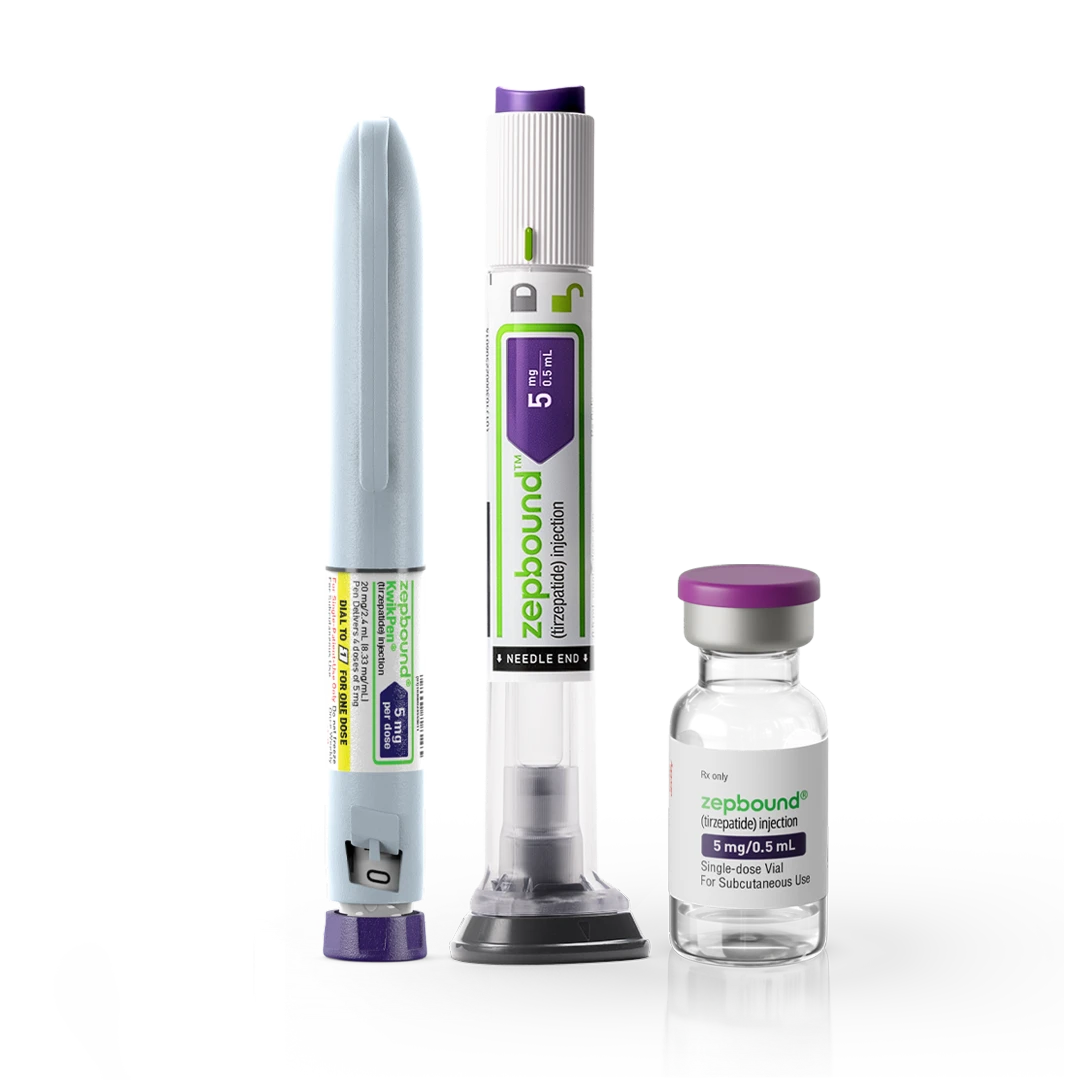
Prescribed by a licensed physician. Sent to your pharmacy.
Why People Stop, and What That Costs
A cross-sectional analysis of 288 patients who discontinued semaglutide or tirzepatide for obesity tracked the reasons:
- 47.6% stopped because of cost or insurance issues
- 14.6% couldn't tolerate side effects
- 11.8% couldn't fill the medication due to shortages
- 2.4% switched to a compounded version
- 1.7% stopped because they weren't losing enough weight
Cost dominates. If you can't sustain access to the drug at an effective dose, the results in the trial papers are not the results you're going to get.
What Happens If You Stop
This is where Zepbound results get sobering. SURMOUNT-4 was specifically designed to test what happens after withdrawal. After a 36-week lead-in where everyone took tirzepatide and lost an average of 20.9%, participants were randomized to either continue the drug or switch to placebo for the next 52 weeks.
The continuers kept losing, ending at 25.3% total weight loss. The placebo switchers regained on average 14% of their body weight, dropping the placebo group's overall result to just 9.9% net loss. By the end, 89.5% of continuers had maintained at least 80% of their initial weight loss, versus only 16.6% of the placebo group.
A 2025 post-hoc analysis dug into what regain meant for health markers in the 308 SURMOUNT-4 participants who hit at least 10% loss and then stopped the drug. The more weight participants regained, the more their improvements reversed:
| Weight regain category | Waist circumference change | Systolic BP change | HbA1c change |
|---|---|---|---|
| Less than 25% regained | +0.8 cm | +6.8 mm Hg | +0.14% |
| 25-50% regained | +5.4 cm | +7.3 mm Hg | +0.15% |
| 50-75% regained | +10.1 cm | +9.6 mm Hg | +0.27% |
| 75% or more regained | +14.7 cm | +10.4 mm Hg | +0.35% |
Fasting insulin spiked 46% in those who regained 50-75% of their loss and 26% in the 75%+ regain group. The pattern is consistent: the metabolic benefits of the weight loss largely follow the weight back up.
Beyond Weight Loss
Zepbound's measured effects extend past the scale. In the same 154-trial meta-analysis, tirzepatide showed the largest drops in systolic blood pressure (mean difference of about 5.7 mm Hg), triglycerides, fasting glucose, and HbA1c among all weight loss drugs. A separate trial in adults with moderate-to-severe obstructive sleep apnea found tirzepatide reduced the apnea-hypopnea index and hypoxic burden enough to suggest a meaningful cardiovascular benefit.
A population modeling study estimated that if all 93.4 million SURMOUNT-1-eligible US adults took 15 mg tirzepatide, 70.6% would hit at least 15% weight loss and the obesity prevalence would drop by 58.8%. That same modeled population would see 10-year cardiovascular risk drop from 10.1% to 7.7%, translating to about 2 million preventable events over a decade.
The ongoing SURMOUNT-MMO trial is testing whether tirzepatide actually prevents heart attacks, strokes, and deaths over time in 15,000 adults with obesity but without diabetes. Until that data lands, the cardiovascular case for Zepbound rests on improved risk factors, not on hard outcomes.
What This Means If You're Considering Zepbound
The 20.9% headline is real, but only under specific conditions: full 72 weeks, full dose escalation to 15 mg, full adherence, full lifestyle support. The closer your real situation gets to that, the closer your results will get to the trial.
If you discontinue early, expect to land in single-digit percentage loss. If you stay on but can't reach the highest doses, expect 12-17% loss at one year. If you stop entirely, expect to regain most of the weight within a year and lose most of the cardiometabolic gains with it.
Instalab's GLP-1 Program ($99) pairs you with a licensed physician who prescribes Zepbound or other GLP-1 medications, monitors your labs throughout treatment, and adjusts your dose over time. The maintenance-dose persistence problem visible in the real-world studies is exactly what ongoing clinical support is designed to address.
References
14 studies- Tirzepatide Trial Demonstrates Substantial Weight Loss.
- Efficacy and Safety of Tirzepatide, GLP‐1 Receptor Agonists, and Other Weight Loss Drugs in Overweight and Obesity: A Network Meta‐analysis.
- Safety and Effects of Anti-obesity Medications on Weight Loss, Cardiometabolic, and Psychological Outcomes in People Living With Overweight or Obesity: A Systematic Review and Meta-analysis.
- Continued Treatment With Tirzepatide for Maintenance of Weight Reduction in Adults With Obesity: The SURMOUNT-4 Randomized Clinical Trial.
- Tirzepatide for the Treatment of Obstructive Sleep Apnea: Rationale, Design, and Sample Baseline Characteristics of the SURMOUNT-OSA Phase 3 Trial.