
Zepbound for Weight Loss: How Much Comes Off, and What Happens When You Stop
In the largest trial of Zepbound for weight loss, people on the highest dose lost an average of 20.9% of their body weight over 72 weeks. That's the kind of number that, before tirzepatide arrived, only showed up in bariatric surgery papers.
Zepbound is the obesity-indication brand name for tirzepatide, a once-weekly injection developed by Eli Lilly. It's the same molecule sold as Mounjaro for type 2 diabetes.
Over the past four years, the SURMOUNT trial program has tested it across populations: adults with obesity but no diabetes, adults with obesity plus type 2 diabetes, people who already lost weight through lifestyle changes, Chinese adults, and people with sleep apnea or heart failure. The pattern is consistent. Weight loss is large, dose-dependent, and largely vanishes when the drug is stopped.


The Headline Numbers, by Dose and Population
| Trial | Population | Dose | 72-week weight loss vs placebo | ≥5% weight loss | Citation |
|---|---|---|---|---|---|
| SURMOUNT-1 | Obesity, no diabetes | 5 mg | −15.0% vs −3.1% | 85% vs 35% | |
| SURMOUNT-1 | Obesity, no diabetes | 10 mg | −19.5% vs −3.1% | 89% vs 35% | |
| SURMOUNT-1 | Obesity, no diabetes | 15 mg | −20.9% vs −3.1% | 91% vs 35% | |
| SURMOUNT-2 | Obesity + type 2 diabetes | 10 mg | −12.8% vs −3.2% | 79% vs 32% | |
| SURMOUNT-2 | Obesity + type 2 diabetes | 15 mg | −14.7% vs −3.2% | 83% vs 32% | |
| SURMOUNT-3 | After 12-week lifestyle lead-in | 10 or 15 mg | −18.4% additional vs +2.5% | 87.5% vs 16.5% | |
| SURMOUNT-CN | Chinese adults | 10 mg | −13.6% vs −2.3% | 87.7% vs 29.3% | |
| SURMOUNT-CN | Chinese adults | 15 mg | −17.5% vs −2.3% | 85.8% vs 29.3% |
A few things stand out. The dose-response is real: each step from 5 mg to 10 mg to 15 mg adds a few more percentage points of weight loss. Weight loss is somewhat smaller in people who also have type 2 diabetes, around 13 to 15% at 72 weeks rather than 15 to 21%.
Nearly everyone who stays on the drug loses at least 5% of their body weight, the threshold cardiologists usually call "clinically meaningful."
How Zepbound Actually Works
Tirzepatide is a "twincretin." It activates two gut hormone receptors at once: GIP and GLP-1. GLP-1 alone is what semaglutide (Wegovy, Ozempic) does. Adding GIP appears to amplify the metabolic effects.
The drug binds GIP receptors more tightly than GLP-1 receptors and signals through them differently than the body's own incretin hormones do. That uneven, biased agonism may be why tirzepatide produces more weight loss than GLP-1-only drugs. Mechanistically, it suppresses appetite, modestly raises energy expenditure in animal studies, slows gastric emptying transiently after the first few doses, and improves insulin sensitivity even in proportion that can't be fully explained by weight loss alone.
The exact contribution of GIP to human appetite remains an open question. Reviewers note that tirzepatide's weight loss "cannot be fully explained by reduced intake or gastric emptying alone". Something about dual incretin signaling does more than the sum of its parts.
Tirzepatide vs Semaglutide: A Direct Comparison
For years, the comparison between tirzepatide and semaglutide came from indirect math across separate trials. SURMOUNT-5, the first head-to-head trial in adults with obesity but without diabetes, settled the question.
Over 72 weeks, tirzepatide produced 20.2% weight loss versus 13.7% with semaglutide. Tirzepatide patients also lost about 5 cm more from their waists.
A real-world cohort of more than 18,000 propensity-matched patients showed the same pattern. Tirzepatide users were 76% more likely to hit at least 5% weight loss, and three times as likely to hit at least 15%, compared to semaglutide users.
The on-treatment weight difference grew over time: 2.4% more weight loss at 3 months, 4.3% at 6 months, 6.9% at 12 months. Rates of gastrointestinal side effects were similar between the two drugs.
In type 2 diabetes specifically, the SURPASS-2 head-to-head trial showed tirzepatide doses produced 1.9 to 5.5 kg more weight loss and bigger HbA1c drops than semaglutide 1 mg. A 2024 network meta-analysis of 76 GLP-1-class trials covering more than 39,000 patients ranked tirzepatide as the most effective for HbA1c reduction in type 2 diabetes, and an earlier Bayesian network meta-analysis of obesity trials without diabetes reached the same ranking for weight loss.
What Happens When You Stop
This is where the picture changes. SURMOUNT-4 is the trial that everyone considering Zepbound should understand.
It started with 36 weeks of open-label tirzepatide, during which participants lost 20.9% of their body weight on average. Then patients were randomized to either continue or switch to placebo for 52 more weeks.
The continue group lost another 5.5%. The placebo group regained 14.0%. Over the full 88 weeks, people who stayed on tirzepatide lost 25.3% of their starting weight; people who switched to placebo netted 9.9%.
A 2025 meta-analysis of anti-obesity-drug discontinuation trials found that GLP-1 receptor agonist drugs, the class Zepbound belongs to, were the only subgroup with significant weight regain past 12 weeks of stopping; the regain trend grew from 1.5 kg at 8 weeks off-drug to 2.5 kg at 20 weeks. A separate real-world cohort tracking obesity treatment with semaglutide or tirzepatide found weight changes diverged sharply by whether patients stayed on the medication.
The takeaway is consistent across every dataset: Zepbound is acting like blood-pressure medication. It works while you take it. It mostly stops working when you don't.
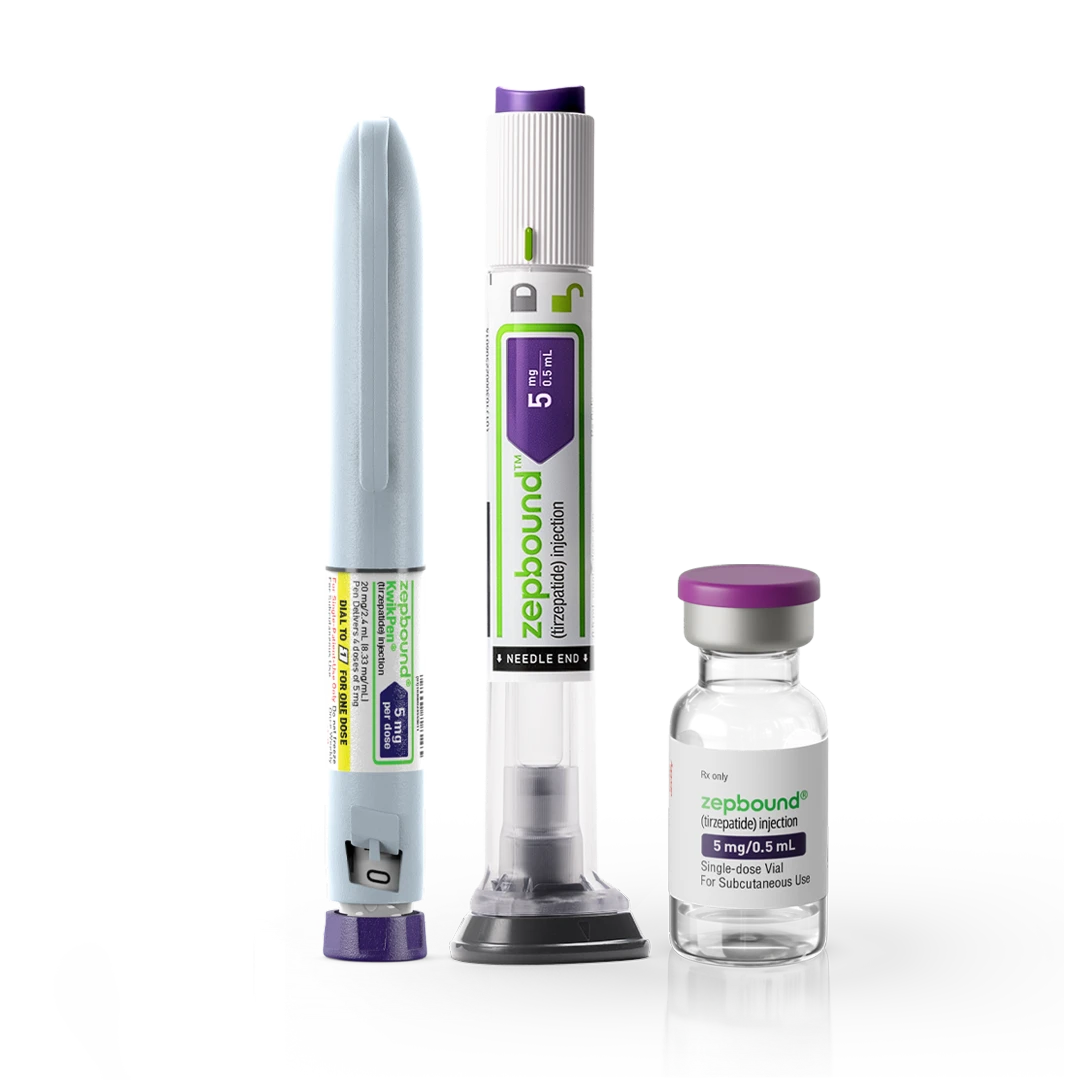
Prescribed by a licensed physician. Sent to your pharmacy.
The Three-Year Data
SURMOUNT-1 was extended to 176 weeks (about three years and four months) for participants who had both obesity and prediabetes. With continued treatment, weight loss was sustained: 12.3%, 18.7%, and 19.7% at the 5, 10, and 15 mg doses. The placebo group lost 1.3%.
The diabetes prevention numbers are striking. Over 176 weeks, only 1.3% of tirzepatide patients developed type 2 diabetes versus 13.3% of placebo patients, a hazard ratio of 0.07. Even after a 17-week off-treatment period, the gap held: 2.4% versus 13.7%.
No new safety signals turned up over three years.
For people with obesity and prediabetes specifically, that hazard ratio is one of the larger diabetes-prevention effects ever recorded for a single drug.
What About Body Composition
Not all the weight that comes off is fat. A 2024 meta-analysis of 22 trials and 2,258 participants found that GLP-1 drugs reduce both fat mass and lean mass. About 25% of the total weight loss is lean mass.
Tirzepatide and semaglutide were the most effective for fat loss but among the least effective for preserving lean mass. The relative proportion of lean mass to total body weight stayed about the same, so this isn't muscle wasting in the clinical sense. But it does mean resistance training and adequate protein matter while you're losing weight on these drugs, both for function and for what happens to your metabolism after.
Side Effects, Briefly
The most common adverse events are gastrointestinal: nausea, diarrhea, vomiting, and constipation. They cluster around dose escalation (the first few weeks at each dose level) and then tend to settle.
Serious adverse events are rare. Discontinuation rates due to side effects are typically 4 to 7% across SURMOUNT trials.
In the obstructive sleep apnea trial, tirzepatide cut apnea-hypopnea events by 25 to 29 per hour at 52 weeks alongside the weight loss, plus drops in blood pressure and inflammation markers (hsCRP). In a heart failure trial in people with preserved ejection fraction and obesity, tirzepatide cut cardiovascular death or worsening heart failure by 38% over a median 104 weeks. The cardiovascular outcomes story is still being written, with a much larger trial (SURPASS-CVOT) of 13,299 patients reading out separately.
What This Means If You're Considering Zepbound
A few takeaways from the evidence:
- The weight loss is real and large. Across populations, 70 to 90% of people on Zepbound hit at least 5% weight loss. At the 15 mg dose, 57% of trial participants lost 20% or more of their starting body weight.
- Stopping reverses most of it. Plan for ongoing therapy or a structured maintenance approach. The data on "graduating" from tirzepatide are not encouraging.
- The dose matters. Most of the effect comes between 5 mg and 15 mg; lower doses still work but produce smaller losses.
- Lean mass needs protecting. About a quarter of the weight you lose on these drugs is lean mass. Resistance training and adequate protein during the weight-loss phase are not optional.
Zepbound is also expensive and prescription-only. Getting on it requires an evaluation, monitoring during dose escalation, and labs to track metabolic outcomes.
Instalab's GLP-1 Program ($99) handles the prescribing piece: a licensed physician evaluates whether tirzepatide is appropriate, writes the prescription, and adjusts your dose as you escalate. The same physician tracks the labs that matter on these drugs (HbA1c, lipid panel, basic metabolic panel) and adjusts based on what changes.
The drug is doing the heavy lifting. The clinical wrap-around is what keeps the dose right and catches the things that need catching while you're on it.