
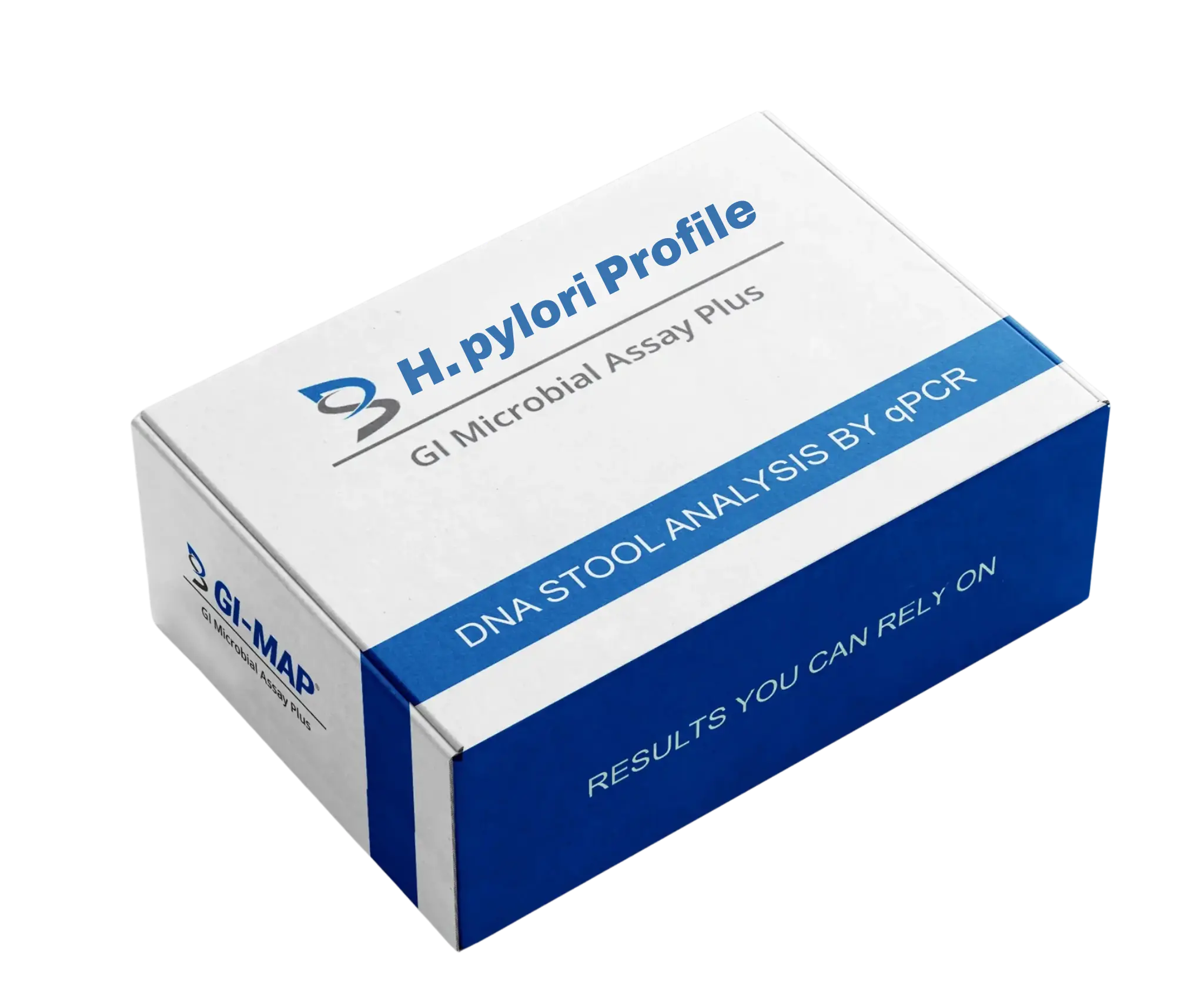
H. Pylori Profile
Detect the bacteria behind most stomach ulcers
A non-invasive stool test that detects H. pylori and reveals whether your strain is resistant or high-risk, so you can take action before ulcers or gastric damage develop.
$159$239Save $80
HSA / FSA eligible
Free shippingSpecimen:StoolCollection:SelfCLIA-certified lab:DSLResults:1-2 weeks
Simple Process
How it works
From order to insights in three easy steps — no doctor’s visit required.
1
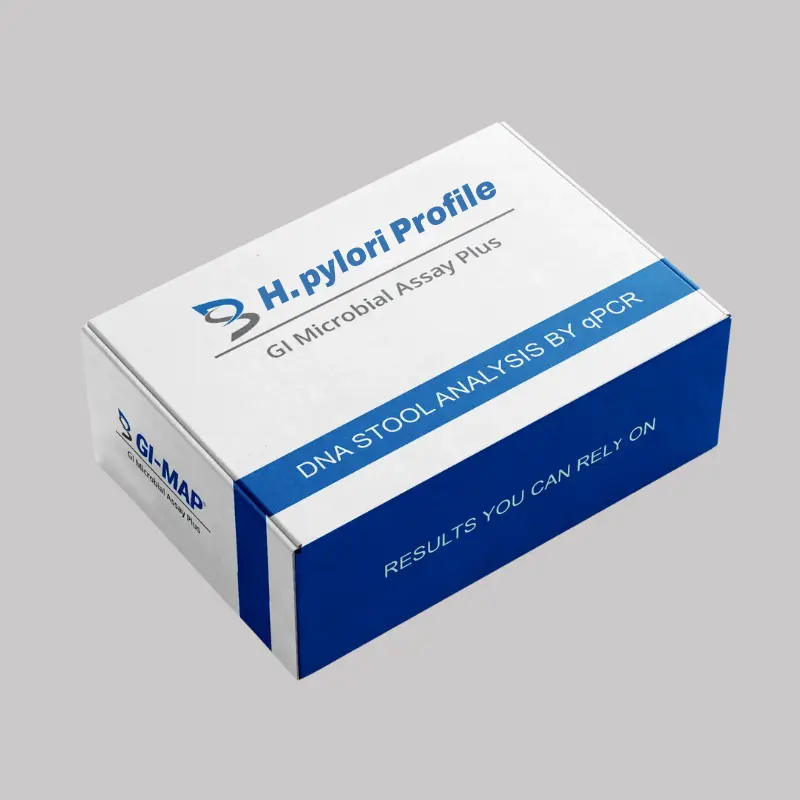
Get Your Collection Kit
It'll be delivered within 2-3 business days of purchase. This includes everything you'll need to collect your stool for testing.
2
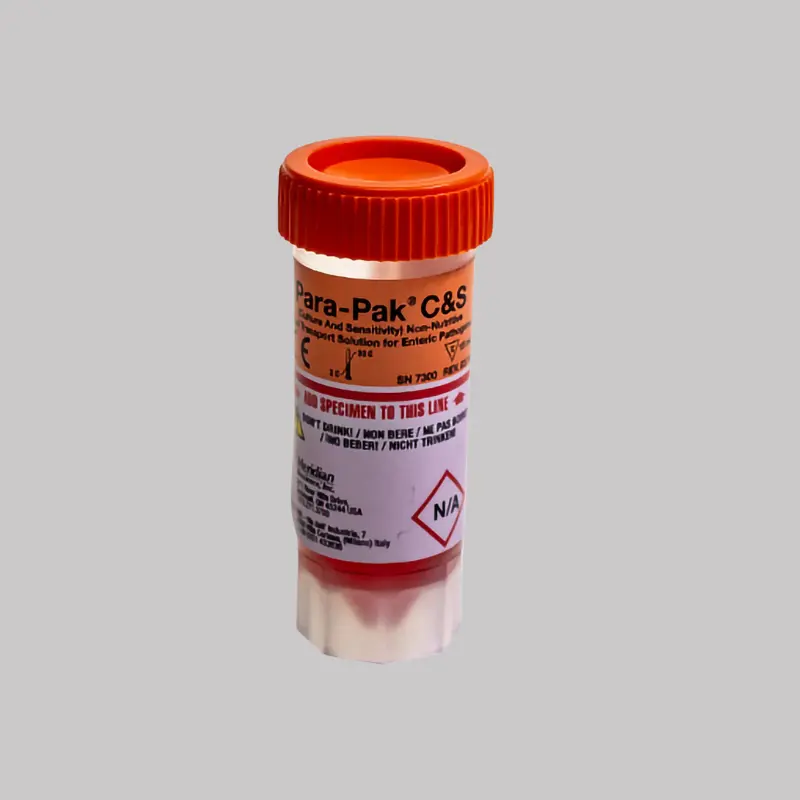
Self Collect Stool + Mail Back
You'll collect your stool specimen anytime during the day. Drop off or have it picked up by Fedex. Pre-paid shipping materials are included.
3
View Results Online
Test results are usually ready 7-10 business days after your sample arrives at the lab. You'll receive a detailed report with your results.
Is This Right for You?
This test is designed for people who
If any of these apply, this test can give you clarity and peace of mind.
Experience chronic stomach pain, acid reflux, or nausea and want to check for a common bacterial cause
Have a family history of stomach ulcers or gastric cancer and want early, proactive screening
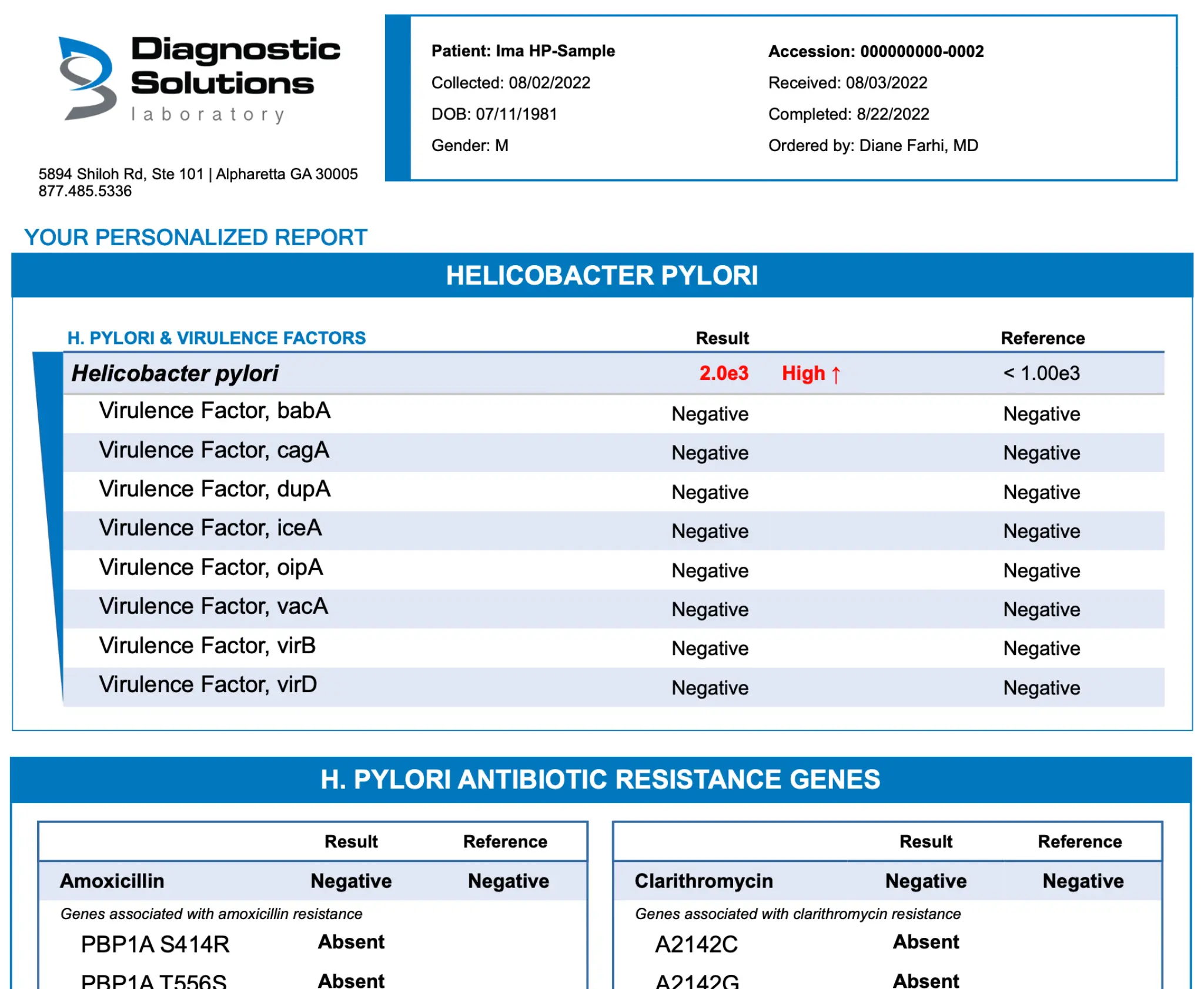
Want to know not just if you have H. pylori, but whether your strain is resistant or high-risk
Have been treated for H. pylori before and need to confirm whether the infection has cleared
Prefer a simple, non-invasive at-home stool test over an endoscopy or breath test
Take a prevention-first approach and want to catch and address gut infections before damage develops
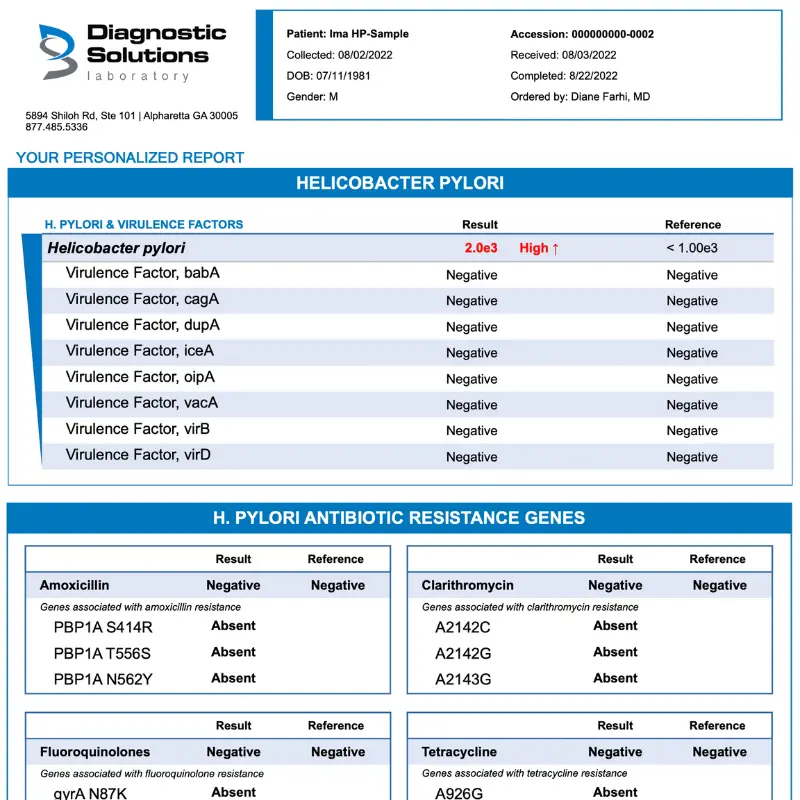
13 key biomarkers
What's included in your report
Each result will include your value, your personalized optimal range, and a plain-language interpretation.
Helicobacter Pylori
Catch the stomach infection behind most ulcers and stomach cancer, and find out which antibiotic will actually clear it.
Virulence Factor, babA
Find out whether the H. pylori in your gut carries one of the riskier strains linked to ulcers and stomach cancer.
Virulence Factor, cagA
See whether the H. pylori living in your stomach is the high-risk strain that drives most cases of stomach cancer.
Virulence Factor, dupA
Find out whether the H. pylori living in your gut carries a strain marker linked to ulcer risk.
Virulence Factor, iceA
Explore whether your stomach bacteria carry a gene linked to higher ulcer risk and antibiotic resistance.
Virulence Factor, oipA
See whether the stomach infection you carry comes from a more aggressive strain linked to ulcers and stomach cancer.
Virulence Factor, vacA
Find out whether the H. pylori in your stomach carries one of the most aggressive toxin genes linked to ulcers and gastric cancer.
Virulence Factor, virB
Find out whether the H. pylori strain in your stomach carries the machinery linked to more aggressive disease.
Virulence Factor, virD
Find out whether the H. pylori in your gut carries a gene linked to more aggressive infection.
H. pylori Amoxicillin Resistance
Know whether your H. pylori can survive amoxicillin before you start a regimen that may fail.
H. pylori Clarithromycin Resistance
The fastest way to know whether the standard ulcer-bug antibiotic will actually work for you, before you waste weeks on a failing regimen.
H. pylori Fluoroquinolone Resistance
Find out if your stomach infection will respond to common antibiotics, before you spend weeks on a treatment that cannot work.
H. pylori Tetracycline Resistance
Find out whether the bacteria in your gut can shrug off one of the most widely used antibiotic families.
Common Questions