 Instalab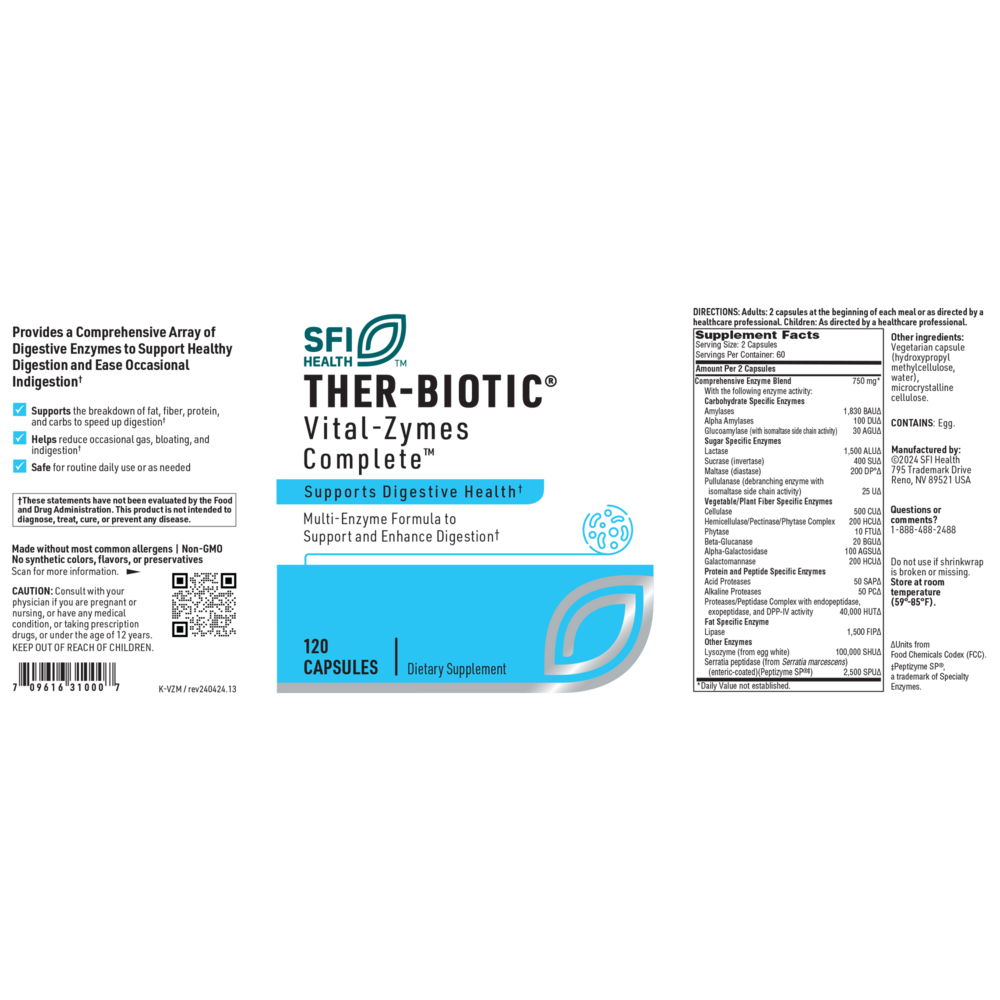
Klaire Labs/SFI Health
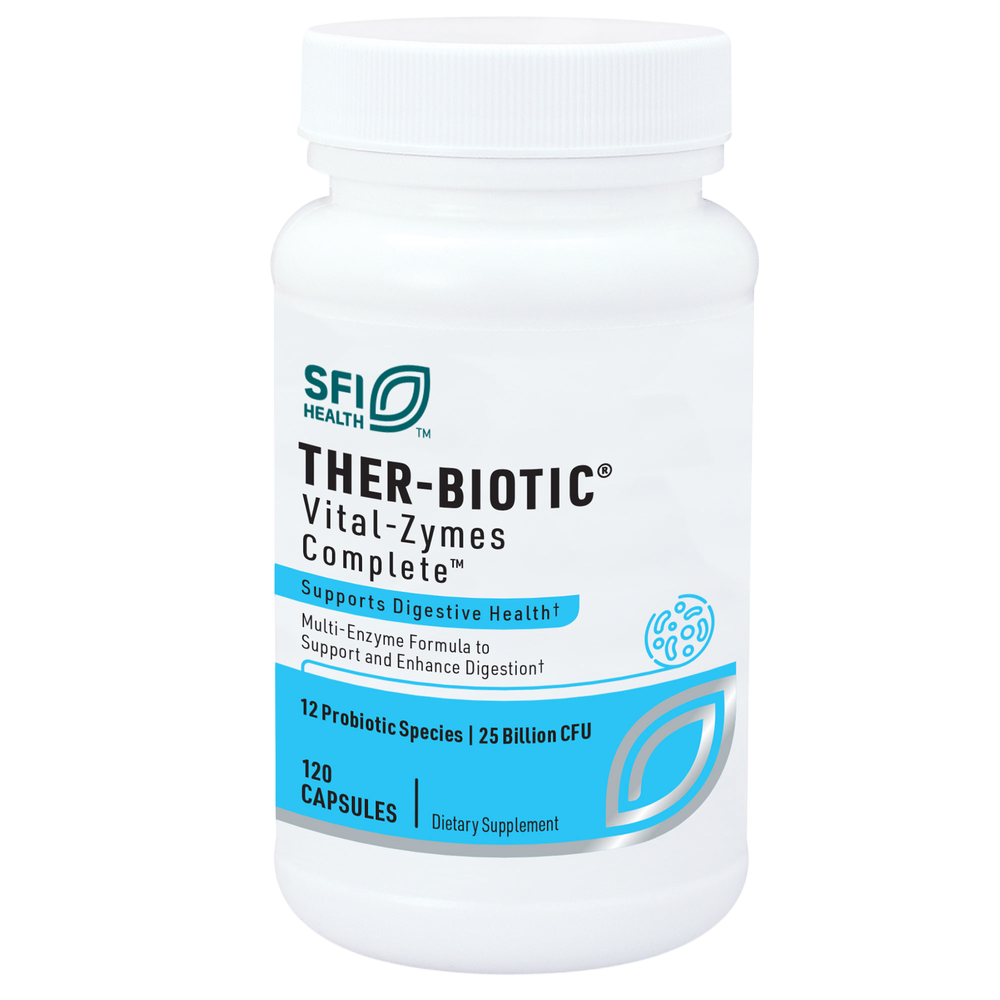
Ther-Biotic® Vital-Zymes (Complete) by Klaire Labs/SFI Health
120 capsules
Comprehensive Digestive Support with Targeted Enzyme Blend$XX.XX$43.99retail
This item is currently out of stockGet notified when this item is back in stock
20% below MSRP3rd-party tested for purity & potencyFree shipping $50+
Klaire Labs/SFI Health Ther-Biotic® Vital-Zymes (Complete) overview
If “healthy” meals still leave you gassy or tight through the midsection, digestive enzymes for bloating are a practical first step. They fit people who notice beans, dairy, or high-fiber plants trigger symptoms, older adults with sluggish digestion, and those on acid-suppressing drugs where protein breakdown is weaker. If your Hydrogen Breath Test shows lactose or fructose malabsorption, or if stool testing flags low fecal elastase (reduced pancreatic output), enzymes can make meals noticeably easier to tolerate.
This multi-enzyme blend breaks food where your own enzymes fall short. Proteases split proteins into smaller peptides and amino acids, amylase and glucoamylase turn starch into simple sugars, and lipase trims fats into fatty acids your gut can absorb. Lactase targets milk sugar, while alpha-galactosidase tackles the gas-producing carbohydrates in beans and crucifers. Cellulase and hemicellulase open tough plant cell walls, reducing residue and pressure. DPP‑IV activity helps break difficult, proline-rich food peptides; it is not a pass to ignore medical diets like strict gluten avoidance in celiac disease.
Take two capsules with the first bites of a meal, as the manufacturer suggests. You should feel lighter digestion on the first use; give it 1 to 2 weeks to judge a consistent pattern. For small snacks, one capsule is often enough. Larger or higher-fat meals sometimes need an extra capsule. If you’re sensitive, start low and build. Enzymes pair well with probiotics, but they do different jobs—enzymes break food, probiotics shift the microbe mix over weeks.
Prescription pancrelipase is the standard for true pancreatic insufficiency; over-the-counter digestive enzymes are not a replacement. Orlistat blocks fat digestion, so taking lipase alongside it works against its intent. Alpha‑glucosidase inhibitor drugs for diabetes (acarbose, miglitol) conflict with starch- and sugar-digesting enzymes. Active peptic ulcer disease can feel worse with proteases. For suspected celiac disease, confirm with tTG‑IgA blood testing and biopsy guidance; do not use enzymes to justify eating gluten.
Frequently asked questions
Do digestive enzymes actually help with bloating?
Often yes, when bloating follows specific foods. Lactase helps with dairy, alpha‑galactosidase with beans and crucifers, and lipase/proteases with rich, mixed meals. You should notice a difference on the first few uses if enzymes match your trigger foods.
How long do digestive enzymes take to work?
They work during the meal you take them with. Most people feel less pressure and gassiness that same day. Give it 1–2 weeks of regular use to see a stable pattern across different meals.
Can I take digestive enzymes with a probiotic?
Yes. Enzymes act on the food in that meal, while probiotics work over weeks to influence the gut microbiome. If anything, better breakdown can reduce fermentable leftovers that feed gas‑producing microbes.
Are digestive enzymes safe during pregnancy?
They’re generally considered low risk, but pregnancy data are limited. Use only for clear food-related symptoms, stick to meal-time dosing, and review with your obstetric clinician before starting.
Can I use enzymes if I don’t have a gallbladder?
They can help with meal comfort, especially lipase for fat-heavy meals, but bile acids are the main driver of fat absorption. If fatty stools or urgency persist, ask about bile acid therapy and check stool fat testing.
Do enzymes let me eat gluten if I’m sensitive?
No. Enzyme blends with DPP‑IV activity can break some food peptides but do not protect against immune injury in celiac disease. For celiac, strict gluten avoidance remains essential.
Can I take digestive enzymes with my acid blocker (PPI)?
Yes, and they may help because low stomach acid slows protein breakdown. Choose broad pH–stable blends and take at the start of meals. If reflux persists, address timing, meal size, and weight as well.
Any drug interactions with digestive enzymes?
Avoid taking them with acarbose or miglitol (they oppose these drugs’ effects) and with orlistat (it blocks lipase). For bleeding disorders or before surgery, high-dose proteolytic enzyme supplements warrant caution, though meal-time blends have minimal systemic absorption.
How to take it & ingredients
Suggested use: Adults take two capsules daily, with food, or as directed by your healthcare professional.
Certifications
Benefits
Warnings