 Instalab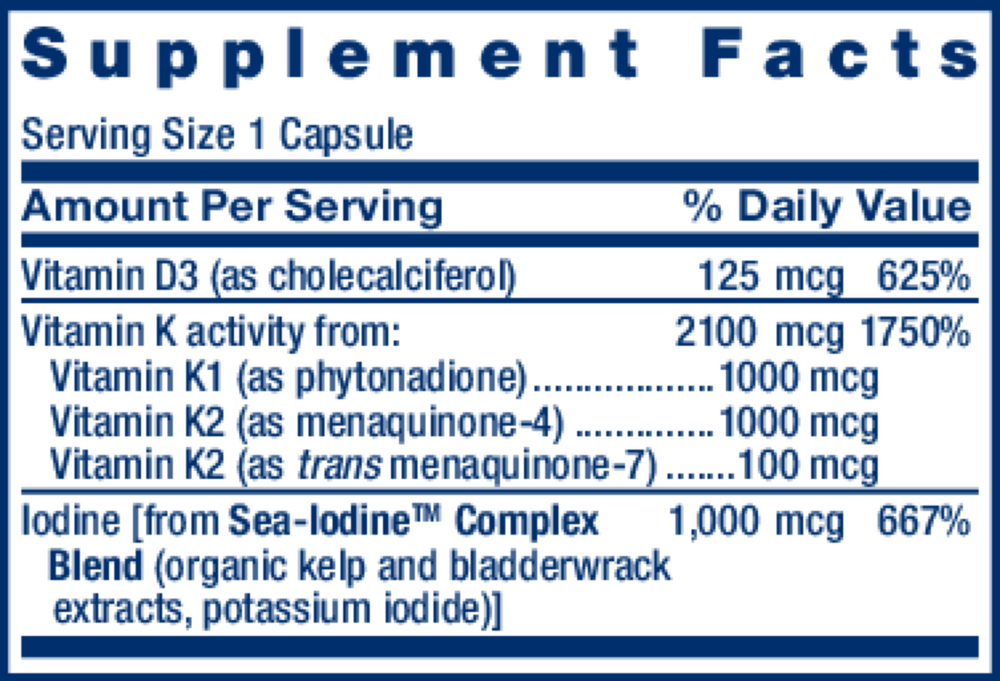

Life Extension
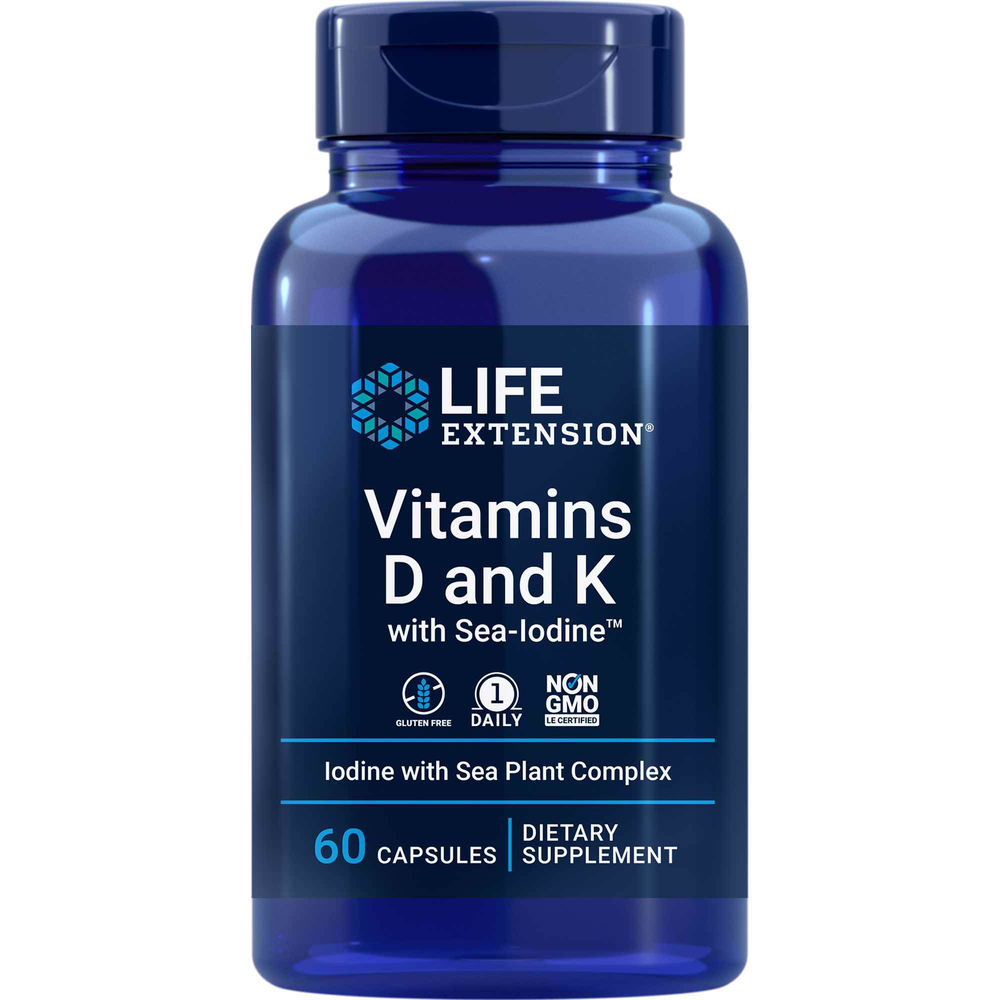
Vitamin D and K with Sea-Iodine by Life Extension
60 capsules · 60-day supply
Comprehensive Support for Bone, Heart, and Thyroid Health$24.99
Purchase options
Practitioner-grade brand3rd-party testedFree shipping $50+
Life Extension Vitamin D and K with Sea-Iodine overview
If you’re looking for vitamin D and K with iodine in a single daily capsule, this fits adults whose Vitamin D, 25-Hydroxy is low or low‑normal, who want bone and calcium balance support without multiple bottles. It’s also relevant if your diet is low in iodine—common with strict vegan patterns, sea‑salt use without iodized salt, or minimal seafood/dairy—especially when your TSH (thyroid-stimulating hormone, the brain’s signal to the thyroid) runs high‑normal. If your level is frankly deficient, you may need a higher short‑term D3 plan first, then step down to this.
Vitamin D3 raises calcium absorption from the gut and helps lower parathyroid hormone (the signal that pulls calcium from bone). Vitamin K activates osteocalcin (a bone‑building protein) and matrix Gla protein (a calcium‑binding protein that helps keep calcium out of arteries), so calcium goes to the right places. Iodine enables the thyroid to make T4 and T3 (the hormones that set metabolic rate). The catch is that sudden high iodine can disrupt thyroid function in susceptible people, so fit matters more than dose bravado.
Take one capsule daily with food, ideally a meal containing some fat to improve absorption of vitamin D3 and vitamin K. Recheck Vitamin D, 25-Hydroxy after 8–12 weeks to gauge your personal response, and thyroid labs (TSH, Free T4) if you started with low iodine intake. The 5,000 IU D3 here is a common maintenance dose; those with established deficiency often need a higher or loading dose short‑term under clinician guidance, then transition down to a daily maintenance like this.
Avoid this if you use warfarin (vitamin K opposes its effect—dose changes require INR monitoring), have a history of high calcium, recurrent kidney stones, or granulomatous diseases like sarcoidosis that raise calcium. With thyroid disease, nodular goiter, Hashimoto’s, postpartum thyroiditis, or if you take amiodarone or lithium, extra iodine can cause swings in thyroid levels—use an iodine‑free vitamin D3 or work with your clinician. Pregnancy and breastfeeding: do not exceed clinician‑guided iodine intake.
Frequently asked questions
Is 5,000 IU of vitamin D3 safe to take every day?
Often yes for maintenance, but the right dose depends on your Vitamin D, 25-Hydroxy level, sun, and body weight. Recheck labs after 8–12 weeks. If your level is already adequate, 5,000 IU may overshoot and you may need a lower daily dose.
Do I need vitamin K when I take vitamin D?
Vitamin K isn’t required to absorb vitamin D, but it activates proteins (osteocalcin and matrix Gla protein) that direct calcium into bone and away from arteries. Pairing vitamin D with vitamin K is a reasonable strategy for bone and calcium balance.
Who should avoid iodine supplements?
Skip iodine if you have autoimmune thyroid disease, nodular goiter, or you take amiodarone or lithium, unless your clinician advises otherwise. A sudden 1,000 mcg intake can trigger hyper‑ or hypothyroidism in susceptible people.
How long until vitamin D levels improve?
Vitamin D, 25-Hydroxy typically rises within 4–12 weeks on a consistent daily dose. Parathyroid hormone often improves on a similar timeline. Re‑test at 8–12 weeks, then adjust dosing to maintain a steady level.
Can I take this with levothyroxine?
Separate by at least 4 hours. While D3, vitamin K, and iodine don’t bind levothyroxine the way calcium or iron do, standard thyroid practice is to take levothyroxine on an empty stomach and keep supplements several hours apart.
Does vitamin K interact with blood thinners?
Yes for warfarin: vitamin K reduces its effect and can change your INR. Do not start or stop vitamin K without clinician guidance. Newer blood thinners (like apixaban and rivaroxaban) are not vitamin K–dependent.
What side effects should I watch for with iodine?
Watch for throat fullness, palpitations, heat or cold intolerance, or unexpected fatigue—signs of thyroid shifts. If these occur, stop and check TSH and Free T4 with your clinician.
How to take it & ingredients
Suggested use: Take one (1) capsule once daily with food, or as recommended by a healthcare practitioner.
Active ingredients
1 capsule per serving · 60 servings
Vitamin D
Vitamin D3 (Cholecalciferol)
Vitamin D3 (Cholecalciferol)
5000 IU, 125 mcg
▼
Vitamin K
2100 mcg
Vitamin K
Vitamin K1 (Phytonadione)
Vitamin K1 (Phytonadione)
1000 mcg
Vitamin K
Vitamin K2 (Menaquinone-4)
Vitamin K2 (Menaquinone-4)
1000 mcg
Vitamin K
Vitamin K2 (Trans Menaquinone-7)
Vitamin K2 (Trans Menaquinone-7)
100 mcg
Iodine
Sea-Iodine™ Complex Blend (Organic kelp, Bladderwrack extract, Potassium Iodide)
Sea-Iodine™ Complex Blend (Organic kelp, Bladderwrack extract, Potassium Iodide)
1000 mcg
Other ingredients: Microcrystalline Cellulose, Vegetable Cellulose, Maltodextrin, Modified Food Starch, Dicalcium Phosphate
Certifications
Benefits
Warnings
Customers also considered
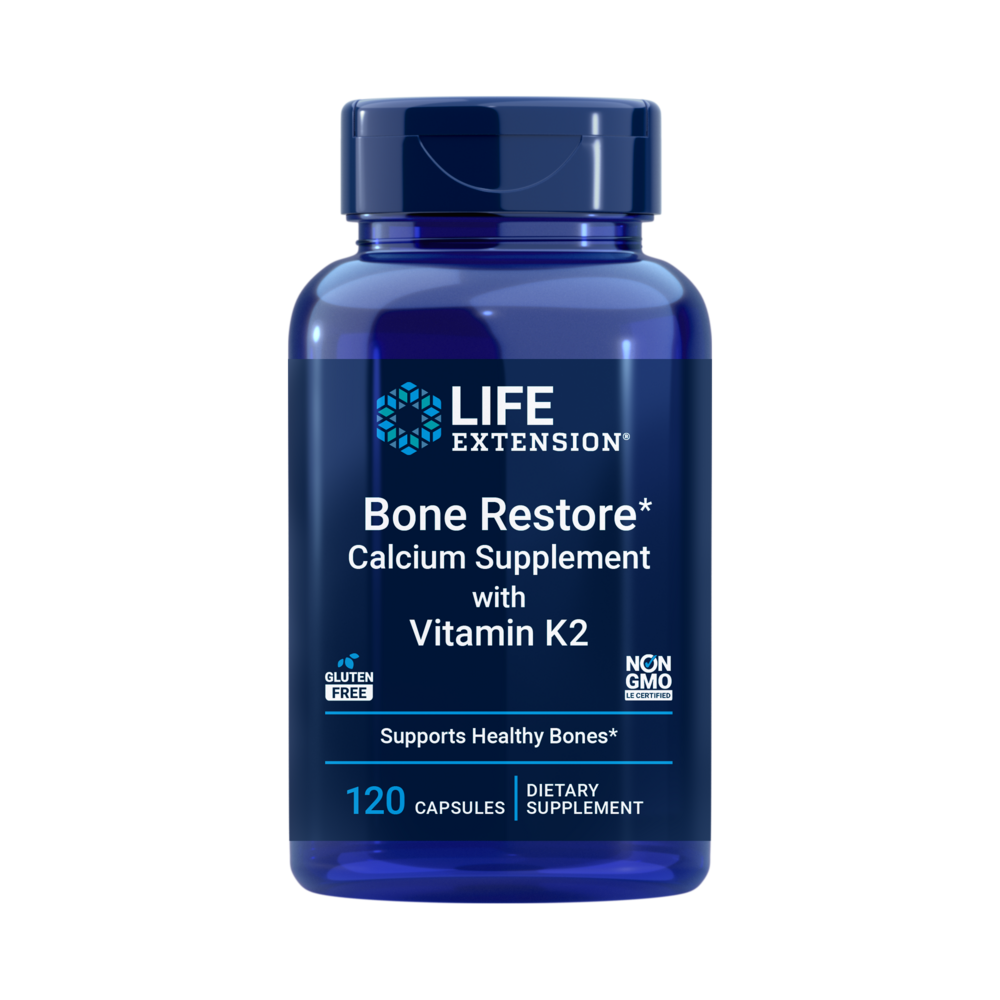
Bone Restore Calcium Supplement with Vitamin K2
Life Extension
120 capsules
$24.99$19.99 with Subscribe & Save
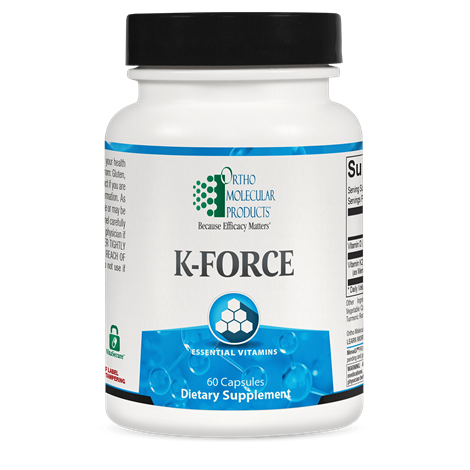
K-FORCE
Ortho Molecular Products
60 capsules
$60.33$54.35 with Subscribe & Save
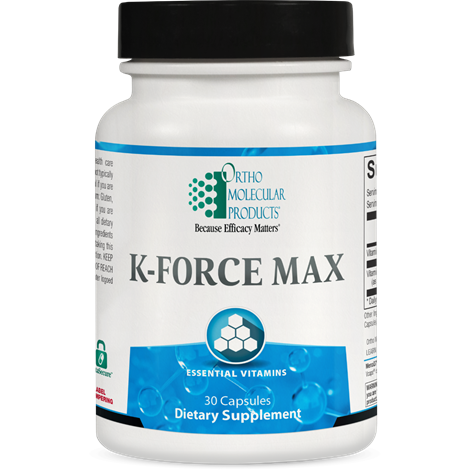
K-FORCE MAX
Ortho Molecular Products
30 capsules
$44.79$40.35 with Subscribe & Save
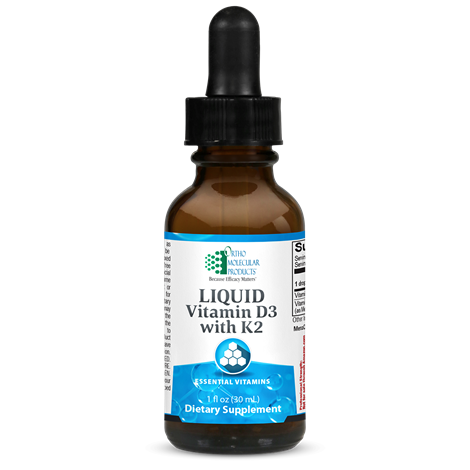
Liquid Vitamin D3 with K2
Ortho Molecular Products
30 milliliters
$52.00$46.85 with Subscribe & Save