 Instalab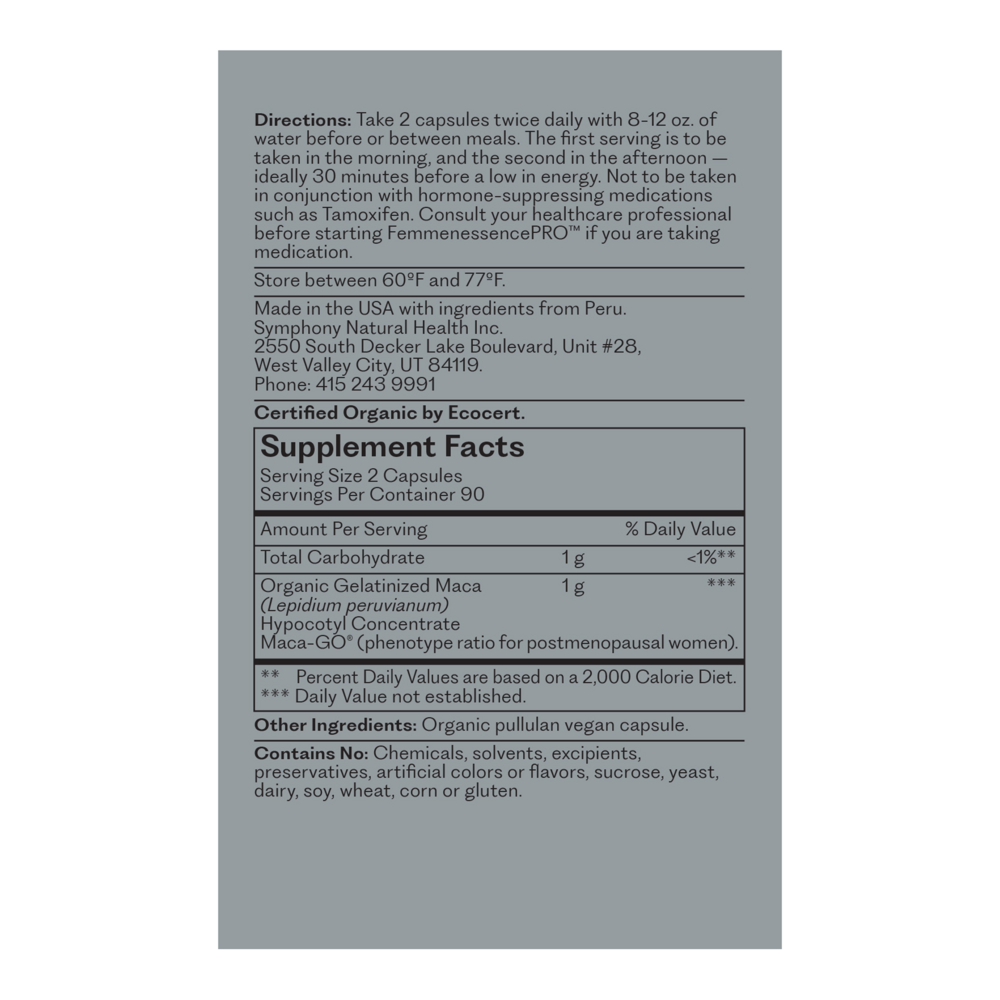

Symphony Natural Health
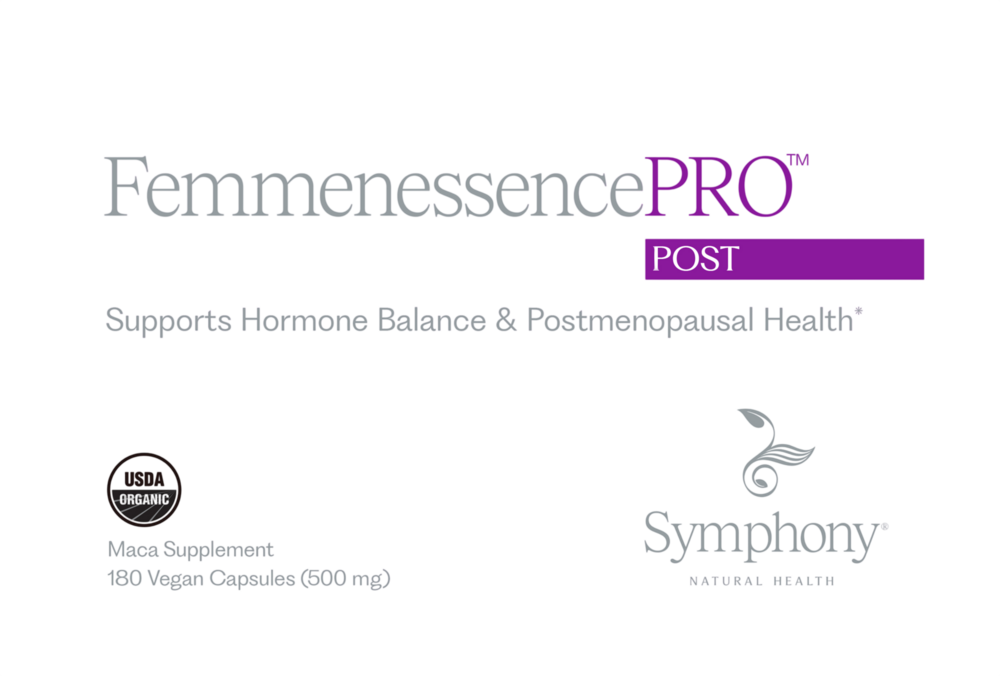
FemmenessencePRO POST (Maca-GO®) by Symphony Natural Health
180 capsules
Support for Hormonal Balance and Women's Wellness$XX.XX$49.99retail
This item is currently out of stockGet notified when this item is back in stock
20% below MSRP3rd-party tested for purity & potencyFree shipping $50+
Symphony Natural Health FemmenessencePRO POST (Maca-GO®) overview
Postmenopausal women who want a non-hormonal option for hot flashes, sleep disruption, low energy, or mood swings often try maca for menopause. It’s a practical fit if you can’t use hormone therapy or prefer to start with herbs. If your Estradiol is very low and symptoms are severe, prescription estrogen is usually more effective; this is for milder cases or as an add-on. Useful labs to track include Estradiol, FSH (follicle-stimulating hormone, the brain’s signal to the ovaries), Morning Cortisol, DHEA-S, and TSH (thyroid-stimulating hormone).
Maca (Lepidium meyenii) appears to act on the brain’s thermostat and stress system rather than supplying estrogen. In small trials, standardized maca reduced vasomotor symptoms and improved sleep and mood without raising Estradiol or lowering FSH in blood tests. Maca-GO is a concentrated, heat-treated maca that’s easier to digest, and its phenotype blend aims to steady signaling along the hypothalamic–pituitary–adrenal axis (the brain–adrenal stress circuit), which is one reason some women feel more daytime energy and fewer night sweats.
Take three capsules daily with food as directed. Because maca can feel energizing, most do best taking it in the morning, or splitting breakfast and lunch. Expect a trial of 2 to 8 weeks before judging benefit; some notice changes in sleep or hot flashes earlier. If you’re also adjusting thyroid medication, recheck TSH within a few weeks to be safe. No specific diet pairing is required.
If you have a history of estrogen receptor–positive breast or endometrial cancer, involve your oncologist before starting any menopausal herb, including maca. With uncontrolled thyroid disease or if you take levothyroxine, monitor TSH after changes. Avoid during pregnancy or breastfeeding. If you’re very sensitive to stimulants or struggle with insomnia, start with a smaller test dose and keep it earlier in the day.
Frequently asked questions
Does maca act like estrogen?
Not in blood tests. In small studies, maca improved menopausal symptoms without raising Estradiol or lowering FSH. It seems to work via brain and stress-circuit effects, not by supplying hormones. If you need estrogen-level repletion, discuss hormone therapy with your clinician.
How long does maca take to work for hot flashes?
Give it 2 to 8 weeks. Some women see fewer night sweats or better sleep within a couple of weeks, but steadier benefits usually show up by one to two months. If nothing changes by 8 weeks, reconsider the plan with your clinician.
Can I take maca with hormone therapy?
Often yes, but coordinate with your prescriber. Maca doesn’t usually alter Estradiol or FSH, yet adding anything that changes symptoms can complicate dose finding. Track symptoms and consider repeating Estradiol and FSH after any regimen change.
What side effects should I watch for with maca?
Most tolerate it well. The common issues are mild stomach upset or a wired feeling if taken late in the day. Take with food, start earlier in the morning, and reduce or stop if you notice jitteriness, headaches, or sleep disruption.
Is maca safe with thyroid medication?
Generally, but be cautious. Maca can slightly shift energy and metabolism, so if you take levothyroxine, recheck TSH a few weeks after starting or changing dose. Take thyroid medication on an empty stomach, separate from supplements.
What time of day should I take maca?
Morning is best. Maca can boost daytime energy, and taking it late can bother sleep. Many split the dose between breakfast and lunch to keep levels steady and avoid nighttime stimulation.
Will maca show up on my hormone labs?
It typically does not raise Estradiol or lower FSH in serum testing. If you’re monitoring a broader panel, you might also track Morning Cortisol and DHEA-S to see how your stress-axis markers trend while on it.
Is this the right pick if my symptoms are severe?
Probably not as a standalone. For frequent, disruptive hot flashes, prescription estrogen is usually the most effective option. Maca fits better for mild-to-moderate symptoms or as an add-on once the basics are in place.
How to take it & ingredients
Suggested use: Adults take three capsules daily, with food, or as directed by your healthcare professional.
Certifications
Benefits
Warnings