 Instalab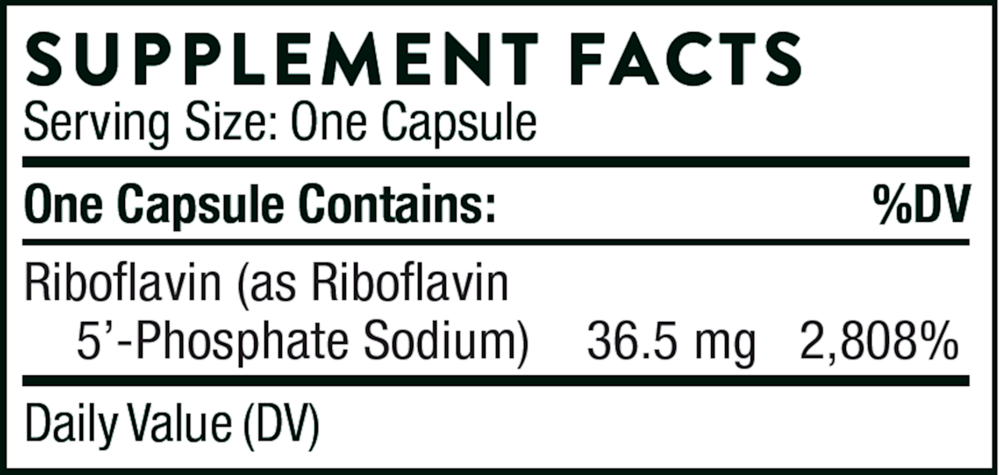



Thorne
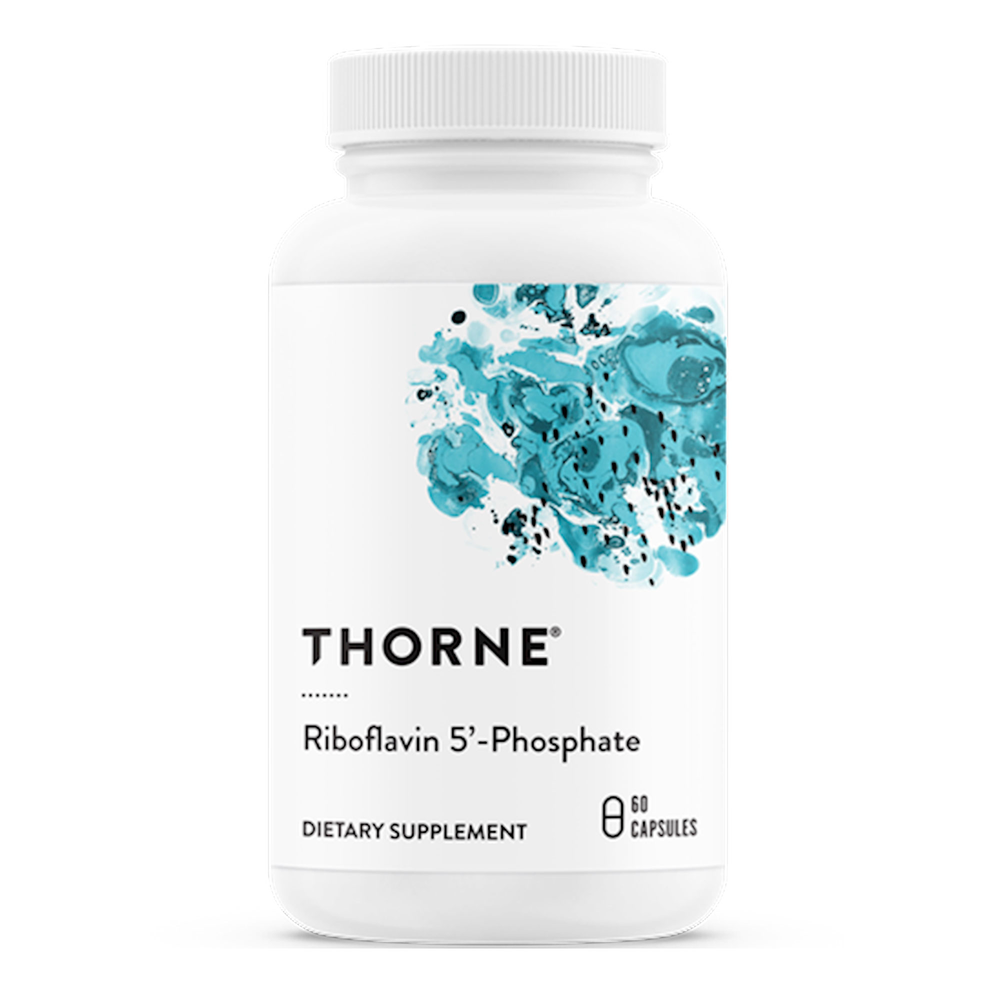
Riboflavin 5'-Phosphate 36.5 mg by Thorne
60 capsules · 60-day supply
Active Form of Vitamin B2 for Energy Production and Metabolism$32.00
Purchase options
Practitioner-grade brand3rd-party testedFree shipping $50+
Gluten Free·Soy Free·Dairy Free·Milk Free
Thorne Riboflavin 5'-Phosphate overview
Choose this if you want active B2 without relying on your gut and liver to convert it. It fits plant‑based eaters, low‑calorie or restrictive dieters, and anyone with digestive or liver issues where vitamin activation can lag. It’s useful if your Homocysteine (an amino acid that rises when methylation is sluggish) stays high despite folate and B12, or if you get recurrent mouth corner cracks. For migraine prevention, most protocols use far higher riboflavin than this maintenance‑level dose.
Riboflavin 5'-phosphate is FMN, the tissue‑ready form your cells use to make FAD, both of which power enzymes that turn carbs and fats into ATP energy. This form also helps “activate” other vitamins: it’s required to convert B6 and folate into their working forms and to recycle glutathione (the cell’s main antioxidant). That’s why improving riboflavin status can nudge Homocysteine down in some people and steady energy production within weeks.
Take one capsule daily with food, which improves absorption and is gentler on the stomach. Morning works well for most, but timing isn’t critical. This is a maintenance dose; repletion for clearly low B2 or migraine prevention typically uses much higher amounts guided by a clinician. Expect bright yellow urine—just riboflavin’s color, not dehydration.
Separate riboflavin from tetracycline antibiotics by 2–4 hours to avoid reducing the antibiotic’s absorption. Alcohol intake increases B‑vitamin needs, so consistency matters if you drink. Pregnancy and breastfeeding: riboflavin is essential and commonly used in prenatal vitamins, but check your total B‑complex intake to avoid stacking high doses.
Frequently asked questions
What is riboflavin 5'-phosphate and why choose it over regular B2?
It’s the active form of B2 (FMN) that’s already “phosphorylated,” so your body doesn’t need to convert it. That can help if digestion or liver activation is impaired, or if you want reliable support for energy enzymes and Homocysteine.
How long does riboflavin 5'-phosphate take to work?
For energy steadiness, people often notice changes within 2–4 weeks. Lab shifts like a drop in Homocysteine can take 4–12 weeks, depending on your folate, B12, and overall diet.
Does riboflavin help migraines?
Riboflavin is used for migraine prevention, but most trials used about 400 mg daily—far higher than this capsule. This product is better for daily maintenance; discuss higher dosing with your clinician if migraines are the goal.
Can I take riboflavin with other B vitamins?
Yes. Riboflavin helps convert B6 and folate into their active forms, so it pairs well with a B‑complex. Just total your intake to avoid unintended high dosing across multiple products.
What lab tests relate to riboflavin status?
Homocysteine can respond to improved riboflavin in some people. Direct tests include plasma riboflavin or an enzyme assay called EGRAC, though these aren’t routinely ordered. Track symptoms and diet alongside labs.
Are there side effects from riboflavin 5'-phosphate?
It’s typically well tolerated. The most common effect is bright yellow urine, which is harmless. Taking it with food reduces rare stomach upset or nausea.
Does riboflavin interact with medications?
It can bind tetracycline antibiotics and reduce their absorption; separate by a few hours. There are no common serious interactions, but always review your meds with your clinician.
How to take it & ingredients
Suggested use: Adults take one capsule daily, with food, or as directed by your healthcare professional.
Active ingredients
1 capsule per serving · 60 servings
Vitamin B2
Riboflavin-5'-Phosphate Sodium
Riboflavin-5'-Phosphate Sodium
36.5 mg
Other ingredients: Calcium Laurate, Hypromellose Capsule, Microcrystalline Cellulose, Silicon Dioxide
Certifications
Benefits
Warnings