 Instalab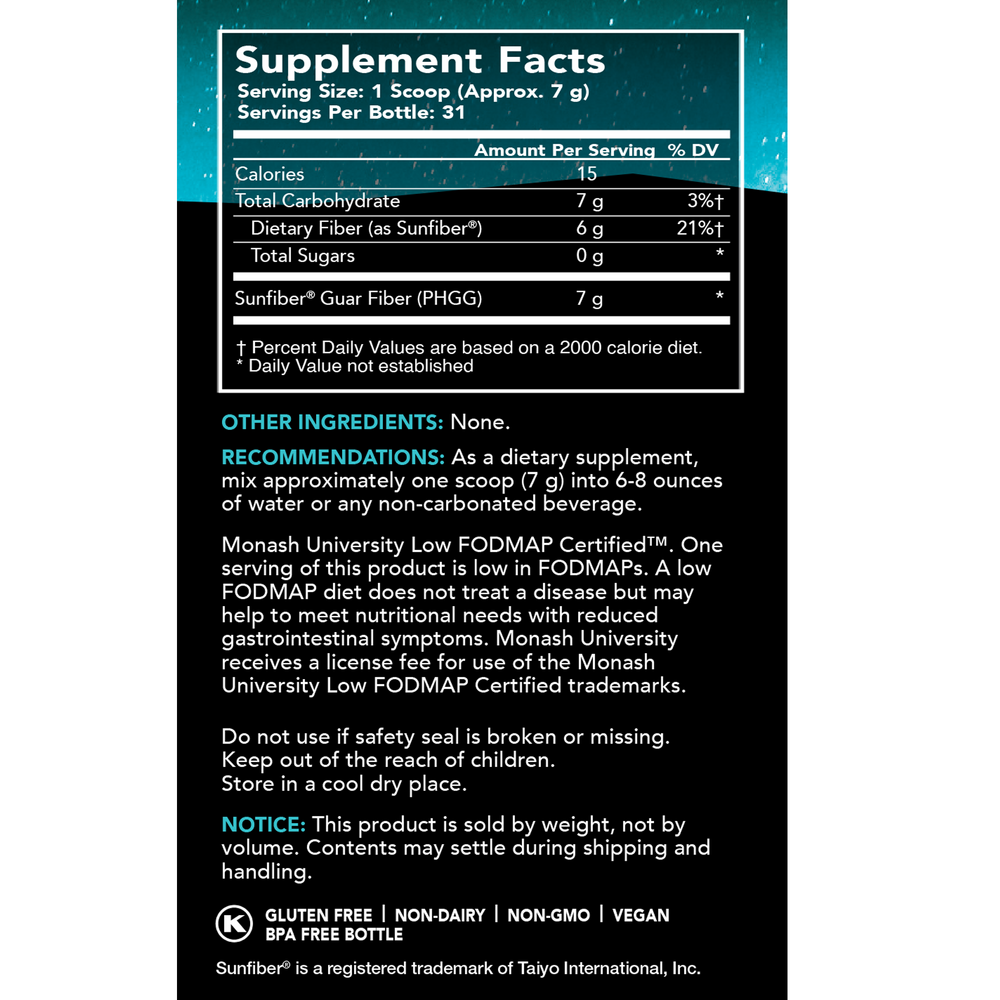

Tomorrow's Nutrition
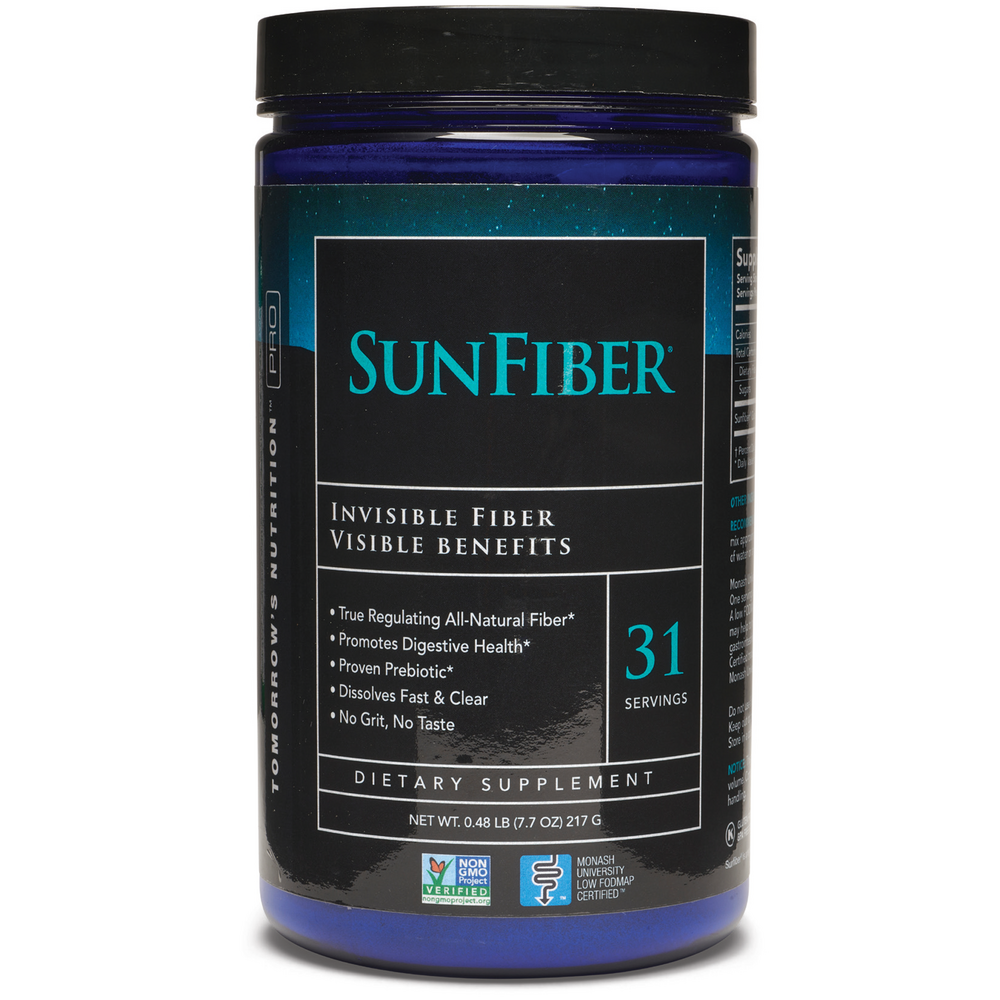
SunFiber 7 g by Tomorrow's Nutrition
217 grams · 31-day supply
Supports Digestive Health and Regularity with Soluble Fiber$36.99retail
Add to cart for 19% off
Purchase option
19% below MSRP3rd-party tested for purity & potencyFree shipping $50+
Vegan·Vegetarian·Gluten Free·Dairy Free·Milk Free·Lactose Free
Tomorrow's Nutrition SunFiber overview
Irritable bowel syndrome (IBS) often swings between constipation and loose stools; partially hydrolyzed guar gum (PHGG) is the rare fiber that helps both. It’s a fit if you bloat with psyllium or inulin, want regularity without gas, or follow a low-FODMAP plan and need a gentle prebiotic. It’s also useful when metabolic labs like fasting glucose, A1c, or Triglycerides are creeping up and you want a food-first lever that’s easy to stick with.
PHGG dissolves clear and is low viscosity, so it mixes easily and moves through the stomach without thickening. In the colon it ferments slowly, feeding beneficial bacteria and producing short-chain fatty acids like butyrate (fuel for the cells lining your colon). That steady fermentation normalizes stool water content, which firms loose stools and softens hard ones, and it’s why gas and cramping are uncommon. Trials also show modest improvements in post-meal glucose and fullness signals that can help with weight management.
Mix one scoop (7 g) into 6–8 oz of water, coffee, or a smoothie; it’s tasteless and works hot or cold. Start with half a scoop daily for 3–4 days, then move to a full scoop. Many IBS patients do best splitting the dose morning and evening. Studied intakes range from 5 to 15 g per day. Expect bowel pattern changes within 3–7 days, with metabolic effects on fasting glucose or Triglycerides showing over 4–12 weeks.
Separate this fiber from medications by at least two hours, especially levothyroxine, iron, and certain antibiotics, to avoid reduced absorption. Skip if you have known bowel obstruction, severe gut narrowing, or have been told to avoid fiber after surgery until cleared. People with severe bloating from small intestinal bacterial overgrowth should titrate very slowly. Guar allergies are rare but possible. Hydrate well to keep stools comfortable.
Frequently asked questions
How fast does partially hydrolyzed guar gum work?
Most people notice gentler, more regular stools in 3–7 days. Bloating often eases over the first week. Metabolic changes like steadier post-meal glucose or lower triglycerides typically require 4–12 weeks of daily use.
Does PHGG cause gas or bloating?
It’s one of the better-tolerated fibers because it ferments slowly. Some people feel mild gas the first few days; starting with half a scoop and increasing gradually usually prevents this.
Is partially hydrolyzed guar gum low-FODMAP friendly?
Yes. PHGG is considered low-FODMAP at typical doses and is commonly used during IBS elimination and reintroduction phases. Still, increase slowly and track your personal tolerance.
Can PHGG help both constipation and diarrhea?
Yes. It normalizes stool water content and transit time, which can firm loose stools and soften hard ones. That’s why it’s often used for mixed-type IBS where patterns alternate.
When should I take PHGG—morning or night, with or without food?
Timing is flexible. Take it with or without food, whenever you’ll be consistent. Many split the dose morning and evening. Always separate from medications by at least two hours.
How much PHGG should I take per day?
One scoop provides a clinically relevant dose. Some studies use 5–15 g daily. Start with half a scoop, then increase to one scoop; higher intakes can be used under clinician guidance if needed.
Is PHGG safe in pregnancy or while breastfeeding?
Fiber is generally considered safe, and PHGG is well tolerated. That said, discuss any supplement with your obstetric clinician, especially if you have nausea, heartburn, or constipation being treated with medications.
Will PHGG affect my medications or vitamins?
Fiber can reduce absorption if taken together. Separate PHGG from meds and minerals like iron by at least two hours. If you take levothyroxine, keep a consistent separation each day.
How to take it & ingredients
Suggested use: Mix approximately one scoop (7 g) into 6 to 8 ounces of water or any non carbonated beverage.
Active ingredients
1 scoop = 7 grams per serving · 31 servings
Sunfiber Guar Fiber
Partially Hydrolyzed Guar Gum (PHGG)
Partially Hydrolyzed Guar Gum (PHGG)
7 g
Certifications
Benefits
Warnings