
Is the A&D Foods meat in your freezer part of the recall?
If you've got vacuum-sealed pork, beef, or goat labeled A&D Foods in your freezer, don't cook it. USDA recalled 167,639 pounds because the federal inspection stamp on the label is forged. No veterinarian checked the animals before slaughter, and no one verified the sanitation that keeps Salmonella, E. coli, and Listeria off the carcass. No illnesses have been reported, but USDA rates this Class I, its most serious tier.


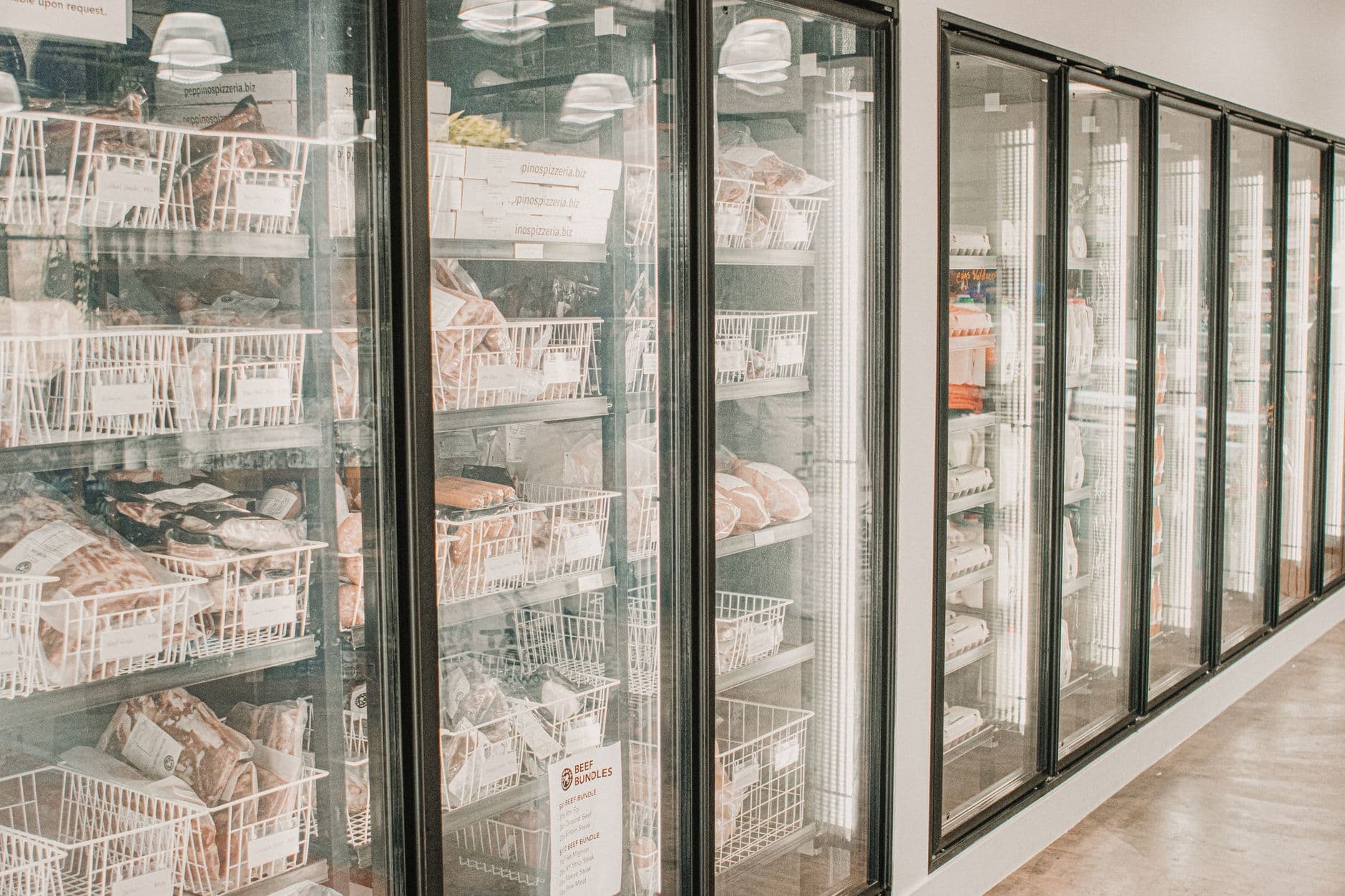
Look on the label for A&D Foods and the establishment number EST. 1363. That number is fake. It sits next to a USDA shield, but no federally inspected plant stands behind it. Star Meat Delivery in Lucama, North Carolina, produced the meat without a federal grant of inspection and stamped the shield on the labels anyway. FSIS caught it during routine surveillance, not because anyone got sick.
What's actually in the recall
The recall covers vacuum-sealed packs of 10 to 30 pounds across roughly 23 varieties. The product moved nationwide through A&D Foods, a distributor in Duluth, Georgia, into retailers and restaurants. Cuts reported so far include beef ribeye slices, chuck, oxtail, short ribs, shanks, and feet; pork chorizo, chops, ribs, Boston butt, hocks, and menudo mix; and a range of goat cuts. All were produced before September 22, 2026. If a pack matches, don't cook it, taste it, or feed it to a pet. Double-bag it and throw it out, or return it for a refund. Then wash your hands, the freezer surface, and any cutting board or knife the pack touched with hot soapy water.
| Where you might have it | Look for | What to do |
|---|---|---|
| At home | A&D Foods label with a USDA shield and EST. 1363 on a vacuum-sealed 10-to-30-pound pack of pork, beef, or goat | Don't cook, taste, or feed to a pet; double-bag and discard, or return for refund |
| At a restaurant | Menudo, chorizo, goat, or house cuts of pork or beef sourced through A&D Foods of Duluth, GA | Ask whether the restaurant sources from A&D Foods; don't eat it if they do |
| Questions on a specific pack | Uncertainty about a lot or label | USDA Meat and Poultry Hotline: 1-888-674-6854; Star Meat Delivery: 252-239-0610 |
Why the shield matters more than the label
A USDA mark isn't decoration. It certifies a pipeline of checks between a live animal and your kitchen. A veterinarian examines each animal before slaughter and pulls the ones that look sick. The plant runs a written plan for slaughter and chilling designed to drive measurable drops in Salmonella and E. coli on the carcass. Inspectors then check lymph nodes and organs for tuberculosis and parasites. None of that happened at Star Meat Delivery. Since HACCP process controls became mandatory in 1996, US foodborne illness has fallen by about 20 percent, an estimate USDA's Economic Research Service tied to the rule. Meat that skips the whole layer isn't the same product with a paperwork gap. It's a different product, at a contamination baseline nobody has measured.
The pathogens that layer normally catches
The three organisms USDA worries about most in raw red meat are Salmonella, Shiga-toxin producing E. coli, and Listeria monocytogenes. Together they account for roughly 12,500 Salmonella hospitalizations, about 2,100 E. coli O157:H7 hospitalizations, and hundreds of Listeria hospitalizations in the US each year. Invasive Listeria kills about one in five people who get it. Cooking a whole cut to 145°F with a three-minute rest, or ground meat to 160°F, reliably kills all three in the meat. That's why I'll just cook it well usually works. It stops working when the starting load is unknown. Undercook by a bit at the center of a Boston butt, cross-contaminate a cutting board, spill juice in a sink, feed a raw slice to the dog, and the margin is gone. A Class I recall before any illness isn't overcaution. It's USDA saying the upstream baseline is unmeasured, and no illnesses yet isn't the same as no illnesses coming.
If you already ate it
Most people who eat contaminated meat get nothing, or a self-limited gut illness. A few groups should have a lower threshold for calling a clinician. Pregnant women carry 10 to 18 times the general listeriosis risk, and infection during pregnancy causes fetal loss or preterm delivery in a large share of cases. Adults over 65 make up close to 60 percent of US listeriosis cases. People on chemotherapy, transplant medications, or high-dose steroids are also at higher risk. Young children face the highest risk of hemolytic uremic syndrome, a form of kidney failure that can follow E. coli O157 infection. Watch for fever, bloody diarrhea, a stiff neck, confusion, or a new severe headache. E. coli symptoms usually appear within a week; Salmonella within a few days.
Why FSIS moved before anyone got sick
A counterfeit USDA shield takes away the one thing that lets you trust raw meat at the store without personally inspecting the animal it came from. That's why FSIS treats this as Class I with zero reported illnesses. The system is built to act on the risk, not wait for a body count. What would change the calculation is FSIS lab testing that comes back clean across the retained lots, or confirmation that the meat actually came from an inspected plant and only the label was diverted. Until then, if a pack in your freezer matches the description, the calibrated response is to lose the meat and clean the surfaces it touched.