
Why Am I Always Tired Even After Getting Enough Sleep?
Tiredness that survives a full night's sleep has real, findable causes: sleep apnea, iron deficiency before anemia sets in, an overtly underactive thyroid, depression or anxiety, inflammatory disease, diabetes, cancer-related fatigue, or a post-infection syndrome like Long COVID. Some causes are treatable; others need symptom-focused management once recognized. The productive move is to match your symptom pattern to targeted evaluation, including labs or sleep testing when the clues fit, not to order every blood marker you can think of.


You sleep enough and still feel like you never rested. The answer is not simply to sleep more. It is to find out why the sleep is not restoring you, or what is draining your energy. The usual suspects are shorter than a whole-body testing hunt, and many are actionable: sleep that looks adequate but is not restful, obstructive sleep apnea, iron deficiency even before anemia shows up, overt thyroid disease, diabetes or inflammation, depression or anxiety, chronic inflammatory disease, cancer-related fatigue, or a post-infection syndrome like Long COVID. A useful route to an answer is a clinician-guided workup that pairs your symptom pattern with targeted tests, not a fishing expedition.
Hours in bed do not prove the sleep worked
Duration and restfulness are not the same thing. Across studies in rheumatoid arthritis and insomnia, self-reported sleep quality has tracked fatigue, while total sleep time, especially movement-based estimates, can be a less reliable signal. Actigraphy, the wrist-monitor method researchers use to estimate sleep from movement, can track sleep efficiency, awakenings, fragmentation, and how long it takes to fall asleep. In one small rheumatoid arthritis study, none of those actigraphy measures tracked PROMIS Fatigue, a standardized patient-reported fatigue score, while self-reported sleep quality did. Trackers are not useless. But a normal-looking sleep duration does not rule sleep out as the cause.
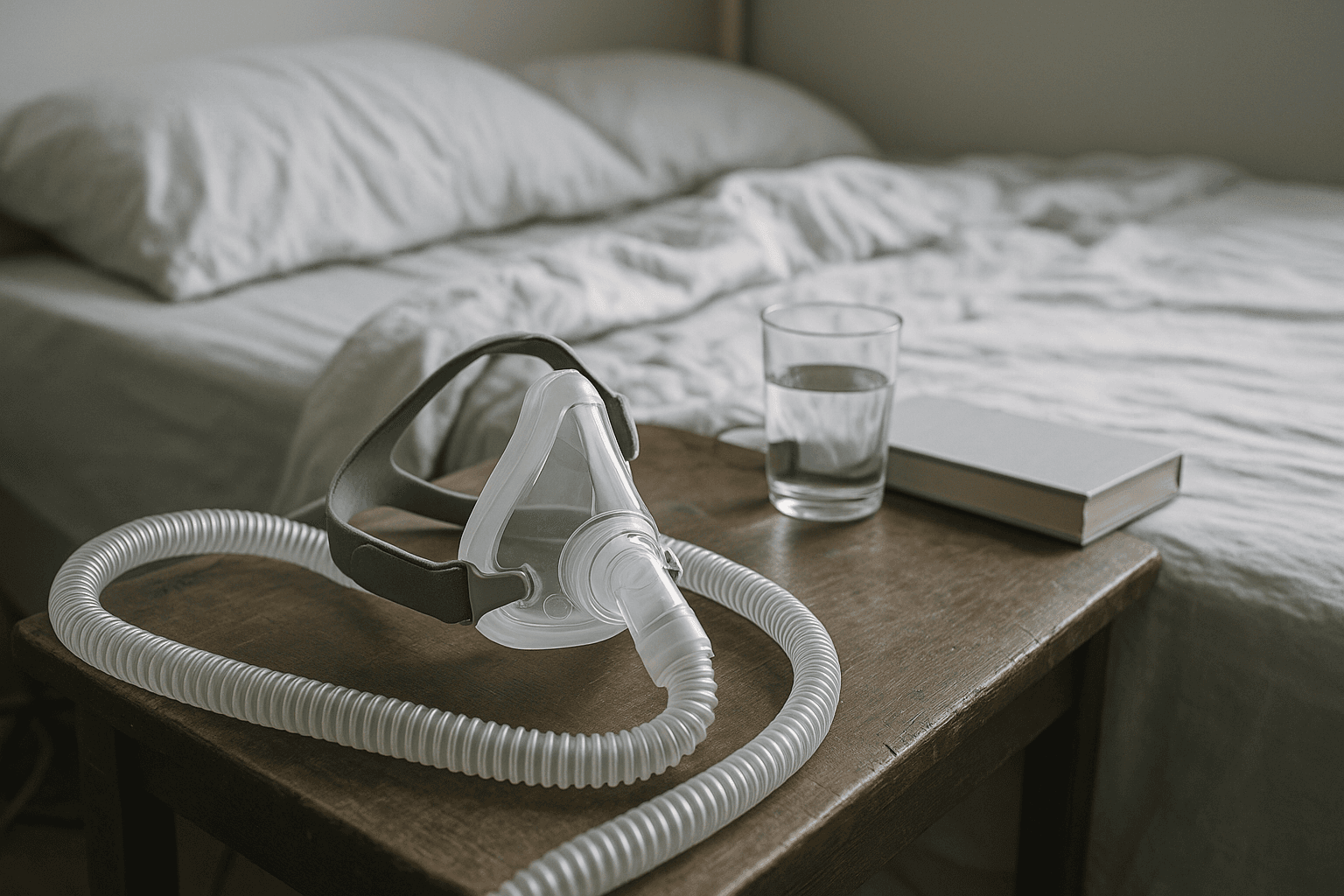
Obstructive sleep apnea (OSA) is the clearest example. Repeated airway collapse fragments sleep and lowers oxygen levels through the night, which can leave you exhausted even when total sleep time looks fine. In interviews, people with OSA and at least mild fatigue described fatigue as something distinct from sleepiness, and often the more bothersome symptom. In one study, fatigue severity did not line up well with the apnea-hypopnea index, the count of breathing pauses per hour. So the clues worth noticing are the visible ones: snoring, a partner witnessing pauses or gasping, waking unrefreshed, high blood pressure, and daytime sleepiness. Positive airway pressure, treatment that keeps the airway open with pressurized air, can improve both sleepiness and fatigue for many people, though some symptoms persist even with treatment.
The causes worth finding first
Some common drivers of fatigue are genuinely treatable, and iron is near the top. Low iron stores can contribute to fatigue with or without anemia, because iron does more than build hemoglobin. It also helps cells use oxygen to make energy, including in muscle. In four randomized trials of 714 non-anemic but iron-deficient adults, iron supplements reduced subjective fatigue. The benefit is not universal: a trial of intravenous iron in iron-deficient blood donors found no effect on fatigue, and measured physical capacity improves less reliably than how tired people feel. Still, if you have heavy periods, donate blood, or have restless legs, iron is one of the higher-yield things to discuss checking.
Thyroid is where the nuance matters. An overtly underactive thyroid can cause fatigue and often improves with thyroid hormone medicine such as levothyroxine. Subclinical hypothyroidism is a different pattern: thyroid-stimulating hormone (TSH) is mildly elevated while free thyroxine, a main thyroid hormone, stays normal, and that pattern does not reliably explain tiredness. The large TRUST trial in older adults found no improvement in tiredness on levothyroxine compared with placebo. Those participants had only mildly elevated TSH and few symptoms to begin with, which limits how far the result stretches to younger or more symptomatic people. But a BMJ practice guideline reached the same place: no clinically meaningful fatigue benefit for most adults with subclinical hypothyroidism. A borderline thyroid result should not automatically become the whole explanation for why you are tired.
Two other patterns deserve attention. Mood counts on its own terms. Depression, anxiety, stress, and inactivity are associated with severe or chronic fatigue, and fatigue, poor sleep, and low mood can reinforce one another. And when fatigue starts after a viral illness and comes with crashes after exertion, brain fog, or lightheadedness on standing, that pattern raises Long COVID or myalgic encephalomyelitis/chronic fatigue syndrome (ME/CFS). ME/CFS is marked by function-limiting fatigue, unrefreshing sleep, and symptoms that worsen after exertion. There is no single blood test that confirms either. Diagnosis is clinical and involves ruling out other plausible causes. In a population-based study of adults with post-COVID syndrome assessed in the second year after infection, the persistent cases showed fatigue, exercise intolerance, and cognitive complaints, while routine clinical and laboratory measures gave no simple diagnostic signature.
| Clue to ask about | What it may point to | Evidence-supported next step |
|---|---|---|
| Unrefreshing sleep, snoring, witnessed pauses or gasping, high blood pressure, daytime sleepiness | Obstructive sleep apnea | Sleep testing with a home or in-lab study when risk fits, not a questionnaire alone |
| Heavy periods, blood donation, restless legs | Iron deficiency, with or without anemia | Iron studies including ferritin (stored iron) and transferrin saturation (iron carried in blood) |
| Cold intolerance and other underactive-thyroid features, diabetes risk, chronic inflammatory disease | Thyroid, metabolic, or inflammatory cause | Thyroid function, fasting glucose, and an inflammatory marker when the history fits |
| Post-viral onset, crashes after exertion, brain fog, lightheadedness on standing | Long COVID or ME/CFS | Clinical evaluation; no confirmatory lab test exists |
| Low mood, anxiety, stress, rumination at night, reduced activity | Depression, anxiety, or insomnia loop | Mental health review and validated screening |
Why a giant lab panel usually is not the answer
It is tempting to think that if you sleep enough and still feel awful, some hidden number will surface once you test enough things. The evidence points the other way. A systematic review pooled 26 primary-care studies of people showing up with tiredness. The pooled estimates were 2.8 percent for anemia, 0.6 percent for malignancy, and 4.3 percent for serious somatic disease as a broader category that included anemia, malignancy, and other treatable physical illness. Depression turned up in 18.5 percent. Broad, scattershot panels rarely find hidden disease when fatigue is an isolated symptom with no additional concerning history or exam findings, and when a stray value comes back abnormal, it often does not explain the fatigue.
This cuts both ways, and both directions favor a focused approach. Normal routine labs do not mean your fatigue is imaginary. An abnormal result on a broad panel does not mean you have found the cause. Guidelines and reviews land on a focused set instead: history and exam, a fatigue severity check, and targeted labs such as a blood count, electrolytes, kidney and liver function, thyroid function, an inflammatory marker, fasting glucose, and iron studies when your risk fits, plus a sleep study when apnea or another sleep disorder is on the table.
What this means for you
Persistent fatigue after a full night's sleep earns a real evaluation, especially when it is new, worsening, limiting your life, or paired with post-exertional crashes, cognitive or mood symptoms, snoring or witnessed apnea, heavy bleeding, a chronic disease, a cancer history, or a recent medication change. The higher-value move is a focused workup matched to your symptoms, not a broad panel you order on your own.
This conclusion would shift if the science delivered what it has not yet: a validated, accurate blood test for ME/CFS or Long COVID, or trials showing that broad laboratory panels actually improve diagnosis and outcomes in unexplained fatigue. Until then, the most useful answer is not to chase every possible test. It is to find out why your sleep is not restoring you, and to look first at causes a focused evaluation can name and treat.