
Can a Daily Handful of Nuts Help Prevent High Blood Pressure?
A handful of nuts a day is linked to a lower chance of developing high blood pressure. A large 2026 review of long-term studies strengthens that link. That makes the habit a sensible choice if you want to protect your blood pressure. Whether the nuts themselves cause the benefit is still unsettled, because feeding trials haven't consistently lowered blood pressure.


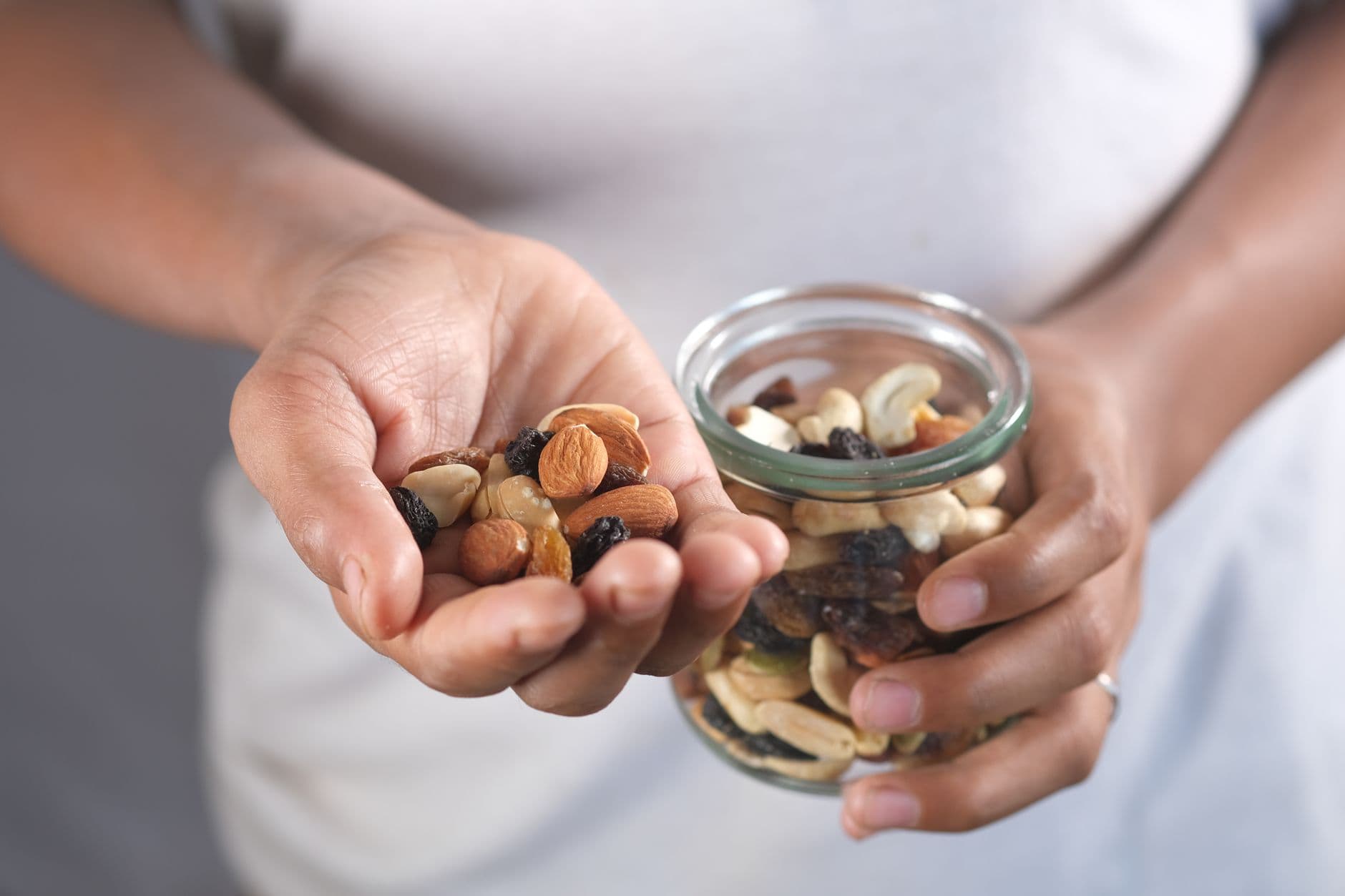
In August 2026, the British Journal of Nutrition published an updated pooled analysis of nut eating and new cases of high blood pressure. The researchers combined eight prospective studies that followed 143,380 adults in the US, Europe, and Asia, of whom 20,665 developed hypertension. People who ate the most nuts had about a 16% lower relative risk of developing it than people who ate the least. This is a link seen in people's eating habits over time, so on its own it can't prove the nuts caused the lower risk.
What eight studies add to the old four
The link itself isn't new. A 2014 review pooled four cohorts and found an inverse association, though its per-serving estimate was borderline. The new review doubles the number of studies and narrows the uncertainty around the estimate for each daily serving. The result held when each study was dropped in turn, and no sign of publication bias turned up. The inverse association also appeared in most subgroups, including men and women, shorter and longer follow-up, and different regions. Six of the eight studies were rated high quality.
| Evidence | Outcome and main finding | What it settles |
|---|---|---|
| Zhou review, 2014 (4 cohorts) | Developing hypertension: about a third lower relative risk per additional daily serving, but the estimate was borderline | Supported a link; the per-serving estimate remained imprecise |
| Metoudi review, 2026 (8 cohorts) | Developing hypertension: about a fifth lower relative risk per additional 28 g daily serving, with the plausible range staying clearly below no association | Makes the association firmer and the per-serving estimate more precise; can't show nuts cause it |
| Arnesen trial synthesis, 2023 (11 randomized trials) | Blood pressure change: the evidence didn't establish a reduction | Finds no clear average blood pressure drop from adding nuts; doesn't test long-term prevention |
Why the case for cause is still open
A sharper association still carries the weaknesses of any diet cohort. The studies disagreed substantially about how much lower risk was per daily serving. Most measured diet once at the start and never again, and none corrected for errors in how people report what they eat. People who eat more nuts also tend to have healthier diets in other ways, and statistical adjustment may not fully account for that. Weighing all of this with World Cancer Research Fund criteria, the authors graded a causal effect as "probable" and stopped short of their top grade, "convincing."
Randomized trials could settle the question of cause, and so far they point in different directions. Some syntheses of feeding trials found blood pressure reductions with almonds, pistachios, and cashews specifically. Others, including the 2023 synthesis in the table, found no clear effect. These trials measure changes in blood pressure, which is a different outcome from whether someone develops hypertension over years, so a null trial result doesn't cancel the cohort finding. Biological explanations exist, such as better function of the blood vessel lining and L-arginine from nuts feeding nitric oxide production, but they remain proposed routes to preventing hypertension.
Three of the four authors are affiliated with Plant-Based Health Professionals UK, which funded two of them and is directed by the third. The authors state the funder had no role in the design, analysis, or interpretation, and the senior author declared no conflict.
No one can yet put a number on how much a daily handful would lower your own risk, and the review didn't try. The decision comes down to a trade. On the cost side, randomized trials generally find no meaningful increase in average body weight from adding nuts, which addresses the usual calorie worry. On the benefit side, if even part of the association is causal, it could help you avoid or delay hypertension. For a food this easy to add, that's a reasonable bet.
A handful a day, unsalted
About 28 grams, roughly one handful, is the serving the review authors support, in line with several European and North American dietary guidelines. The modeled curve seemed to flatten somewhere around 25 to 30 grams a day. The statistical evidence for that shape was weak, though, so there's no proven optimal dose or established extra protection from bigger portions. None of the studies separated walnuts from almonds or peanuts, or salted from unsalted, so no particular nut has an edge on this evidence. The authors note that salt could blunt any benefit, which makes unsalted nuts the sensible default.
Nuts also fit inside an eating pattern with stronger evidence behind it. The 2025 American Heart Association and American College of Cardiology hypertension guideline strongly recommends a heart-healthy pattern such as the Dietary Approaches to Stop Hypertension (DASH) diet, along with cutting sodium, for all adults. A handful of unsalted nuts slots easily into that pattern. If you already have hypertension, nuts can be part of your diet, but nothing here is a reason to change your treatment.
The missing piece is a large, long randomized trial that assigns people to a defined daily serving of nuts or a specified replacement food and counts new hypertension diagnoses over years. That trial would help establish whether nuts themselves provide protection and how large the benefit is. Until one exists, the 2026 review gives a daily handful stronger support as a food choice that may help prevent high blood pressure, with the size of the effect still unproven.