
Does Sleeping Under 7 Hours Shorten Your Life?
A 2025 meta-analysis of 79 cohort studies, studies that follow groups of people over time, found that people reporting under 7 hours of sleep had a 14% higher risk of all-cause mortality, meaning death from any cause, than people reporting 7 to 8 hours. That signal is worth respecting, but it is not proof that the missing hours are shortening your life. The same analysis found a 34% higher mortality risk among people sleeping 9 or more hours, a pattern that points less to a clean 'hours cause death' equation than to illness quietly reshaping how people sleep. What is solid: cutting sleep short can strain the systems that keep you healthy.


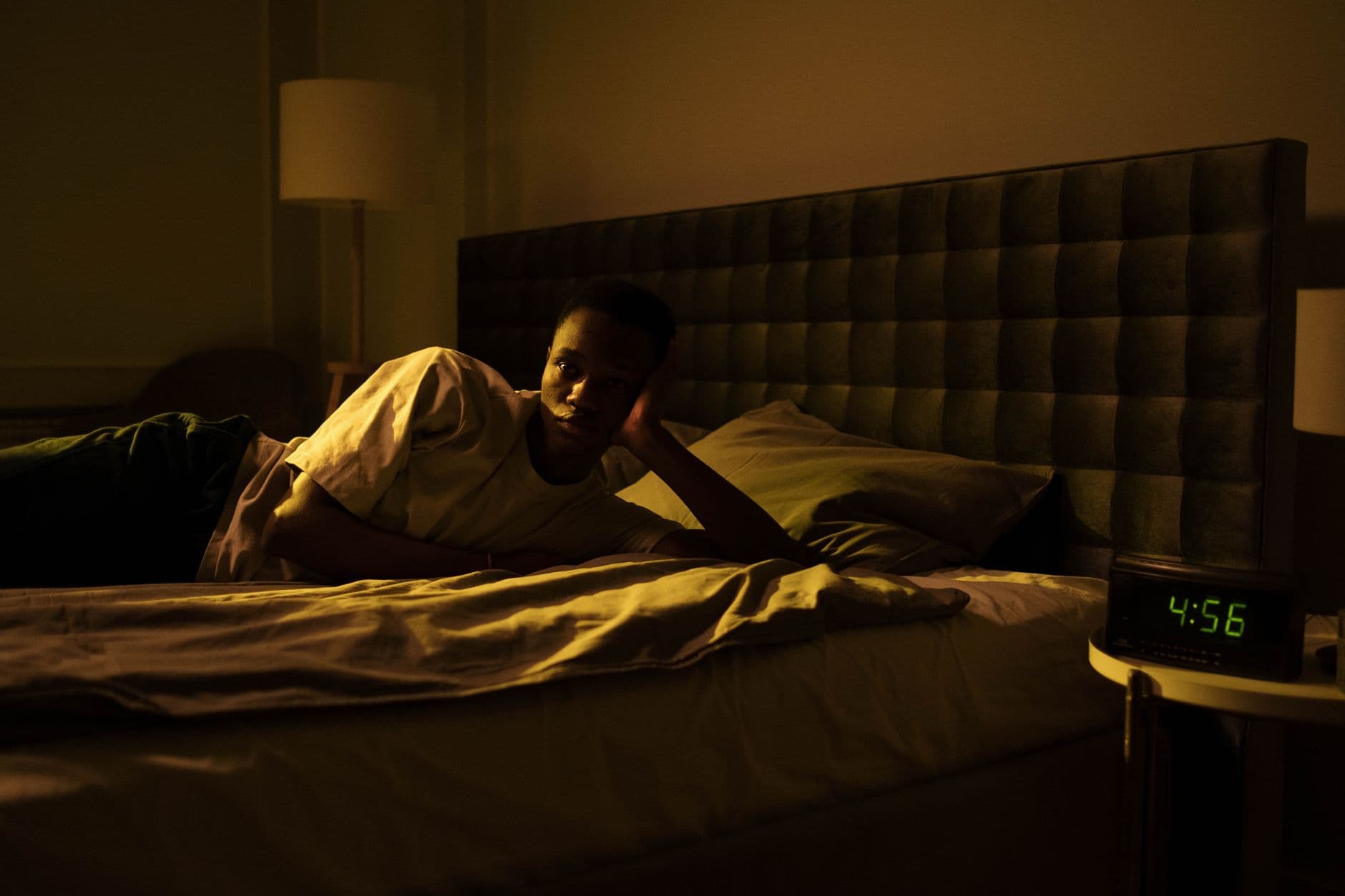
If you regularly sleep less than 7 hours, that pattern deserves attention, but the evidence does not prove those missing hours are directly subtracting time from your life. Large observational studies repeatedly find higher death risk among people who report short sleep, and controlled experiments show that cutting sleep to 4 to 5.5 hours, or going without sleep for a night, can quickly push metabolism, stress biology, and muscle protein turnover, the balance between building and breaking down muscle protein, in harmful directions. What no study can yet do is turn your nightly sleep number into a personal loss of years, because illness and sleep disorders can change how much people sleep before they change mortality risk.
The number people are quoting
The headline comes from a 2025 meta-analysis in GeroScience, a study that pooled 79 cohort studies following people over time. Compared with a 7-to-8-hour reference, sleeping under 7 hours was associated with about 14% higher all-cause mortality, the risk of death from any cause. Cappuccio and colleagues' 2010 pooling of more than 1.3 million people found a similar 12% increase. That consistency matters. If the association is partly causal, it could matter at population scale.
But the same 2025 analysis found something that complicates the simple reading. People sleeping 9 or more hours had roughly 34% higher mortality, a substantially larger signal than short sleepers. There is no convincing evidence that simply spending extra time asleep causes such a large mortality increase.
Why the long-sleep clue points at illness
A likely explanation for the oversized long-sleep signal is not sleep alone. Some people who are sick, frail, depressed, in chronic pain, or not yet diagnosed sleep longer, sleep less, or spend more time awake in bed. Heart failure, cancer, depression, chronic pain, and obstructive sleep apnea, repeated breathing pauses during sleep, can all disturb sleep. Sleep can contribute to illness, result from illness, and signal illness, occasionally all three at once. That is reverse causation: the outcome being measured can be helping drive the sleep pattern, not only the other way around.
When studies account for baseline health, the association can shrink or disappear. In a 48-year follow-up of Finnish businessmen, the higher death risk tied to midlife short sleep vanished after adjusting for smoking, alcohol, BMI, and self-rated health. In the 45 and Up Study, sleep duration was not significantly associated with mortality among participants in good baseline health. In a companion 45 and Up analysis, short sleep predicted future cardiovascular disease, meaning heart and blood vessel disease, only among people who already reported ill health at baseline; the link disappeared after those people were excluded and baseline health was adjusted for.
Genetic studies were meant to help with reverse causation. Mendelian randomization, a method that uses naturally inherited gene variants as proxies for an exposure, can reduce the chance that illness is causing the exposure. In a UK Biobank analysis, genetically predicted short sleep supported a potential causal link to hypertension, high blood pressure, myocardial infarction, meaning heart attack, coronary artery disease, narrowed or diseased heart arteries, and several other cardiovascular outcomes, diseases of the heart and blood vessels, while genetically predicted long sleep was not associated with any cardiovascular disease. But the method depends on a strong assumption: the gene variants affect disease only through sleep. That assumption is hard to defend for sleep, because sleep biology overlaps with arousal, metabolism, and stress pathways that also affect the heart.
In a family study paired with cell and mouse experiments, one rare natural-short-sleep mutation was found in ADRB1, a gene for the beta-1 adrenergic receptor, a protein that responds to adrenaline-like signaling. The mouse work linked that receptor to wake-promoting neurons in the brainstem, a lower brain region involved in sleep-wake control. The same receptor is also important in the heart and is a target of beta-blocker drugs. So a genetic link between short sleep and heart disease could reflect lost sleep, direct cardiovascular biology, or both. That problem is called horizontal pleiotropy, meaning one gene affects an outcome through more than one pathway. Either way, Mendelian randomization does not turn the 14% cohort estimate into a proven personal mortality effect.
What each kind of study can actually tell you
| Evidence type | What it shows | What it cannot settle | Reader takeaway |
|---|---|---|---|
| Observational cohorts and meta-analyses | Short and long self-reported sleep both track with higher mortality risk; short sleep was about 14% higher in the 2025 meta-analysis | Whether sleep hours cause death or illness drives sleep hours | A consistent signal worth respecting, not a personal risk figure |
| Mendelian randomization, a gene-based natural experiment | Genetically predicted short sleep is linked to higher cardiovascular disease risk in some analyses | All-cause mortality directly, or whether variants act only through sleep rather than pleiotropy, one gene influencing an outcome through more than one pathway | Supports a real cardiovascular stake in short sleep, with genuine uncertainty |
| Controlled sleep-restriction experiments | Days of 4 to 5.5 hours, or a night with no sleep, worsen insulin sensitivity and glucose tolerance, how well the body responds to insulin and clears sugar, and can alter stress and muscle biology | Whether these short-term shifts translate into a measurable lifespan effect | The clearest reason to protect sleep, without claiming proven years gained |
What short sleep can do to your body
The strongest causal evidence comes from experiments where healthy people have their sleep cut on purpose, then recover. In one trial, a week of 5 hours in bed per night reduced insulin sensitivity, the body's ability to respond to insulin and move glucose out of the bloodstream, by about 20% on an intravenous glucose tolerance test and 11% on a glucose-clamp test. In one small randomized crossover study of 13 healthy adults, a single night without sleep raised plasma cortisol, a stress hormone, by 21%, lowered plasma testosterone by 24%, and reduced post-meal muscle protein synthesis, the rate at which muscle rebuilds protein after eating, by 18%. In dieters assigned to 5.5 hours in bed per night for two weeks on the same calorie deficit, fat-free mass loss, the non-fat part of body weight, was 60% higher and fat loss was 55% lower than when they had 8.5 hours in bed. These studies show short-term causal strain on glucose control and body-composition biology, not a measured lifespan effect.
Two qualifiers matter. First, these protocols are severe and brief, often 4 to 5.5 hours in bed per night or none at all, far heavier than an occasional late night. Second, recovery differs by outcome: some effects improve when normal sleep returns, while attention can remain impaired after a single recovery night in chronic-restriction experiments. An occasional rough night is not the exposure that was studied, and it is not worth agonizing over. A sustained pattern of short, fragmented sleep is a different matter, because it keeps those systems pushed in the wrong direction.
What the evidence justifies
Protecting adequate, regular sleep is a defensible health priority not because a cohort study assigned it a number, but because we know which systems short sleep can move and in which direction. Persistent short sleep, insomnia symptoms, unrefreshing sleep, loud snoring or witnessed pauses that suggest obstructive sleep apnea, a condition with repeated breathing pauses during sleep, or a new drift toward long sleep are worth investigating, since any of these can be the visible edge of a treatable disorder or an emerging illness rather than a harmless habit. What the evidence does not support is treating the 14% figure as your personal countdown, or assuming that simply spending more time in bed has been shown to add years. It has not: no randomized trial has tested sleep extension against lifespan, and the trials that exist measure intermediate outcomes, not survival. The judgment would shift if long-term sleep-extension studies showed sustained gains in objectively measured sleep translating into fewer deaths, or if cleaner causal analyses could separate sleep duration from the depression, pain, sleep apnea, frailty, and heart and metabolic disease tangled up with it. Until then, short sleep is a plausible lever on health and a clear stressor on systems that keep people well, but not a proven equation where every hour below 7 subtracts years.