
The 2.5 mg Starting Dose of Zepbound Made You Sick. Can You Start Below It With the KwikPen?
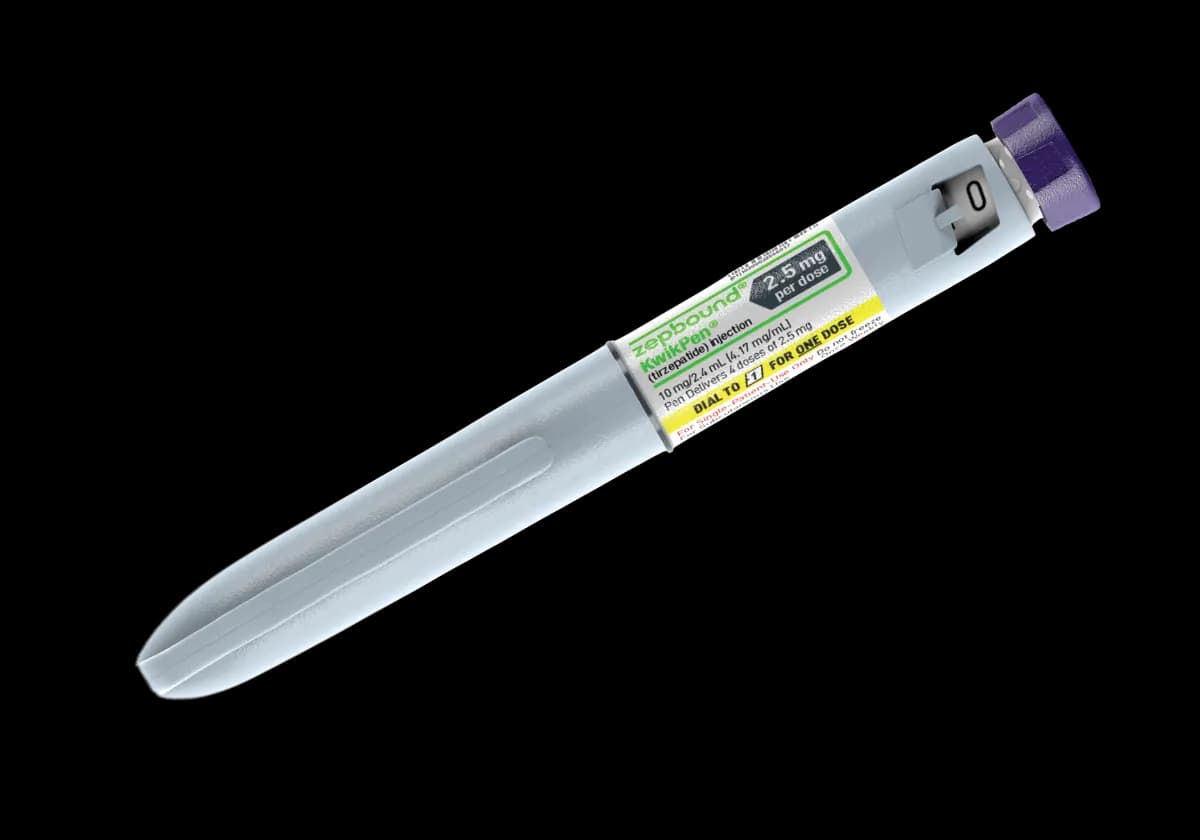
If the first couple of 2.5 mg doses of Zepbound hit you hard with nausea, vomiting, or diarrhea, you have two obvious options: quit, or grit your teeth. There is a third. The multi-dose KwikPen has a dial that clicks as you turn it, and each click delivers a small, predictable volume, so you can take a fraction of the 2.5 mg starting dose and work up gradually instead. Here is how the click system works, the math behind it, and what else helps with the side effects.


Why microdose below the starting dose?
The 2.5 mg dose is meant to be the gentle introduction, the rung before the "real" doses. But the starting dose is one size for everyone, and some people are more sensitive to tirzepatide than the average trial participant. For them, even 2.5 mg brings a rough week or two of nausea, vomiting, or diarrhea.
Those side effects are common and usually mild to moderate: nausea affects roughly 25 to 40% of people on tirzepatide, diarrhea 19 to 31%, constipation 11 to 23%, and vomiting 8 to 13%. They show up most in the first weeks and fade with time. But "usually mild and temporary" is cold comfort when you are the one who cannot keep food down.
Microdosing means starting below 2.5 mg, say 1.25 mg, letting your body adjust, then climbing to the full starting dose over a few weeks instead of all at once. Smaller steps mean a gentler adaptation curve. It also lets you find your lowest effective dose, since appetite response varies a lot between people and some get full benefit at doses well below the maximum.
There is good reason to think slower escalation helps. Nausea and vomiting on these drugs follow a tolerance curve: the dose that made you sick in week one bothers you less by week four as your body adapts. The effect is large. The amount of tirzepatide it takes to nauseate half of people is several times higher when the drug is stepped up gradually than when it is introduced quickly. Give the adaptation more time at each step and you have less to fight at the next one.
To be straight with you, no trial has tested starting below 2.5 mg. This is us reasoning from how the drug behaves, not copying a published protocol. The logic is sound and the risk of a smaller dose is low, which is why we are comfortable with it.
You also do not give up results by going slow. In the SURMOUNT trials, weight loss was similar whether or not people had GI side effects. Feeling sick is not the mechanism. There is no prize for tolerating misery.
A note on where this sits. Using the pen this way is off-label, meaning it is not the dosing method Lilly printed on the box. That does not make it wrong. Guidelines and labels are built around the average patient and the doses that were run through trials, and off-label prescribing is routine, legal medicine when the reasoning is sound. We are comfortable individualizing dose when it serves you. The click chart is an estimation tool, not a manufacturer-validated dosing method, so treat the numbers as close approximations and keep your care team in the loop.
How the KwikPen click system works
This applies only to the multi-dose KwikPen that contains 4 doses of 0.6 mL each (2.4 mL total). It does not apply to the single-dose auto-injector pens or to vials.
The pen was engineered to deliver four preset full doses, not partial ones, so what follows is a way of using the device outside its intended design. That is doable, but it puts the accuracy on you rather than on a mechanism built to guarantee it.
When you turn the dose dial, it clicks. Each click dispenses approximately 0.01 mL. A full dose is 60 clicks, which delivers 0.6 mL. This click-to-volume relationship is not published by Lilly or the FDA; it comes from the pen's mechanics and community measurement, which is exactly why you treat the output as an estimate.
The milligrams per click depend on which pen strength you have, because every pen holds the same volume but a different concentration. The formula is simple:
mg per click = pen strength ÷ 60.
The 2.5 mg pen is where most people start, and it is the one to use for easing into therapy. On a 2.5 mg pen, one click is about 0.042 mg. The same formula works for any strength: a 5 mg pen is 0.083 mg per click, a 15 mg pen is 0.25 mg per click.
To figure out your dose: your dose in mg = pen strength × (clicks ÷ 60).
Here is what common click counts deliver on a 2.5 mg pen, which is the starting dose:
| Clicks | Volume (mL) | Fraction of full dose | Dose on 2.5 mg pen |
|---|---|---|---|
| 10 | 0.10 | 17% | 0.42 mg |
| 15 | 0.15 | 25% | 0.63 mg |
| 20 | 0.20 | 33% | 0.83 mg |
| 30 | 0.30 | 50% | 1.25 mg |
| 40 | 0.40 | 67% | 1.67 mg |
| 45 | 0.45 | 75% | 1.88 mg |
| 60 | 0.60 | 100% | 2.5 mg |
A worked example: even the starting 2.5 mg dose can be rough for some people. Instead of quitting or gutting it out, you could begin at 30 clicks on your 2.5 mg pen for 1.25 mg, hold there for a few weeks while your gut adapts, then step up to 45 clicks (1.88 mg), and finally the full 60 clicks (2.5 mg) before moving to your 5 mg pen. You are climbing the same ladder, just with more rungs.
Doing it in practice
- Confirm your pen. This only works with the multi-dose KwikPen (4 doses of 0.6 mL). Check the label.
- Use a fresh needle every time and prime the pen per the manufacturer's instructions before each dose. Because microdosing means more than the usual four injections from one pen, do not reuse needles. A new one each time keeps the dose accurate and avoids clogs and contamination.
- Dial slowly and count clicks. The dial markings will not show your intended milligram dose for a partial draw, so the click count is what you are tracking. If you overshoot, follow the pen instructions for dialing back rather than guessing.
- Inject and hold for the full count the instructions specify so the entire dialed volume is delivered.
- Write it down. Log the date, pen strength, and click count every time. Partial dosing makes it easy to lose track of how much remains in the pen and when you last dosed.
- Mind the 30-day clock. Once you have used a pen the first time, discard it 30 days later or after four weekly doses, whichever comes first. This matters more when you microdose, because drawing partial doses means you may inject from the same pen more than four times and be tempted to keep going past 30 days. Do not. The preservative and drug stability are only rated for that window, so a pen that still has liquid in it can still be past its date.
Two things worth knowing alongside the steps:
- The multi-dose KwikPen contains benzyl alcohol as a preservative, which is what allows repeated use from one pen. It is not an issue for the adults this is written for, but worth knowing if you have a specific sensitivity to it.
- The click values are approximations rounded to the nearest hundredth of a mL, so treat your calculated dose as an estimate, not a lab-grade measurement. If you are working with us on this, keep us posted on your click counts and how you feel so we can adjust with you.
Other ways to blunt GI side effects
Microdosing is one tool. These help too, and they stack.
- Eat smaller meals, more often, and slowly. Stop when you feel full, which will arrive sooner than you expect. High-fat, fried, and very sweet foods sit badly on a slowed stomach, so keep them minimal, especially in the days after an injection.
- Stay hydrated. Vomiting and diarrhea can dehydrate you enough to stress your kidneys, and that is the complication worth taking seriously.
- Stay at a dose longer. The label sets a minimum of four weeks at each dose before moving up, but there is no maximum. The trials let people sit at a dose for up to eight weeks to let symptoms settle, and you can hold longer than that if you want. Stepping back down is always an option for persistent symptoms too.
Medications by symptom may be worth asking your prescribing physician as well:
- Nausea: prochlorperazine is a reasonable first choice because, unlike ondansetron, it does not worsen constipation. Ginger or peppermint tea helps some people.
- Constipation: magnesium citrate or polyethylene glycol (MiraLAX).
- Diarrhea: loperamide for acute episodes.
- Reflux or dyspepsia: famotidine or a proton pump inhibitor.
If symptoms are severe or will not quit despite all of the above, tell your prescribing physician. Dehydration that stresses the kidneys is the line where this stops being a nuisance and becomes something to act on.