A painless, radiation-free scan of the arteries that supply your brain. It detects plaque buildup and narrowing linked to stroke risk, often years before any symptoms.
Most strokes give no warning. The plaque that causes them builds silently for decades in the carotid arteries of your neck, where it happens to be easiest to see. A carotid ultrasound uses sound waves to image those arteries directly, showing whether atherosclerosis has started and how far it has progressed, so you can treat it while it is still just a finding and not an event.
How It Works
Step 1: A Quick, Painless Scan
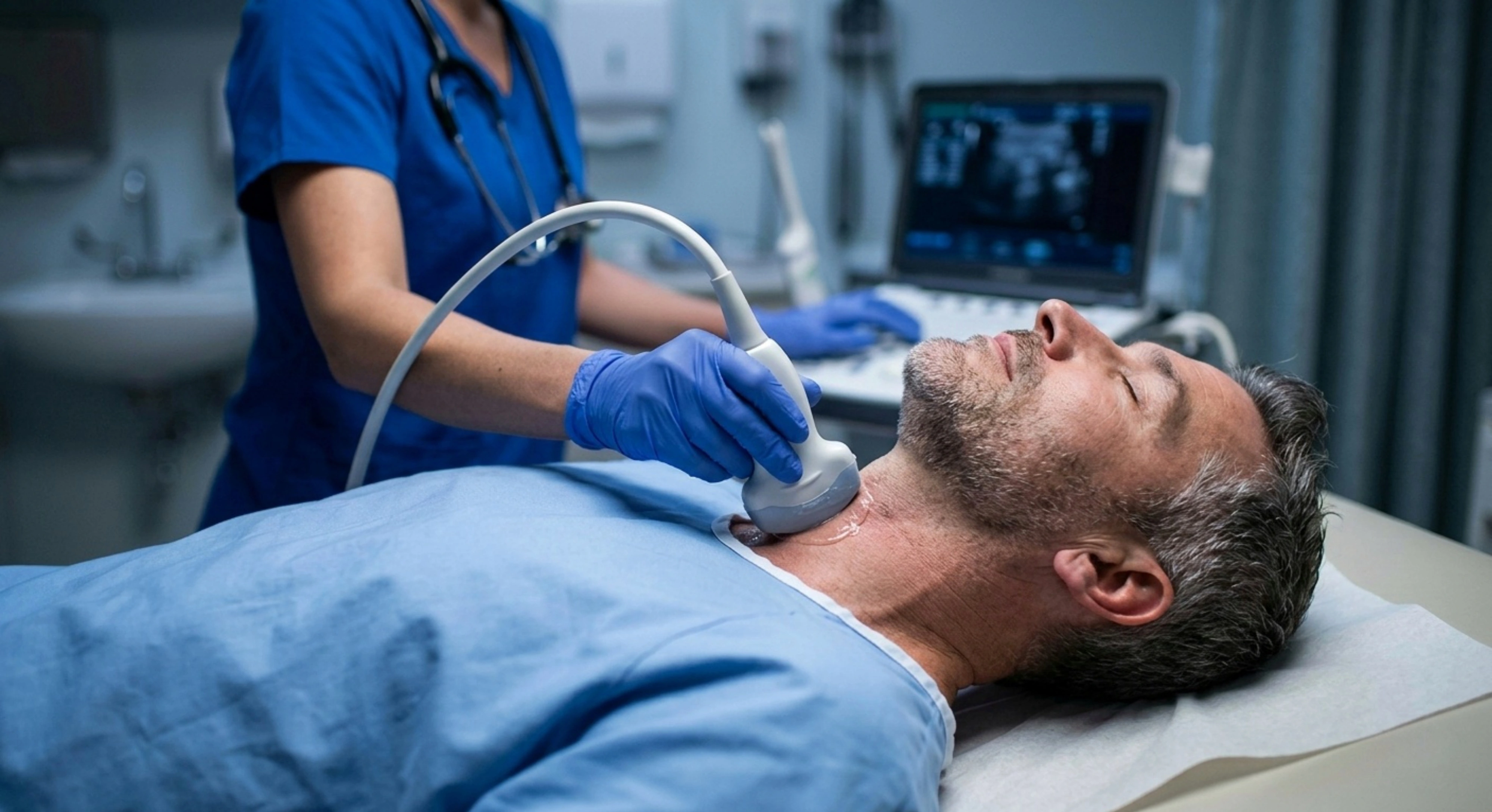
A sonographer applies gel to your neck and moves a small handheld probe over each carotid artery. The probe uses sound waves, not radiation, to image the artery walls and measure how fast blood is flowing through them. The whole exam takes about 30 minutes.
Step 2: See Plaque Before It Causes Symptoms
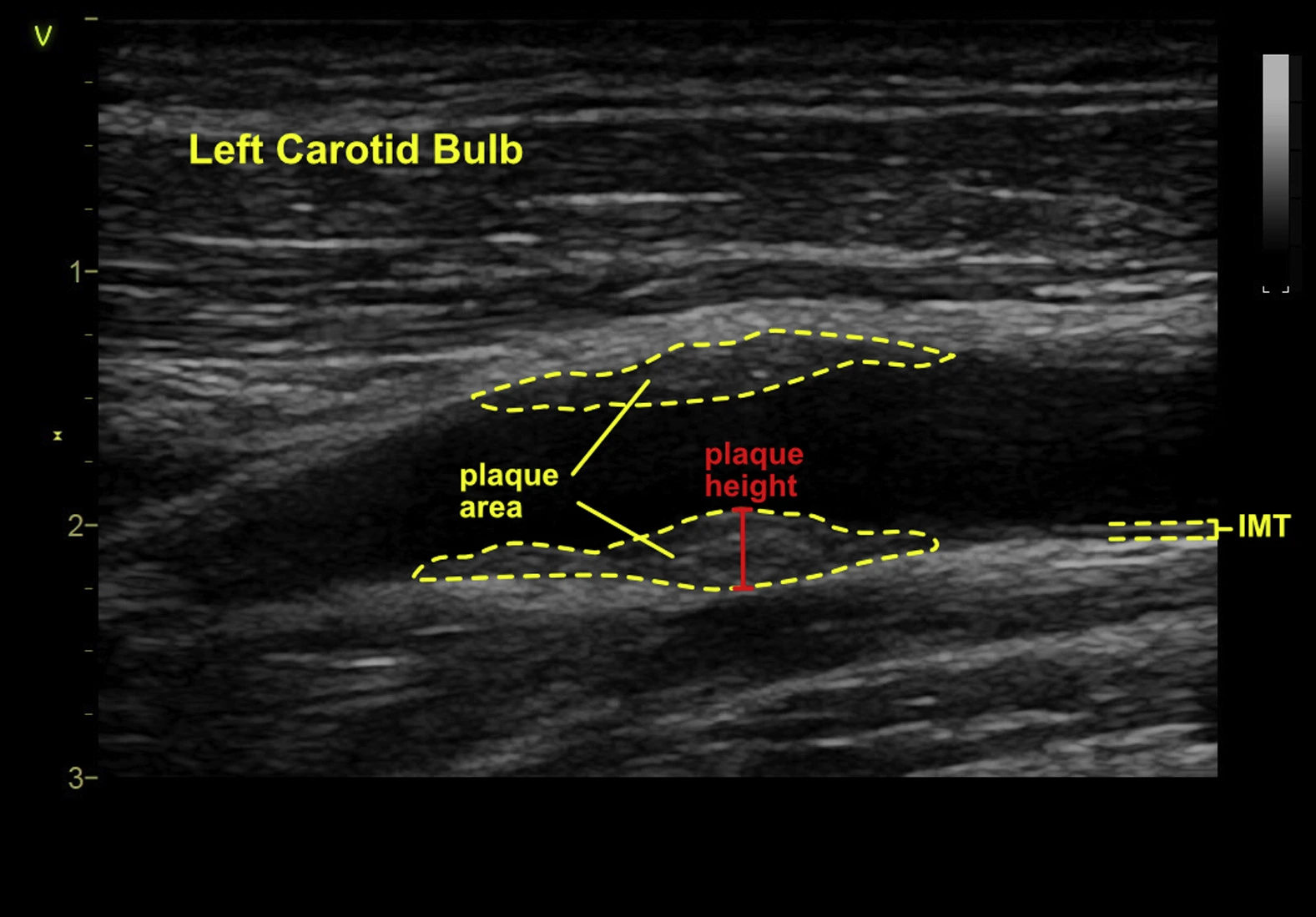
The scan shows whether plaque has started building up in the arteries that supply your brain, and whether any narrowing is restricting blood flow. Because carotid plaque develops silently over decades, this is often the first hard evidence of atherosclerosis in people who feel completely fine.
Step 3: Expert Review and Personalized Guidance
A radiologist reviews your images and reports whether plaque is present and how much, if any, narrowing exists in each artery. You receive the full report along with an explanation of your results.
Pricing
We'll help you find the testing locations near you and handle the appointment scheduling. Enter your location below to get started.
Your Address
Related Articles
Read more about stroke prevention and keeping your arteries healthy.
 Instalab