 Instalab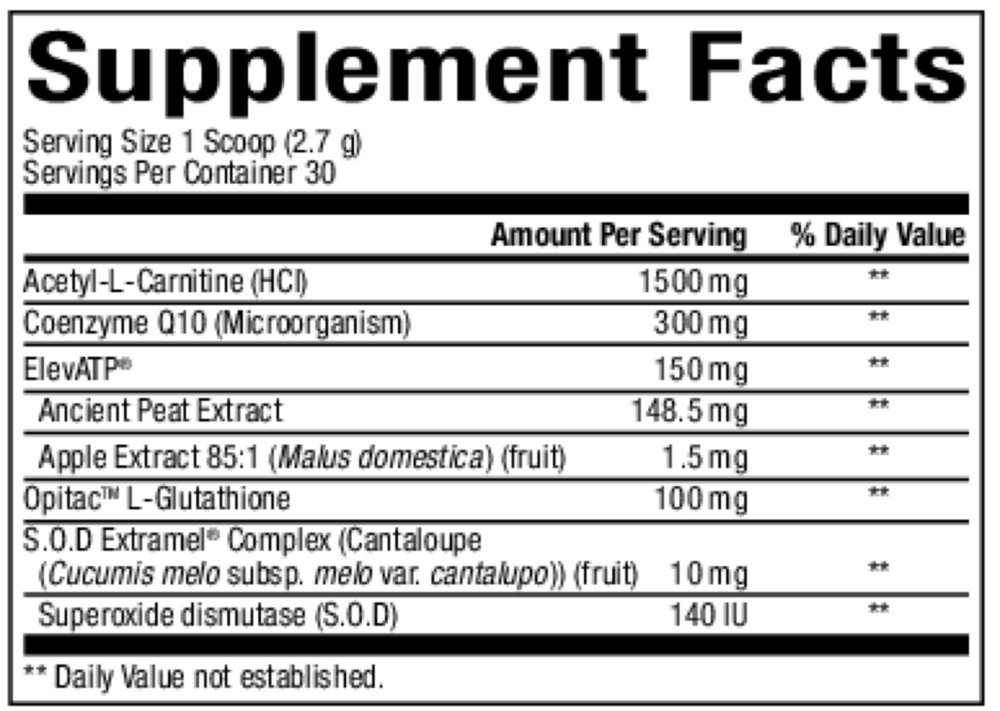
Bioclinic Naturals
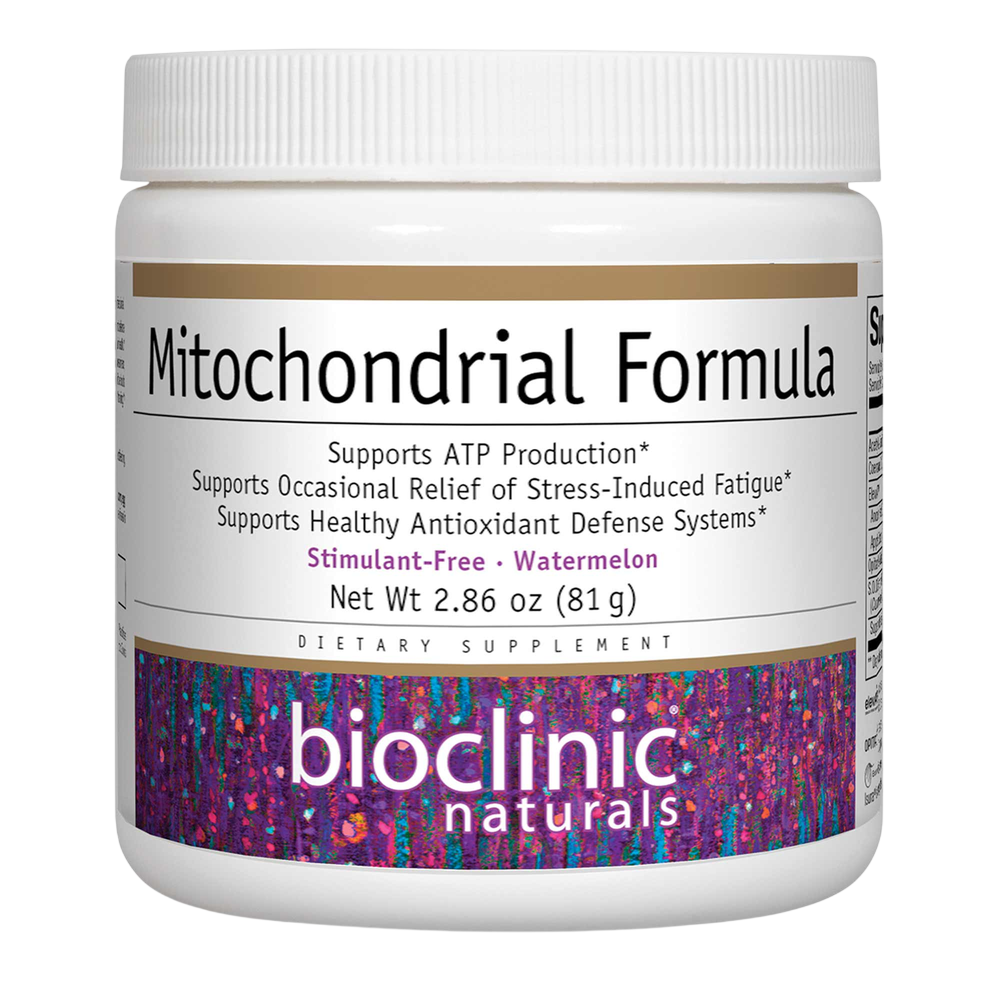
Mitochondrial Formula Watermelon by Bioclinic Naturals
81 grams
Watermelon-flavored powder with acetyl-L-carnitine, CoQ10, glutathione, SOD, and ElevATP$62.99
Purchase options
Practitioner-grade brand3rd-party testedFree shipping $50+
Vegetarian·Gluten Free·Soy Free·Dairy Free·Milk Free·Tree Nut Free·
Bioclinic Naturals Mitochondrial Formula Watermelon overview
This is a watermelon-flavored powder from Bioclinic Naturals, formulated for adults who want these ingredients in a single mixable scoop. The 81 g container holds 30 servings. The powder is stimulant-free and suitable for vegetarians.
Each 2.7 g scoop provides acetyl-L-carnitine (as HCl) 1,500 mg, coenzyme Q10 (from microorganism fermentation) 300 mg, ElevATP 150 mg (ancient peat extract 148.5 mg and apple extract 1.5 mg), Opitac L-glutathione 100 mg, and S.O.D Extramel complex 10 mg (providing 140 IU superoxide dismutase). The other ingredients are shellac gum, natural flavor, and purified stevia leaf extract.
Suggested use is to dissolve 1 heaping scoop (2.7 g) per day in 8 oz of water, or as directed by a health care professional. Coenzyme Q10 is fat-soluble, so it can be taken with a meal that contains some fat. You may split the scoop across two times of day if you prefer.
If you take prescription medications, are pregnant or breastfeeding, or are receiving cancer treatment, talk to your clinician before starting and review the warnings below.
Frequently asked questions
What is in each scoop?
Each 2.7 g scoop provides acetyl-L-carnitine (as HCl) 1,500 mg, coenzyme Q10 300 mg, ElevATP 150 mg, Opitac L-glutathione 100 mg, and S.O.D Extramel complex 10 mg (140 IU superoxide dismutase).
How many servings are in the container?
The 81 g container holds 30 servings at one 2.7 g scoop per day.
How do I take it?
Dissolve 1 heaping scoop (2.7 g) per day in 8 oz of water, or as directed by a health care professional. You may split the scoop across two times of day if you prefer.
Should I take it with food?
Coenzyme Q10 is fat-soluble, so the manufacturer suggests it can be taken with a meal that contains some fat. Taking it with breakfast or lunch works for most people.
What form of coenzyme Q10 is used?
The label lists coenzyme Q10 produced by microorganism fermentation.
Is it vegetarian and what is it free from?
The manufacturer lists this product as suitable for vegetarians and free from dairy, sugar, wheat, gluten, yeast, soy, corn, egg, fish, shellfish, salt, tree nuts, and GMOs. It is also stimulant-free.
What are the other ingredients?
The other (non-medicinal) ingredients are shellac gum, natural flavor, and purified stevia leaf extract.
How to take it & ingredients
Suggested use: Dissolve 1 heaping scoop (2.7g) per day in 8oz of water or as directed by a health care professional.
Active ingredients
1 scoop = 2.7 g per serving
Acetyl-L-Carnitine
HCL
HCL
1500 mg
Coenzyme Q10
Microorganism
Microorganism
300 mg
▼
ElevATP®
150 mg
Ancient Peat Extract
148.5 mg
Apple Extract 85:1
Malus domestica, fruit
Malus domestica, fruit
1.5 mg
Opitac™ L-Glutathione
100 mg
▼
S.O.D Extramel® Complex
Cantaloupe (Cucumis melo subsp. melo var. cantalupo), fruit
Cantaloupe (Cucumis melo subsp. melo var. cantalupo), fruit
10 mg
Superoxide Dismutase (S.O.D)
140 IU
Other ingredients: Shellac gum, Natural flavor, Purified stevia leaf extract
Certifications
Benefits
Warnings