 Instalab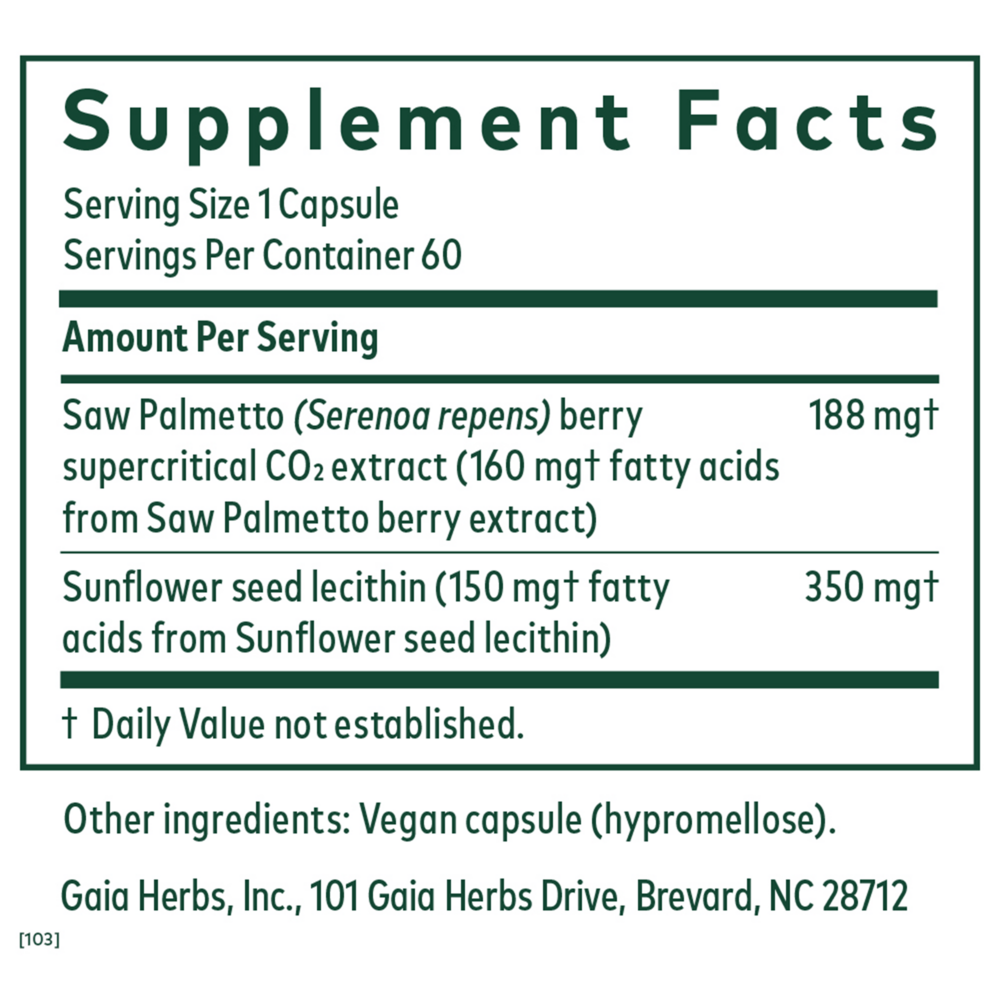
Gaia Herbs Pro
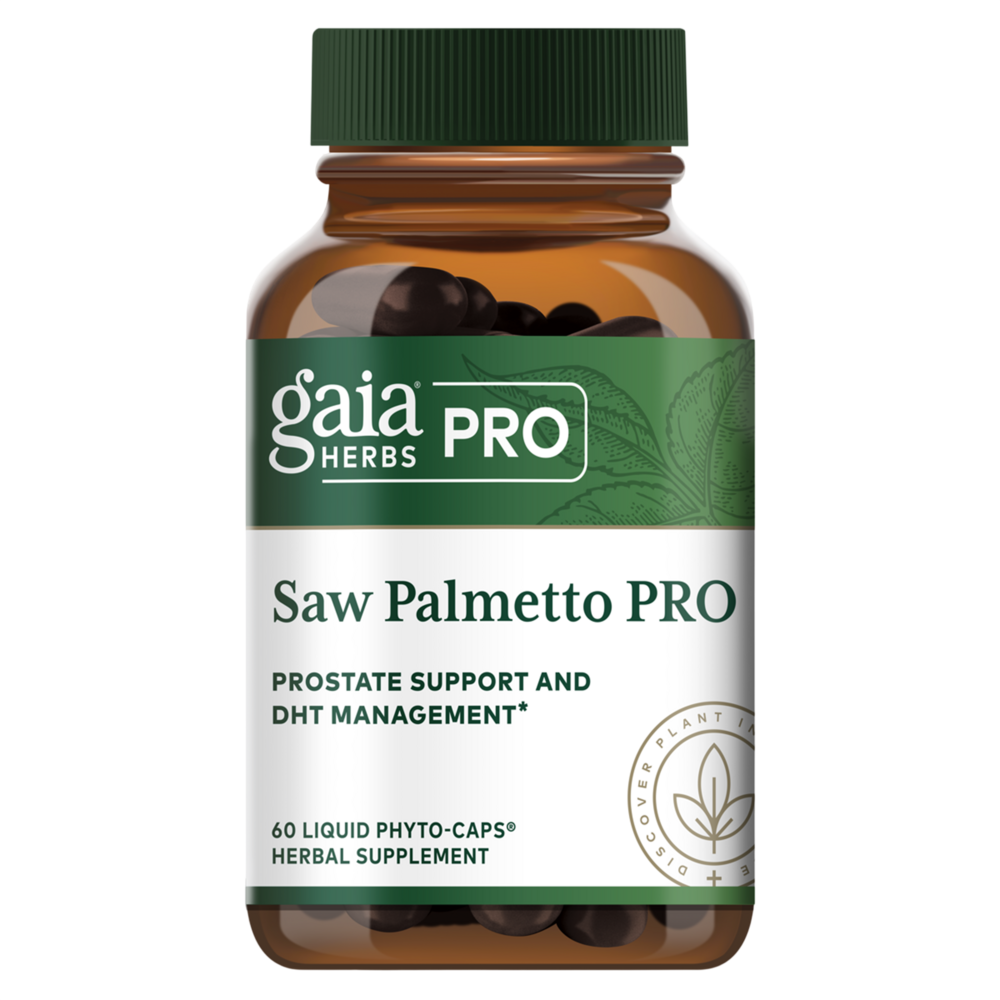
Saw Palmetto PRO by Gaia Herbs Pro
60 capsules · 60-day supply
Support Prostate Health and Hormonal Balance with Saw Palmetto$40.99
Purchase options
Practitioner-grade brand3rd-party testedFree shipping $50+
Vegan·Vegetarian·Gluten Free·Soy Free·Dairy Free·Egg Free·
Gaia Herbs Pro Saw Palmetto PRO overview
If you’re a man with mild lower urinary tract symptoms from an enlarged prostate (BPH)—nighttime trips, weak stream, urgency—saw palmetto is a reasonable first try. It’s most useful when symptoms are bothersome but not severe, and your PSA (Prostate-Specific Antigen, a prostate activity marker) is stable. This extract delivers roughly the clinically used daily amount when taken twice daily. If you have urinary retention, pain, blood in urine, fever, or a fast-rising PSA, see a clinician first.
Saw palmetto concentrates fatty acids and plant sterols that inhibit 5‑alpha‑reductase, the enzyme that converts testosterone into DHT (dihydrotestosterone, a stronger signal that drives prostate growth). It also has mild anti‑inflammatory effects by shifting eicosanoids (cell signaling fats) made in the prostate. In trials, this mechanism translates to small but meaningful improvements in symptom scores and nighttime urination for responders, with little change in PSA. Evidence is mixed, so give it a defined trial window.
Take 1 capsule twice daily between meals as directed. This supercritical CO2 extract is lipid‑rich, and the added sunflower lecithin helps absorption even away from food. Consistency matters: expect a fair test to take 4 to 8 weeks, with full effect by 12 weeks. If you need a single daily dose, many studies used about 320 mg/day of standardized extract; this two‑a‑day schedule reaches a similar total amount.
Caution with blood thinners: warfarin, apixaban, rivaroxaban, dabigatran, aspirin, or clopidogrel, due to bleeding risk. Hold 1–2 weeks before surgery unless your surgeon approves. If you already take finasteride or dutasteride (prescription DHT blockers), combining creates duplicate therapy—use only with clinician oversight. Tamsulosin (urine‑flow relaxer) can be combined, but monitor blood pressure and dizziness. Get medical evaluation first if infection is suspected or if PSA, DHT, or urinary symptoms change rapidly.
Frequently asked questions
Does saw palmetto really work for BPH?
It helps some men with mild symptoms. Trials show small improvements in symptom scores and fewer nighttime urinations, but results are mixed. It’s reasonable to try for 8–12 weeks and continue if you notice clear benefit. Severe or rapidly worsening symptoms need medical care, not supplements.
How long does saw palmetto take to work?
Give it 4 to 8 weeks for initial changes, with fuller effects by about 12 weeks. Track a simple score—nighttime trips, urgency, and stream—to judge response. If there’s no noticeable improvement by 12 weeks, it’s unlikely to help you and you should reassess.
Can I take saw palmetto with finasteride or tamsulosin?
Avoid stacking with finasteride or dutasteride without supervision; they target the same DHT pathway. Tamsulosin works differently and can be combined, but monitor for dizziness or low blood pressure, especially when standing up quickly.
Does saw palmetto lower PSA levels?
It rarely changes PSA. That’s helpful because PSA (a prostate activity marker) remains interpretable while you’re taking it. Any significant PSA rise or new urinary symptoms should prompt medical evaluation regardless of supplements.
What are common side effects of saw palmetto?
Most people tolerate it. Occasional stomach upset, nausea, or headache can occur, usually mild. Taking it away from large, greasy meals can help. Stop and seek care for unusual bleeding, severe abdominal pain, or dark urine, which are rare but important.
Is saw palmetto safe with blood thinners?
Use caution. There are case reports of increased bleeding with warfarin and a theoretical risk with apixaban, rivaroxaban, dabigatran, aspirin, and clopidogrel. If you use these drugs, involve your clinician and consider extra monitoring.
Will saw palmetto affect testosterone or fertility?
It mainly reduces DHT (a potent breakdown product of testosterone) rather than total testosterone. Most studies show minimal change in testosterone levels. Effects on fertility appear minimal, but if you’re actively pursuing pregnancy, discuss any hormone‑active supplement with your clinician.
Who should not take saw palmetto?
Skip it if you have urinary retention, suspected infection, blood in urine, severe pain, or rapidly changing PSA—get evaluated first. Avoid around surgery, and be cautious with blood thinners. Safety in pregnancy or breastfeeding isn’t established.
How to take it & ingredients
Suggested use: Adults take 1 capsule, 2 times daily between meals or as directed by your health care provider.
Active ingredients
1 capsule per serving · 60 servings
▼
Saw Palmetto
Serenoa repens, berry supercritical CO2 extract
Serenoa repens, berry supercritical CO2 extract
188 mg
Fatty acids from Saw Palmetto berry extract
160 mg
▼
Sunflower seed lecithin
350 mg
Fatty acids from Sunflower seed lecithin
150 mg
Other ingredients: Vegan capsule (hypromellose)
Certifications
Benefits
Warnings
Customers also considered
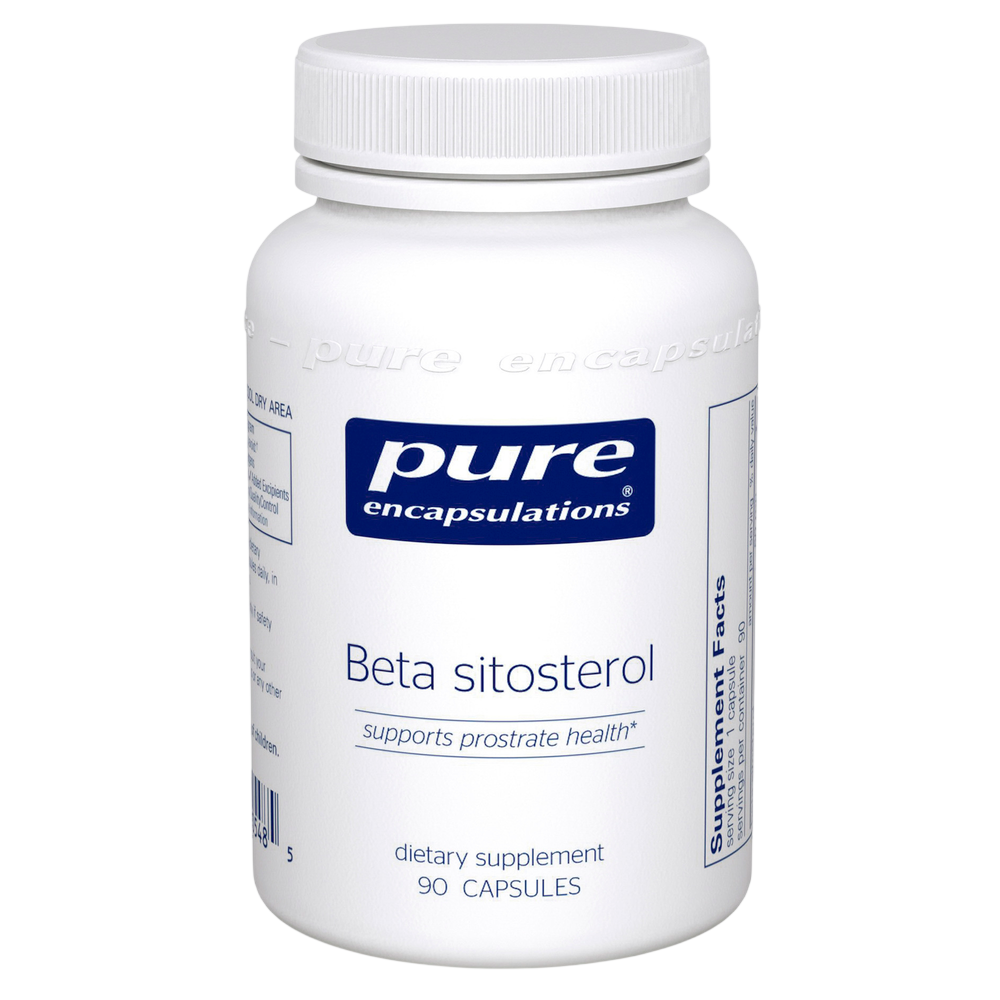
Beta-Sitosterol
Pure Encapsulations
90 capsules
$21.50$16.99 with Subscribe & Save

Prostate 2.4
Theralogix
180 capsules
$122.99$97.99 with Subscribe & Save

Prostate PQ Rye Grass Flower Pollen & Quercetin Supplement
Theralogix
180 tablets
$130.99$104.99 with Subscribe & Save
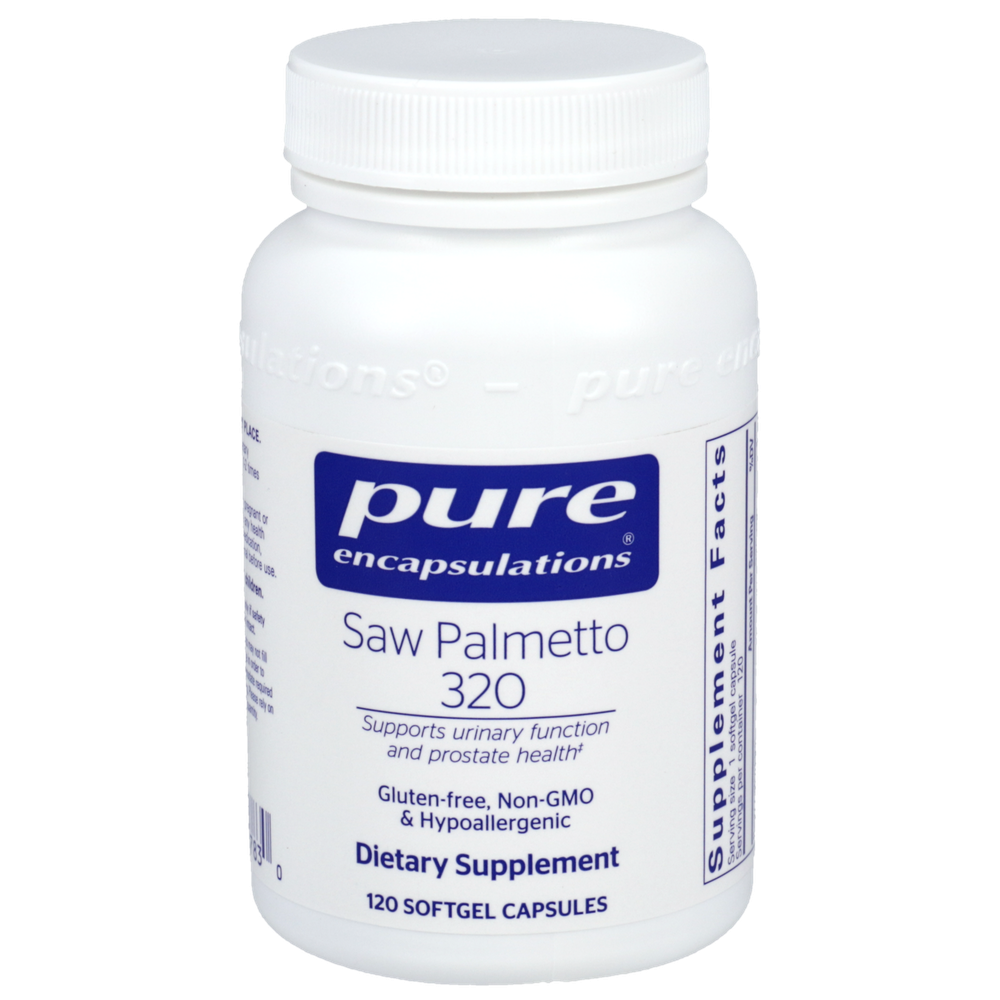
Saw Palmetto 320
Pure Encapsulations
120 softgels
$89.50$71.99 with Subscribe & Save