 Instalab
Garden of Life
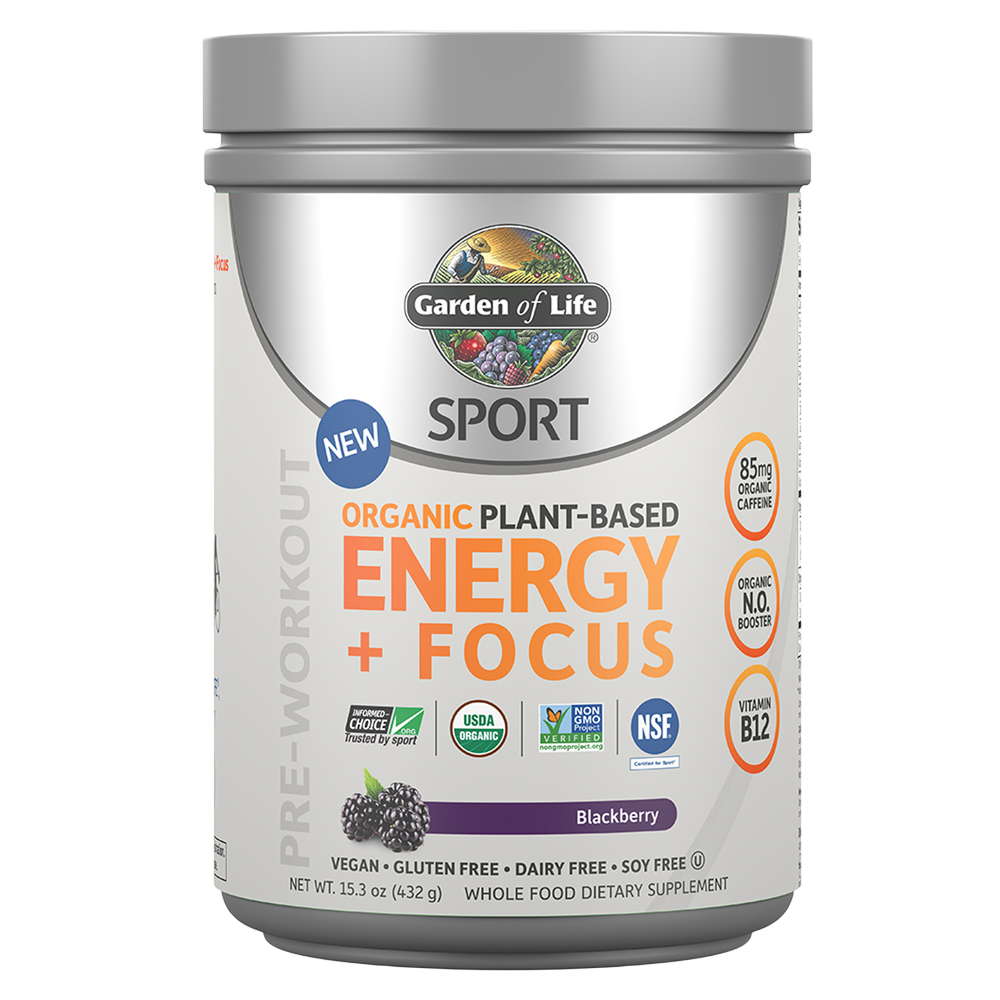
Sport Organic Pre-Workout Energy + Focus Blackberry by Garden of Life
432 grams
Organic Pre-Workout for Enhanced Energy, Focus, and Performance$42.99
Purchase options
Practitioner-grade brand3rd-party testedFree shipping $50+
Vegan·Vegetarian·Gluten Free·Soy Free·Lactose Free·Dairy Free·
Garden of Life Sport Organic Pre-Workout Energy + Focus Blackberry overview
This fits people who want an organic pre-workout with a moderate lift, not a jolt. The 85 mg caffeine from coffeeberry is roughly a small cup of coffee, enough to improve attention and perceived effort without the wired crash many get from 200–300 mg formulas. Endurance trainees and circuit lifters see the most from plant nitrates, while those with low Vitamin B12 on labs benefit from the methylcobalamin form included here for longer-term repletion.
Caffeine blocks adenosine (the brain’s “slow down” signal), which sharpens focus and can improve time-to-exhaustion by a few percent. The nitric oxide blend supplies dietary nitrates that convert to nitric oxide (the molecule that relaxes blood vessels), supporting blood flow to working muscles. The antioxidant blend, including Vitamin C, helps manage exercise-induced oxidative stress. Vitamin B12 as methylcobalamin is the coenzyme form used in energy metabolism and homocysteine processing (a circulating amino acid tied to vascular risk), though acute “energy” from B12 only happens if you’re low.
Mix one scoop in cold water about 20 minutes before training. Sensitive to caffeine? Start with half a scoop and progress. Morning or early afternoon is best to avoid sleep disruption; evening sessions often need a smaller dose. You can take it with or without a light snack, but hydrate well. Creatine and electrolytes stack cleanly. If you track Vitamin B12 or homocysteine on labs, recheck after 8–12 weeks to gauge longer-term B12 status.
Skip or use decaf strategies if you’re pregnant, have uncontrolled high blood pressure, arrhythmias, or significant anxiety—caffeine can aggravate these. This contains Vitamin K1, which can interfere with warfarin (a blood thinner); keep intake consistent and coordinate with your prescriber. If you have frequent heartburn, caffeine may worsen it. Those on stimulant medications should keep total daily caffeine modest. Rarely, high-dose B12 triggers acne; if that happens, stop and reassess.
Frequently asked questions
How much caffeine is in this pre-workout?
It has about 85 mg of caffeine from coffeeberry, similar to a small cup of coffee. Most people feel it within 20–45 minutes and it typically lasts 2–4 hours.
How long before my workout should I take it?
Take it around 20 minutes before training. If you metabolize caffeine slowly or do longer sessions, 30–45 minutes can feel smoother.
Will it make me tingly like beta-alanine?
No. There’s no beta-alanine here, so you shouldn’t get the pins-and-needles sensation (paresthesia) common with beta-alanine pre-workouts.
Can I stack this with creatine or electrolytes?
Yes. Creatine and electrolytes pair well and don’t interfere with caffeine or dietary nitrates. Take creatine daily, not just pre-workout, for best results.
Is this okay if I’m on blood thinners?
If you take warfarin, be cautious. It contains Vitamin K1, which can affect dosing. Keep intake consistent and check with your clinician. Other blood thinners are less affected.
Will this keep me up at night?
It can. Even 85 mg of caffeine late in the day may disrupt sleep in sensitive people. Use earlier, reduce to half a scoop, or skip evening doses.
Do I need this if I already drink coffee?
If coffee before training works for you, you may not need extra caffeine. This adds plant nitrates for blood flow and B12 for status over time, which coffee alone doesn’t provide.
How to take it & ingredients
Suggested use: Mix 1 level scoop with 8oz of cold water 20 minutes before workout (scoop included).
Active ingredients
1 scoop per serving
Vitamin C
40 mg
Vitamin K1
10 mcg
Vitamin B12
As methylcobalamin
As methylcobalamin
220 mcg
▼
Organic Antioxidant Energy Blend
12 g
Organic Cane Sugar
-
Organic Baobab (fruit)
-
Organic Amla Berry (fruit) Extract
-
Organic Coffeeberry® Whole Coffee Fruit Extract (Standardized to 70% Caffeine)
-
▼
Organic Nitric Oxide Blend
1 g
Organic Spinach (leaf)
-
Organic Beet (root)
-
Organic Kale (leaf) Standardized to 1% Nitrate
-
Other ingredients: Organic blackberry flavor, non-GMO citric acid
Certifications
Benefits
Warnings