 Instalab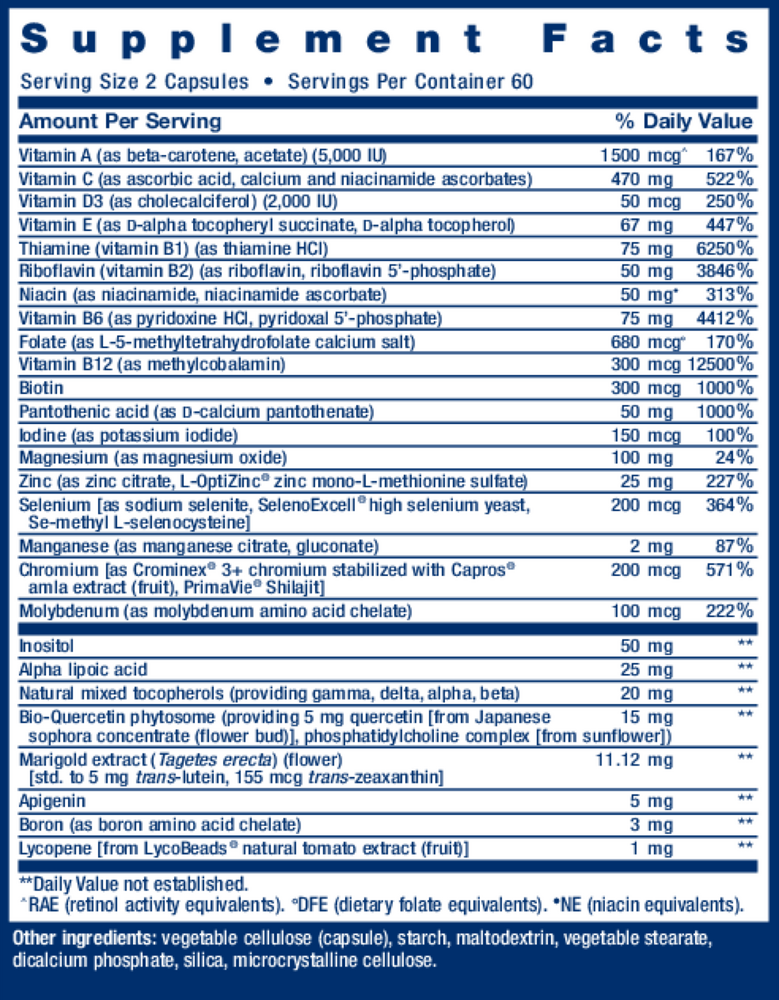

Life Extension
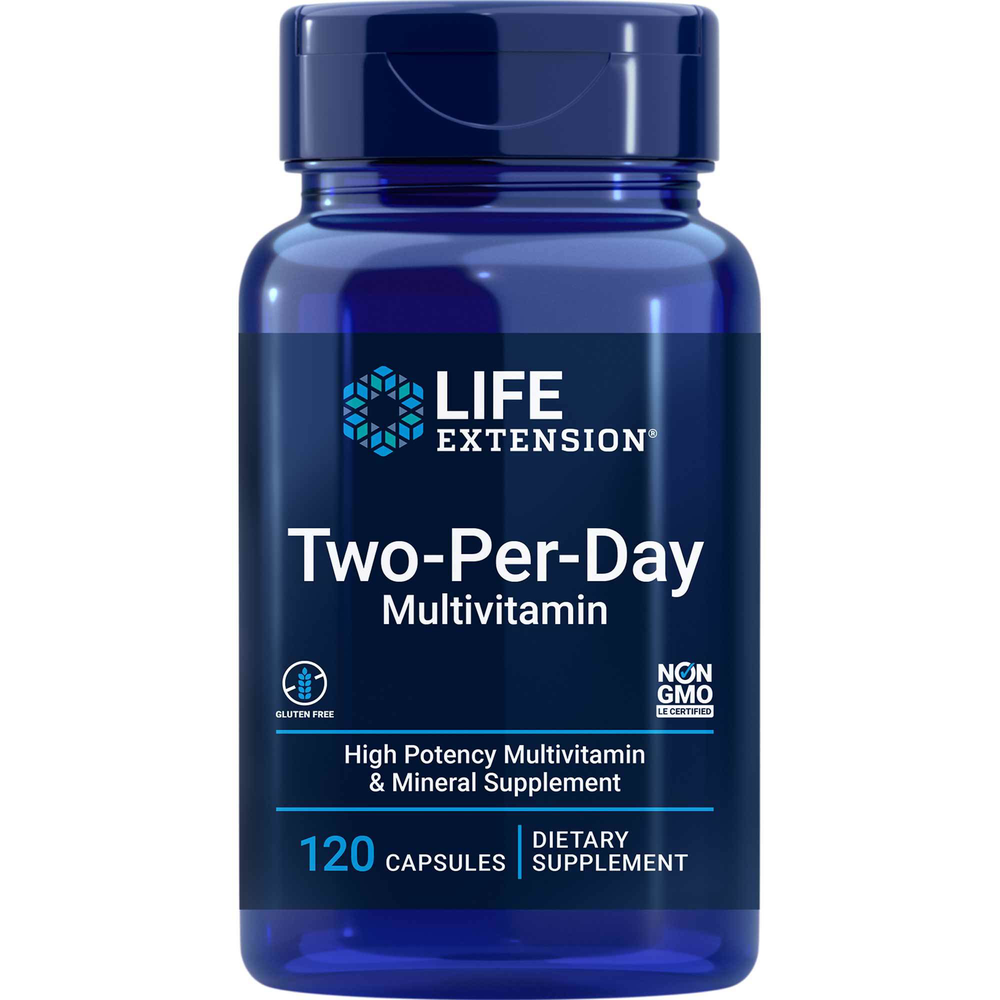
Two-Per-Day Multivitamin by Life Extension
120 capsules · 60-day supply
Comprehensive Daily Support for Optimal Health and Vitality$25.99retail
Add to cart for 19% off
Purchase option
19% below MSRP3rd-party tested for purity & potencyFree shipping $50+
Life Extension Two-Per-Day Multivitamin overview
If you want a high-potency multivitamin that actually moves your labs, this two‑capsule formula fits adults who eat unevenly, train hard, or run a calorie‑restricted plan. It’s useful if your Vitamin D, 25-Hydroxy is in the lower normal range, if homocysteine (a methylation byproduct tied to B-vitamin status) runs high, or if ferritin is adequate but energy still lags from low B intake. Vegans, intermittent fasters, and heavy travelers are common winners here.
Life Extension leans on bioactive forms where it matters: L‑5‑MTHF folate (the form that bypasses common MTHFR variants) and methylcobalamin B12 (the neurologically active form). It layers 2,000 IU vitamin D3 for maintenance, robust B6 and thiamine for carbohydrate metabolism, and mixed selenium forms for thyroid enzyme function. Marigold extract provides carotenoids for the macula, while quercetin and alpha‑lipoic acid add antioxidant capacity. Magnesium oxide is present but light, so don’t count on it for sleep or cramps.
Take two capsules daily with meals, ideally split breakfast and dinner. Food improves absorption of fat‑soluble vitamins A, D, and E, and reduces niacin flushing. Morning is better if B‑vitamins make you alert. Separate by at least 4 hours from levothyroxine, bisphosphonates, and certain antibiotics (tetracyclines, quinolones), since minerals like zinc and magnesium can block their absorption.
If you’re pregnant or trying, discuss the preformed vitamin A content with your clinician and use a prenatal formulated for pregnancy. With thyroid disease, extra iodine can swing labs, so coordinate dosing and check TSH and Free T4 within 6–8 weeks. If you have a history of calcium‑oxalate kidney stones, higher vitamin C can raise urinary oxalate; consider monitoring. On glucose‑lowering drugs, chromium and alpha‑lipoic acid can nudge sugars down—track fasting glucose or A1c.
You won’t see a stimulant buzz. What you can expect: brighter yellow urine (excess riboflavin leaving), steadier energy within 1–2 weeks, and Vitamin D, 25-Hydroxy rising within 4–12 weeks. If homocysteine starts high, folate, B12, and B6 often bring it down on repeat testing. If you need significant magnesium or omega‑3, add those separately—this multivitamin doesn’t cover them at effective doses.
Frequently asked questions
Is this multivitamin too strong to take every day?
For most healthy adults, no. It’s a high‑potency daily, but within typical upper limits for long‑term use. If you’re sensitive to B6 or niacin, start with one capsule for a week, then move to two and monitor how you feel.
How long until I notice benefits from a multivitamin?
Energy and focus changes, if you were low in Bs, often show in 1–2 weeks. Vitamin D status (Vitamin D, 25-Hydroxy) and red blood cell folate usually shift over 4–12 weeks. Retest labs after 8–12 weeks to confirm you’re in range.
Can I take a multivitamin with coffee or on an empty stomach?
Take it with food. A meal improves absorption of fat‑soluble vitamins and lowers the chance of nausea or niacin flushing. Coffee is fine, but avoid taking the capsules with only coffee on an empty stomach.
Does this multivitamin have vitamin K and is it safe with blood thinners?
This formula does not list vitamin K. That lowers the chance of interaction with warfarin, but you should still keep your diet and supplements consistent and have your INR monitored as usual.
Will a multivitamin cover my magnesium needs?
Not here. The 100 mg of magnesium oxide is modest and not very absorbable. If you’re aiming to improve sleep, cramps, or constipation, consider a separate magnesium glycinate or citrate and adjust to effect.
Can a multivitamin upset my stomach?
It can if taken without food. Iron isn’t included, which reduces nausea risk, but higher B‑vitamins and minerals can still irritate an empty stomach. Take with a meal and plenty of water. Split dosing helps.
Is this multivitamin good for people with MTHFR?
Yes. It uses L‑5‑MTHF, the methylated folate that doesn’t require the MTHFR enzyme step, and methylcobalamin B12, both useful for lowering homocysteine in those with reduced folate metabolism.
Can chromium in a multivitamin lower my blood sugar too much?
It’s unlikely by itself, but combined with insulin or oral diabetes meds it can nudge glucose lower. If you use those drugs, monitor fasting glucose or A1c after starting and discuss any dose changes with your prescriber.
How to take it & ingredients
Suggested use: Take two (2) capsules daily in divided doses with meals, or as recommended by a healthcare practitioner.
Active ingredients
2 capsules per serving · 60 servings
Vitamin A
Beta-carotene, acetate
Beta-carotene, acetate
5000 IU, 1500 mcg
Vitamin C
Ascorbic acid, calcium ascorbates, niacinamide ascorbates
Ascorbic acid, calcium ascorbates, niacinamide ascorbates
470 mg
Vitamin D3
Cholecalciferol
Cholecalciferol
2000 IU, 50 mcg
Vitamin E
D-alpha tocopheryl succinate, D-alpha tocopherol
D-alpha tocopheryl succinate, D-alpha tocopherol
60.3 IU, 67 mg
Thiamine
Thiamine HCl
Thiamine HCl
75 mg
Riboflavin
Riboflavin, riboflavin 5’-phosphate
Riboflavin, riboflavin 5’-phosphate
50 mg
Niacin
Niacinamide, niacinamide ascorbate
Niacinamide, niacinamide ascorbate
50 mg
Vitamin B6
Pyridoxine HCl, pyridoxal 5’-phosphate
Pyridoxine HCl, pyridoxal 5’-phosphate
75 mg
Folate
L-5-methyltetrahydrofolate calcium salt
L-5-methyltetrahydrofolate calcium salt
400 mcg
Vitamin B12
Methylcobalamin
Methylcobalamin
300 mcg
Biotin
300 mcg
Pantothenic acid
D-calcium pantothenate
D-calcium pantothenate
50 mg
Iodine
Potassium iodide
Potassium iodide
150 mcg
Magnesium
Magnesium oxide
Magnesium oxide
100 mg
Zinc
Zinc citrate, L-OptiZinc zinc mono-L-methionine sulfate
Zinc citrate, L-OptiZinc zinc mono-L-methionine sulfate
25 mg
Selenium
Sodium selenite, SelenoExcell high selenium yeast, Se-methyl L-selenocysteine
Sodium selenite, SelenoExcell high selenium yeast, Se-methyl L-selenocysteine
200 mcg
Manganese
Manganese citrate, manganese gluconate
Manganese citrate, manganese gluconate
2 mg
Chromium
Crominex 3+ chromium stabilized with Capros amla extract and PrimaVie Shilajit
Crominex 3+ chromium stabilized with Capros amla extract and PrimaVie Shilajit
200 mcg
Molybdenum
Molybdenum amino acid chelate
Molybdenum amino acid chelate
100 mcg
Potassium
Potassium citrate
Potassium citrate
25 mg
Inositol
50 mg
Alpha-lipoic acid
25 mg
Bio-Quercetin Proprietary Blend
14 mg
Marigold extract
11.12 mg
Apigenin
5 mg
Boron
Boron amino acid chelate
Boron amino acid chelate
3 mg
Lycopene
Tomat-O-Red natural tomato extract
Tomat-O-Red natural tomato extract
1 mg
Other ingredients: Vegetable cellulose (capsule), Dicalcium phosphate, Food starch-modified, Silica, Vegetable stearate, Microcrystalline cellulose, Maltodextrin, Sunflower lecithin, Sunflower oil
Certifications
Benefits
Warnings