 Instalab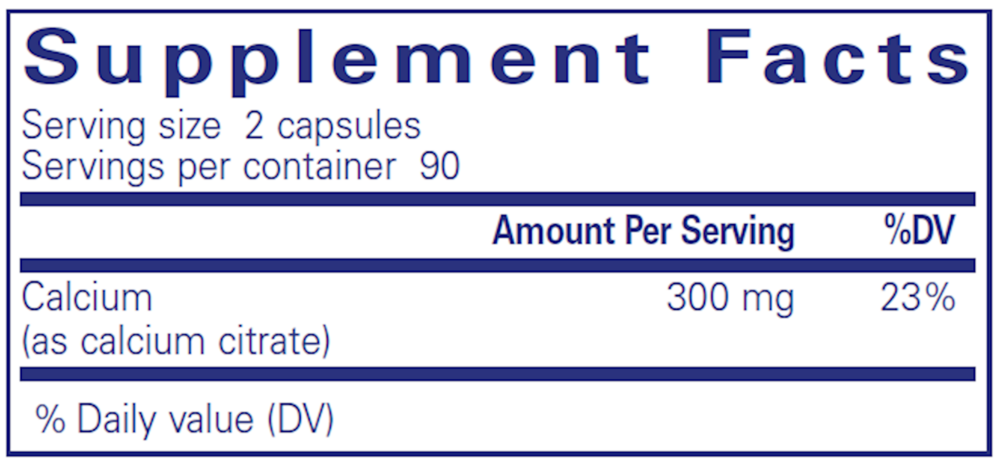


Pure Encapsulations
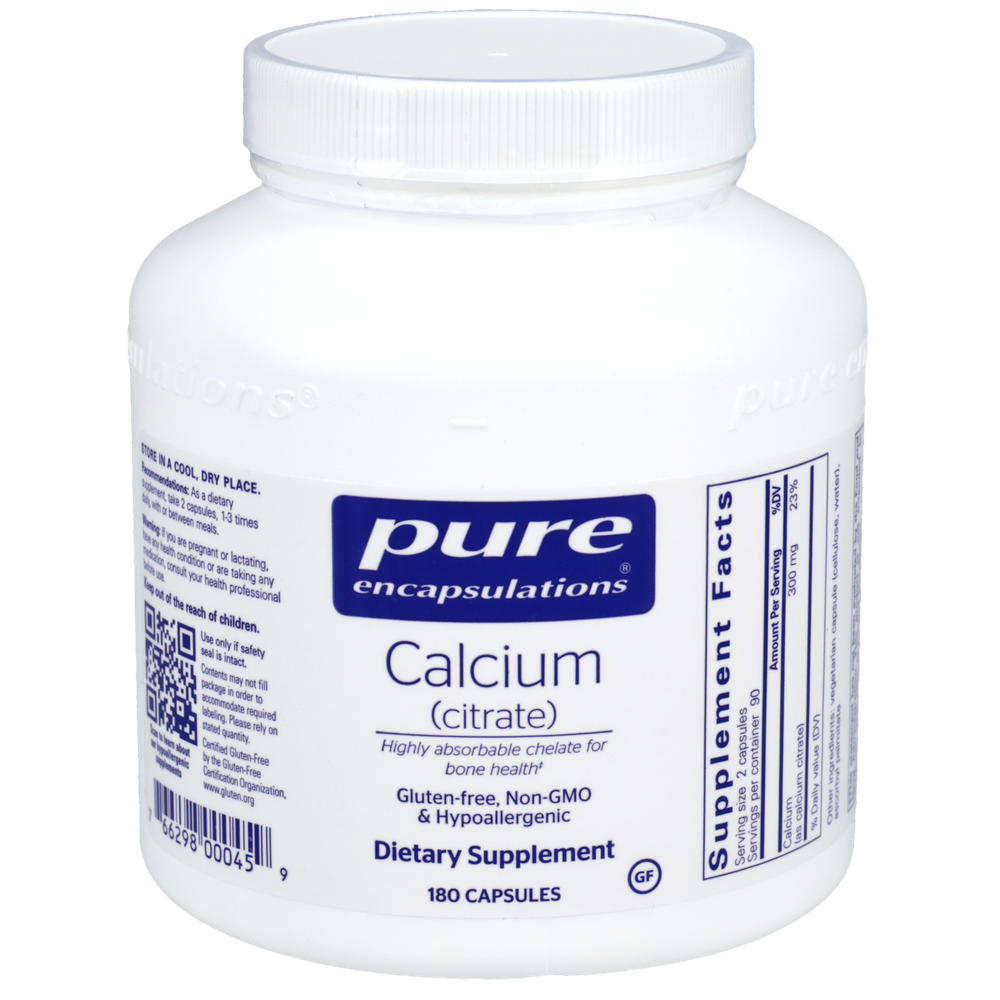
Calcium Citrate 300 mg by Pure Encapsulations
180 capsules
Supports Bone Health and Calcium Absorption for Optimal Strength$32.50retail
Add to cart for 20% off
Purchase option
20% below MSRP3rd-party tested for purity & potencyFree shipping $50+
Vegan·Vegetarian·Gluten Free·Egg Free·Peanut Free·Wheat Free·
Pure Encapsulations Calcium Citrate overview
If you get little calcium from food, have lactose intolerance, eat vegan, or your DEXA scan shows low bone density, calcium citrate is a practical backfill. It absorbs well even with low stomach acid, so it suits people on proton pump inhibitors for reflux. It’s also reasonable for post‑menopausal women, or anyone whose Vitamin D, 25-Hydroxy is low and needs repletion alongside calcium. Kidney stone formers can use it with meals to bind oxalate from food.
Calcium citrate is calcium bound to citric acid, which dissolves easily and is absorbed without much stomach acid. Calcium is the raw material for bone, but it also signals parathyroid hormone (the hormone that pulls calcium from bone) to quiet down when intake is adequate. The citrate portion raises urinary citrate (a natural inhibitor of calcium stone formation). For bone remodeling to actually improve, you also need enough Vitamin D3 to absorb calcium in the gut.
Pure Encapsulations suggests 2 capsules, 1–3 times daily, with or between meals. Split calcium across the day, since the gut absorbs smaller amounts better; aim for no more than a moderate dose per sitting. Take with meals if you’re managing kidney stones, because dietary calcium binds oxalate in the gut. Most adults target their total calcium from food plus calcium citrate to reach typical daily needs; adjust based on diet logs.
Separate calcium citrate by at least 2–4 hours from levothyroxine, iron, zinc, and antibiotics like tetracyclines or fluoroquinolones, since calcium blocks their absorption. Do not take it at the same time as oral bisphosphonates. If you use a thiazide diuretic (hydrochlorothiazide), high-dose vitamin A, or have a history of high calcium, hyperparathyroidism, sarcoidosis, or chronic kidney disease, get clinician guidance and monitor serum calcium and Parathyroid Hormone.
People often ask if calcium citrate is gentler than carbonate. It is, and it works well with low stomach acid. The cardiovascular risk debate around supplemental calcium is mixed; prioritize food calcium, use modest supplemental doses, and check your Vitamin D, 25-Hydroxy and Parathyroid Hormone if there’s concern. Expect changes in DEXA over 12–24 months, not weeks; labs change sooner, imaging takes time.
Frequently asked questions
Is calcium citrate better than calcium carbonate?
For many adults, yes. Calcium citrate absorbs well even with low stomach acid and tends to cause less gas and constipation. Calcium carbonate is cheaper and works if taken with meals and adequate stomach acid. Pick based on tolerance and reflux meds.
How much calcium citrate should I take daily?
Use supplements to close the gap after food. Most adults aim for roughly 1,000–1,200 mg calcium per day from diet plus supplements. Log your intake from food, then use calcium citrate in divided doses to cover the shortfall without overshooting.
Should I take calcium citrate with Vitamin D or K2?
Pairing with Vitamin D3 is often necessary if your Vitamin D, 25-Hydroxy is low, since D drives calcium absorption. Vitamin K2 is sometimes added, but evidence for fracture reduction from K2 alone is mixed. Prioritize Vitamin D status first.
Does calcium citrate cause constipation or stomach upset?
It’s usually gentler than calcium carbonate. Some people still notice constipation; increasing fluids, magnesium from food, and splitting the dose helps. If symptoms persist, reduce the dose or switch timing with meals.
Can I take calcium citrate with levothyroxine?
Not at the same time. Calcium binds levothyroxine and reduces its absorption. Separate by at least 4 hours, and keep the timing consistent so your thyroid labs reflect a steady routine.
What about calcium citrate and kidney stones?
Taken with meals, calcium citrate can bind dietary oxalate and the citrate component can inhibit stone formation. Avoid large doses away from meals if you form calcium oxalate stones. Discuss a 24‑hour urine test with your clinician.
Does calcium citrate increase heart disease risk?
Data are mixed. Large bolus calcium doses may transiently raise blood levels, which some studies link to risk, while others do not. Favor food sources, use modest supplemental doses in split timing, and keep Vitamin D status in a healthy range.
How long until calcium citrate helps my bones?
Bone changes are slow. You’re building a supply chain, not flipping a switch. Expect meaningful DEXA changes over 12–24 months. Parathyroid Hormone and Vitamin D, 25-Hydroxy can improve within weeks to months with consistent intake.
How to take it & ingredients
Suggested use: Take 2 capsules 1–3 times daily, with or between meals, or as directed by your health professional.
Active ingredients
2 capsules per serving
Calcium
Calcium Citrate
Calcium Citrate
300 mg
Other ingredients: Vegetarian Capsule (Cellulose, Water), Ascorbyl Palmitate
Certifications
Benefits
Warnings