 Instalab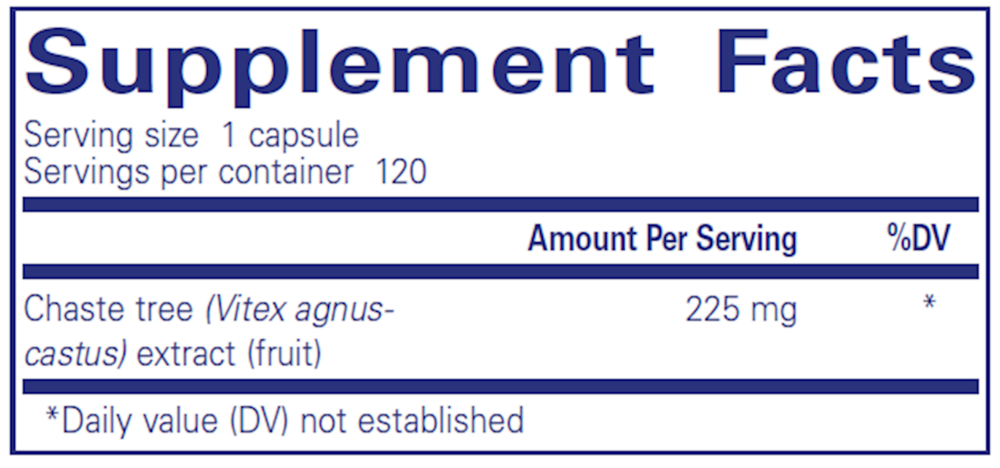

Pure Encapsulations
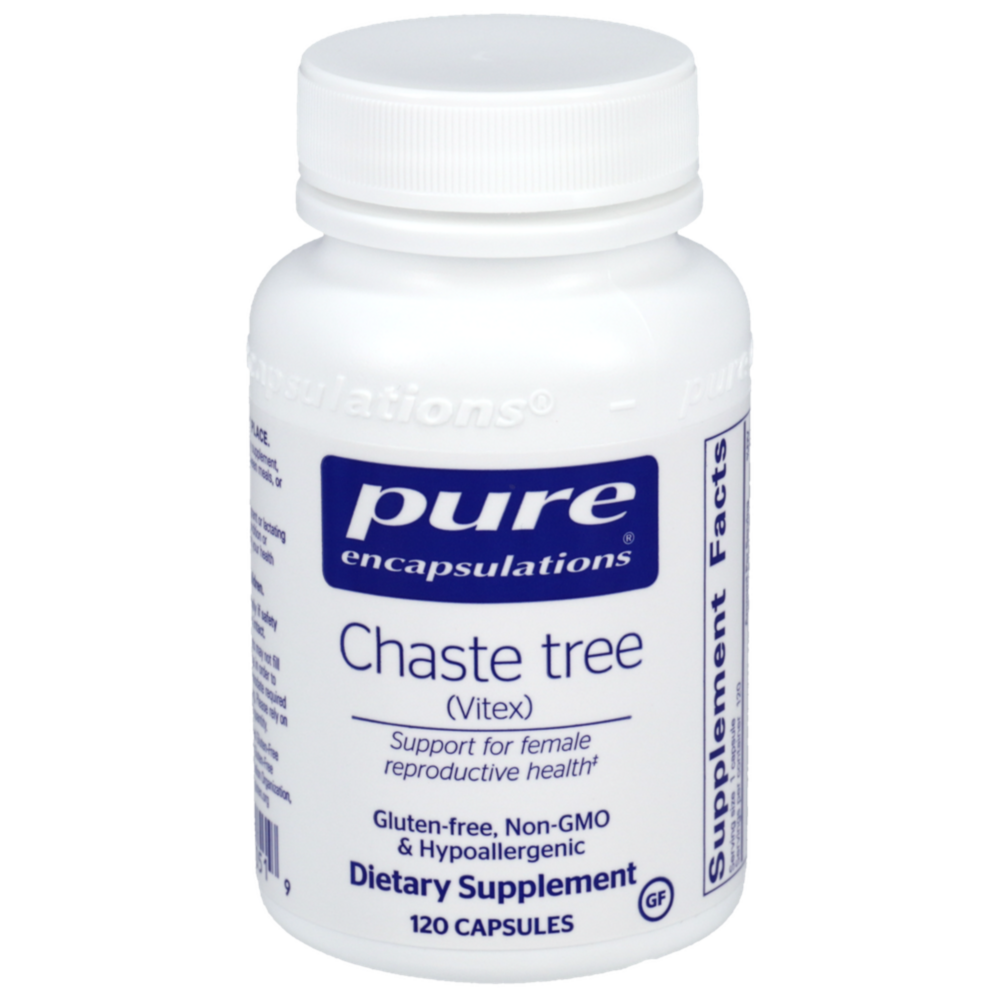
Chaste Tree (Vitex) 225 mg by Pure Encapsulations
120 capsules · 120-day supply
Support for Hormonal Balance and Menstrual Wellness$31.00
Purchase options
Practitioner-grade brand3rd-party testedFree shipping $50+
Vegan·Vegetarian·Gluten Free·Egg Free·Artificial Preservative Free·Peanut Free·
Pure Encapsulations Chaste Tree (Vitex) overview
If you’re searching for vitex for PMS, this 225 mg chaste tree extract fits adults with premenstrual mood shifts, cyclical breast tenderness, or a short luteal phase (the time from ovulation to bleeding). It’s also useful after stopping hormonal birth control if cycles are irregular. Track symptoms and cycle length, and consider labs like Prolactin and mid‑luteal Progesterone if you suspect a luteal issue. Expect the evaluation window to be two to three cycles; meaningful change usually isn’t visible in the first month.
Chaste tree doesn’t contain hormones. It signals the pituitary, the master gland in your brain, to dial down prolactin (the hormone that can drive breast soreness and shorten the luteal phase). Lower prolactin often allows better progesterone output after ovulation, which is why some people see steadier mood and less PMS. Trials show modest but real improvement in symptom scores for many users. If your symptoms stem from other causes, like thyroid issues or iron deficiency, address those first with TSH and Ferritin testing.
Take one capsule once daily, with or between meals, ideally at the same time each morning. Consistency across full cycles matters more than time of day. Give it two to three cycles before judging effect. If you need faster PMS relief, short‑term options like magnesium glycinate or omega‑3 can layer while you wait, but reevaluate after three months. If cycles become unusually long or spotting increases, pause and reassess with your clinician.
Skip vitex if you are pregnant, trying to conceive without medical guidance, or breastfeeding (it can reduce milk by lowering prolactin). Do not combine with dopamine‑related drugs like antipsychotics, metoclopramide, domperidone, or Parkinson’s medications, or with dopamine agonists such as cabergoline and bromocriptine. Avoid self‑treating high prolactin or a pituitary tumor—see an endocrinologist. Use caution with hormonal contraceptives or fertility drugs; mix only with your prescriber’s approval.
Frequently asked questions
How long does vitex take to work for PMS?
Most people need two to three full cycles for vitex to show benefits. It doesn’t act overnight because it works via pituitary signaling and cycle dynamics. If nothing has changed by three cycles, reassess your plan and consider labs like Prolactin and mid‑luteal Progesterone.
Does chaste tree raise progesterone?
Indirectly, sometimes. By lowering prolactin (which can suppress ovulation quality), vitex may allow stronger progesterone production after ovulation. It isn’t a hormone and won’t override other causes of low progesterone, so testing and cycle tracking help target the cause.
Can I take vitex with birth control?
Generally avoid combining without clinician guidance. Vitex can influence pituitary signals, which might counter or confuse the predictable bleeding patterns created by hormonal contraceptives. If you’re on birth control for cycle control, talk to your prescriber first.
Is vitex safe in pregnancy or while breastfeeding?
No. Stop when pregnant and avoid while breastfeeding. Vitex can lower prolactin and may reduce milk supply. If you became pregnant while taking it, discontinue and inform your clinician.
Does vitex help with cyclical breast tenderness?
Often yes. Cyclical mastalgia is frequently tied to higher prolactin. Vitex’s prolactin‑lowering effect is why some users report less breast soreness within two to three cycles. If pain is persistent or atypical, seek evaluation.
What are common side effects of chaste tree?
Most tolerate it well. Possible effects include nausea, headache, mild acne, dizziness, or changes in cycle length. These usually settle within a cycle. If you notice significant cycle disruption or rash, stop and consult your clinician.
Can men take vitex?
There’s no good reason for most men to take it. Vitex targets prolactin and luteal function, which are not typical male issues. If you’re evaluating prolactin‑related concerns, work with a clinician and get labs first.
How to take it & ingredients
Suggested use: Take 1 capsule daily, with or between meals, or as directed by a health professional.
Active ingredients
1 capsule per serving · 120 servings
Chaste Tree Extract
Vitex agnus-castus, fruit
Vitex agnus-castus, fruit
225 mg
Other ingredients: vegetarian capsule (cellulose, water)
Certifications
Benefits
Warnings