 Instalab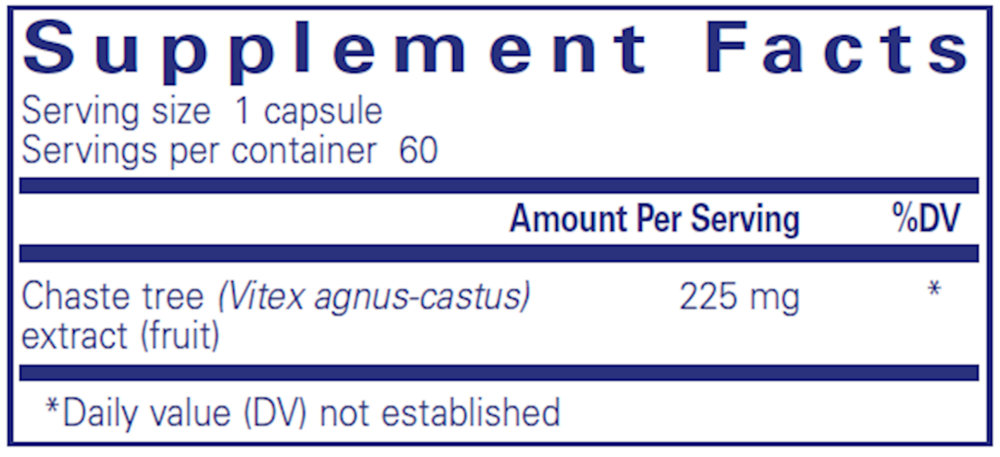

Pure Encapsulations
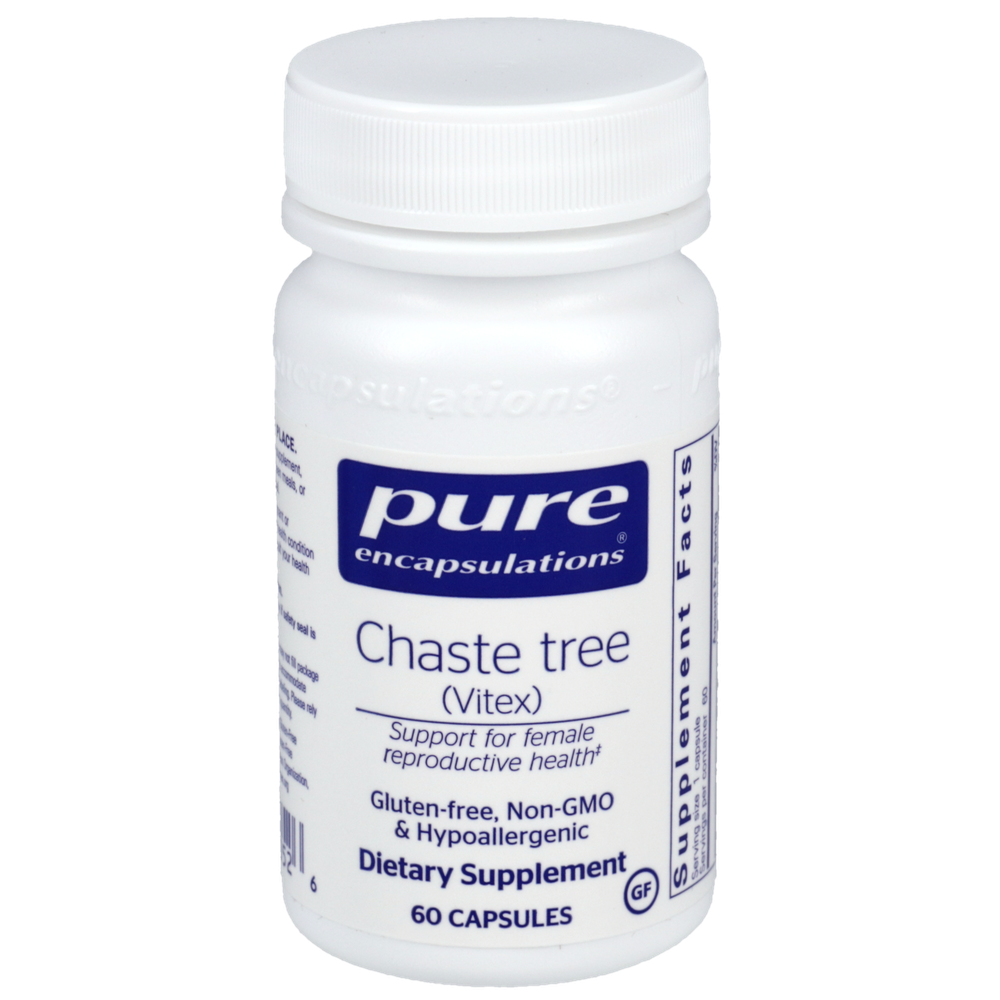
Chaste Tree (Vitex) 225 mg by Pure Encapsulations
60 capsules · 60-day supply
Support for Hormonal Balance and Menstrual Health$17.00
Purchase options
Practitioner-grade brand3rd-party testedFree shipping $50+
Vegan·Vegetarian·Gluten Free·Egg Free·Artificial Preservative Free·Peanut Free·
Pure Encapsulations Chaste Tree (Vitex) overview
Cyclic breast tenderness and mood swings before your period are the classic reasons people look for vitex for PMS. It is most useful if your Prolactin (the pituitary hormone that can suppress ovulation) runs high-normal and your luteal Progesterone (the hormone that stabilizes the second half of the cycle) runs low. It can also help with cycle regularity after stopping hormonal birth control. The 225 mg chaste tree extract here fits a once‑daily, maintenance-style approach.
Chaste tree (Vitex agnus-castus) nudges the pituitary to release less Prolactin by acting on dopamine receptors, which indirectly supports higher luteal Progesterone. That shift often eases PMS breast discomfort and irritability within 2 to 3 cycles. Smaller effects on LH and FSH (the brain signals that coordinate ovulation) can help tighten up timing in unpredictable cycles. Vitex is not a classic phytoestrogen; its main action is the prolactin-progesterone balance.
Take one capsule once daily, with or between meals. Morning is preferred for many because prolactin peaks overnight. Be consistent for at least 2 to 3 full cycles; some need up to 6 cycles to see the full effect. If PMS remains unchanged after 3 months, recheck Prolactin and Progesterone, and consider other options like magnesium glycinate, vitamin B6, or SSRI therapy for severe premenstrual mood symptoms.
Avoid during pregnancy and while breastfeeding, since lowering Prolactin can affect milk supply. Skip vitex if you use dopamine drugs (cabergoline, bromocriptine, most antipsychotics) or are on fertility meds or hormone therapy without clinician guidance. Oral contraceptives still work, but mixing signals can be counterproductive. If Prolactin is elevated, rule out hypothyroidism with a TSH test and pituitary causes before self-treating. Headache, nausea, or rash are the usual mild side effects.
Frequently asked questions
How long does vitex take to work for PMS?
Most people notice changes after 2 to 3 menstrual cycles, with full effect by 3 to 6 cycles. If there is no improvement by 3 months, check Prolactin and Progesterone and consider other strategies.
Does vitex lower prolactin?
Yes. Vitex acts on pituitary dopamine receptors, which typically lowers Prolactin. That can improve luteal phase progesterone output and reduce PMS-related breast tenderness. If your Prolactin is very high, get medical evaluation before using vitex.
Can I take vitex with birth control pills?
You can, but it is often unnecessary and may work at cross-purposes. Pills provide stable synthetic hormones, while vitex tries to fine-tune your own. If you stay on pills for cycle control, vitex usually adds little.
Is vitex safe in pregnancy or while trying to conceive?
Stop vitex once pregnant. If you are trying to conceive, use it only with clinician guidance and confirm timing, then discontinue after a positive test. It is not a substitute for evaluation of infertility.
What time of day should I take vitex?
Morning is a practical choice because prolactin peaks overnight, but timing matters less than daily consistency. Take it with or without food based on your stomach tolerance.
What are common side effects of vitex?
Most tolerate it well. The usual side effects are mild nausea, headache, digestive upset, or a transient change in cycle timing during the first month. Allergic rash is uncommon; stop and seek care if it occurs.
What labs should I check before using vitex?
Prolactin and TSH (thyroid screen) are smart starting points, with mid‑luteal Progesterone if cycles are irregular. Abnormal results, especially high Prolactin, should be evaluated before self-treatment.
How to take it & ingredients
Suggested use: Take 1 capsule daily, with or between meals, or as directed by a health professional.
Active ingredients
1 capsule per serving · 60 servings
Chaste Tree Extract
Vitex agnus-castus, fruit
Vitex agnus-castus, fruit
225 mg
Other ingredients: vegetarian capsule (cellulose, water)
Certifications
Benefits
Warnings