 Instalab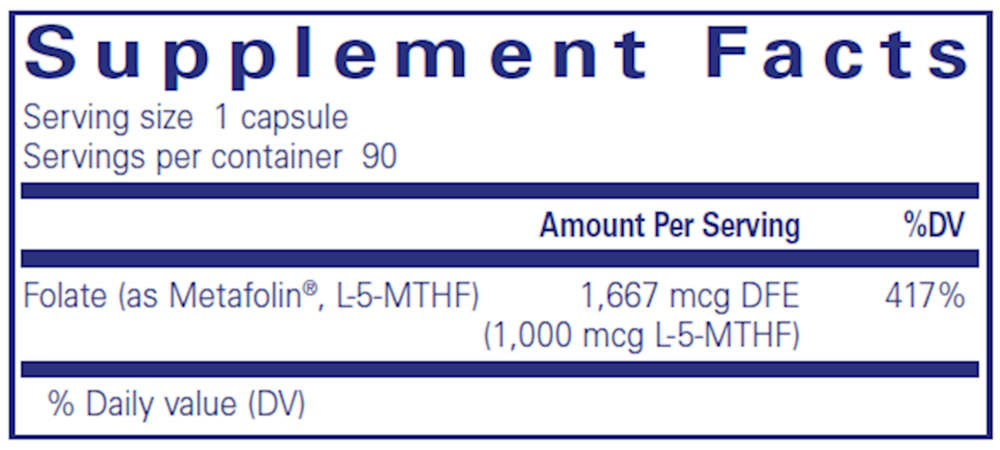

Pure Encapsulations
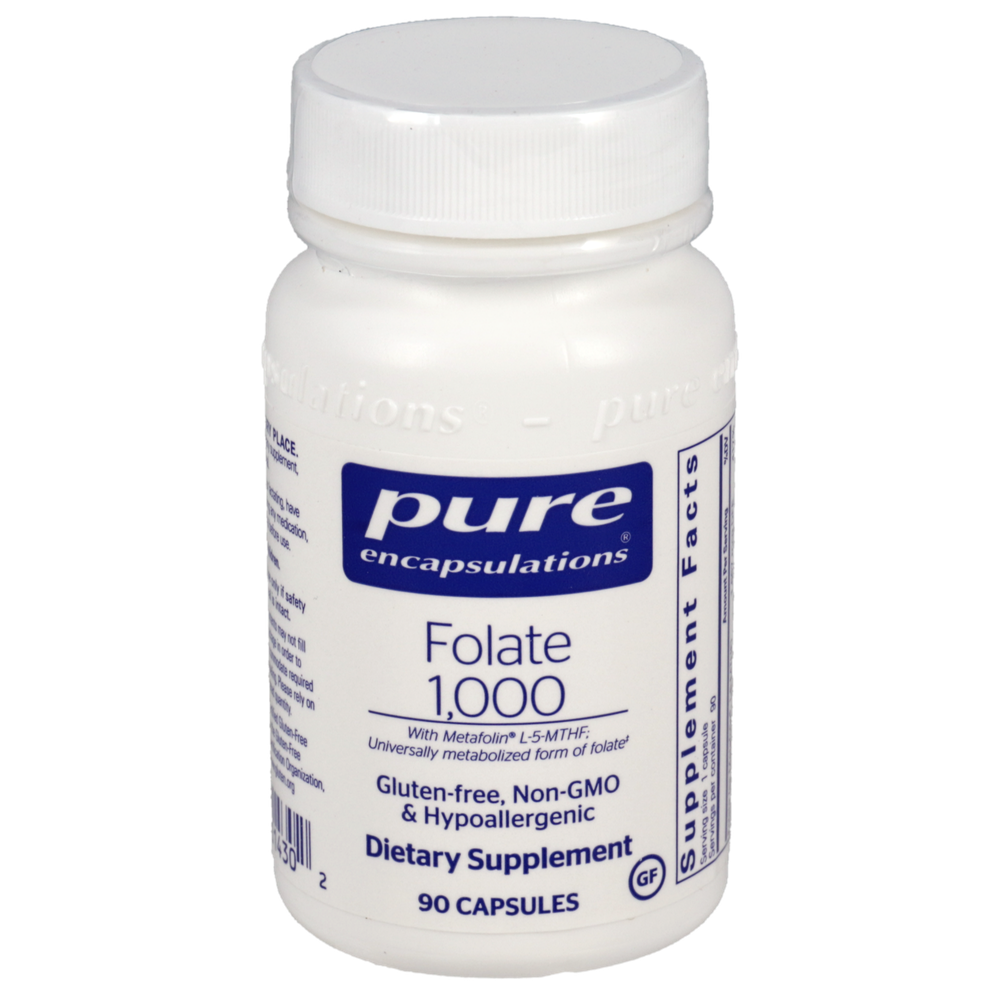
Folate 1000 by Pure Encapsulations
90 capsules · 90-day supply
Essential Folate for Energy, Mood, and Healthy Cell Function$34.50retail
Add to cart for 19% off
Purchase option
19% below MSRP3rd-party tested for purity & potencyFree shipping $50+
Vegan·Vegetarian·Gluten Free·Egg Free·Peanut Free·Wheat Free·
Pure Encapsulations Folate 1000 overview
If you’re looking for methylfolate 1000 mcg because folic acid hasn’t moved your labs, this is the active form, L-5-MTHF. It suits people with MTHFR variants, those with low Folate, RBC on testing, or elevated Homocysteine (the amino acid that rises when folate is low). It’s also practical after bariatric surgery or with alcohol use when absorption or needs change. For pregnancy planning, folate matters, but dose and form should be set with your obstetric clinician.
L-5-MTHF is the bioactive folate your cells actually use, so it bypasses the MTHFR enzyme step that synthetic folic acid relies on. In this form, folate donates a methyl group (a tiny chemical tag) to convert homocysteine into methionine, supporting methylation-dependent processes like DNA repair and neurotransmitter synthesis. When folate is the limiter, Homocysteine usually falls within 4 to 8 weeks. This 1 mg dose won’t treat depression on its own; augmentation trials used much higher prescription doses.
Take one capsule with a meal as directed. If you’re sensitive to stimulatory nutrients, start with every other day for a week, then daily. Pairing with vitamin B12 (methylcobalamin or hydroxocobalamin) is common, and checking Vitamin B12 or Methylmalonic Acid first is wise so high folate doesn’t mask a B12 problem. Compared to folic acid, 1 mg L-5-MTHF is a therapeutic-level dose; maintenance often uses lower amounts once labs stabilize.
Avoid unsupervised use if you take methotrexate for autoimmune disease or cancer, since folate can counteract it. Discuss with your prescriber if you’re on anti-seizure drugs (valproate, carbamazepine) or antibiotics like trimethoprim-sulfamethoxazole. If you have active cancer or a history of colon polyps, involve your oncologist or gastroenterologist. Stop and reassess if you notice new anxiety, irritability, or insomnia, which some people feel at higher doses.
If your Homocysteine is high from low folate, expect movement in 4 to 8 weeks, then re-test. Headaches or a “wired” feeling usually improve by lowering the dose or adding magnesium in the evening. Metafolin is a branded L-5-MTHF with strong stability; Quatrefolic is another well-absorbed form, and both bypass MTHFR. For prenatal needs, work with your clinician on the exact dose and co-nutrients like choline and iodine.
Frequently asked questions
What’s the difference between methylfolate and folic acid?
Methylfolate (L-5-MTHF) is the active form your cells use directly. Folic acid is synthetic and must be converted by the MTHFR enzyme. If that step is slow, methylfolate is more reliable for normalizing folate-dependent labs like Homocysteine.
How long does methylfolate take to lower homocysteine?
Most people who are folate-responsive see Homocysteine start to fall within 4–8 weeks. If it doesn’t budge, rule out low Vitamin B12, low B6, kidney issues, high alcohol intake, or hypothyroidism, which can also drive elevations.
Is 1000 mcg methylfolate too much to take daily?
It’s a therapeutic dose, not a tiny maintenance amount. It’s appropriate when labs are off or needs are higher, then many step down once Folate, RBC and Homocysteine stabilize. If you feel wired or get headaches, reduce frequency or dose.
Should I take methylfolate with B12?
Often yes. Ensuring adequate Vitamin B12 (or checking Methylmalonic Acid) prevents masking a B12 deficiency. Methylcobalamin or hydroxocobalamin are common pairings, especially if you eat little animal protein or use acid-suppressing meds.
Can methylfolate cause anxiety or insomnia?
It can in a subset of people, especially at higher doses. Starting with every other day, taking it earlier in the day, or lowering the dose usually fixes it. If symptoms persist, stop and discuss alternatives with your clinician.
Is methylfolate safe in pregnancy?
Folate is essential, but dosing should be set with your obstetric clinician. Many prenatals use methylfolate, yet the right amount depends on diet, labs, and medical history. Don’t change prenatal dosing without medical guidance.
Does methylfolate interact with methotrexate?
Yes. Folate can reduce methotrexate’s effects when used for autoimmune disease or cancer. Do not start or change folate without your prescriber’s approval. (Low-dose folate is sometimes co-prescribed for side effects—this must be coordinated.)
What labs should I check with methylfolate?
Homocysteine and Folate, RBC show response. Check Vitamin B12 or Methylmalonic Acid to avoid masking B12 deficiency. Some also follow a complete blood count and, if relevant, thyroid and kidney markers that influence homocysteine.
How to take it & ingredients
Suggested use: Take one capsule daily with a meal, or as directed by a health professional.
Active ingredients
1 capsule per serving · 90 servings
Folate
Metafolin® L-5-MTHF
Metafolin® L-5-MTHF
1000 mcg, 1667 mcg DFE
Other ingredients: Hypoallergenic plant fiber (cellulose), Vegetarian capsule (cellulose, water)
Certifications
Benefits
Warnings