
 Instalab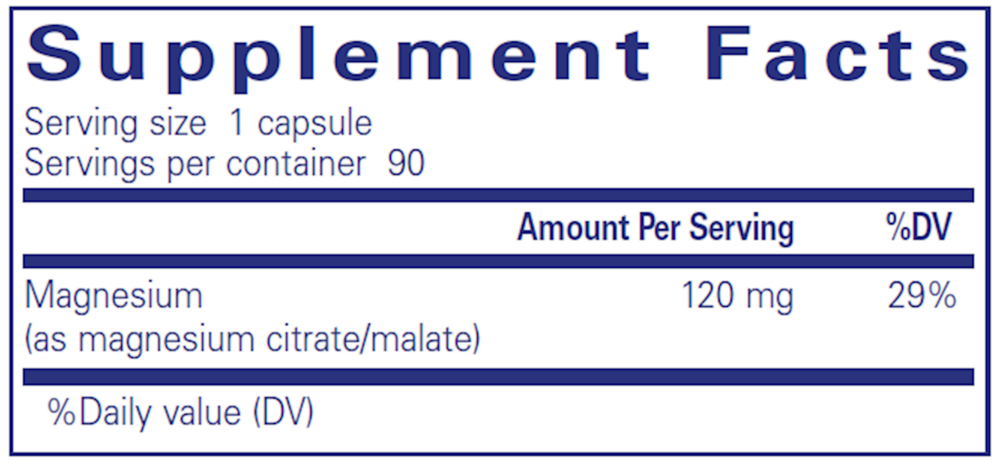

Pure Encapsulations
Magnesium Citrate/Malate 120 mg by Pure Encapsulations
90 capsules · 90-day supply
Supports Muscle Function and Energy Production with Bioavailable Magnesium$20.50retail
Add to cart for 22% off
Purchase option
22% below MSRP3rd-party tested for purity & potencyFree shipping $50+
Vegan·Vegetarian·Gluten Free
Pure Encapsulations Magnesium Citrate/Malate overview
If your Magnesium, RBC (magnesium inside red blood cells, a better read on body stores than serum) trends low, magnesium citrate malate is a practical way to replete. It suits people with low dietary intake, high alcohol use, athletes who sweat heavily, long-term proton pump inhibitor users, and those with constipation. Migraine patients and poor sleepers often try magnesium first; the citrate/malate combo is well absorbed without the chalky feel of oxide.
Citrate and malate are organic acids that keep magnesium soluble in the gut, which improves absorption compared with oxide. Citrate also draws water into the intestines, explaining the regularity benefit at higher doses. Malate feeds the Krebs cycle (the cell’s energy pathway), so some patients notice steadier daytime energy without stimulation. In nerves and muscles, magnesium calms NMDA receptors (excitatory channels) and relaxes smooth muscle, which is why sleep, tension, and mild blood pressure improvements are common.
Take 1–4 capsules daily in divided doses with meals, as the label suggests. Start low and increase every few days until you reach your target or your bowels loosen, then back off slightly. Evening dosing helps if relaxation or sleep is the goal. If constipation is primary, pair doses with a full glass of water. Recheck Magnesium, RBC within 8–12 weeks to see if your dose is doing the job.
Separate magnesium by at least 2 hours from levothyroxine, tetracycline or fluoroquinolone antibiotics, and oral bisphosphonates, since it binds these and blocks absorption. Space it from iron supplements for the same reason. If your blood pressure runs low, monitor as magnesium can lower it a few points. High-dose vitamin D without enough magnesium can cause cramps and restless sleep; balancing both nutrients often solves that.
Skip magnesium supplements if you have significant kidney disease or are already using magnesium-containing laxatives or antacids. Ongoing diarrhea, active inflammatory bowel flares, or a history of heart block warrant clinician guidance. Pregnancy and breastfeeding are fine at typical dietary doses, but use personalized dosing with your obstetric clinician and track Magnesium, RBC if you supplement beyond a prenatal.
Frequently asked questions
Is magnesium citrate malate good for sleep?
Often yes. Magnesium calms excitatory nerve signaling and relaxes muscle, which many people feel as easier sleep onset. Take part of your dose in the evening. If stools loosen, reduce the total dose or split it into smaller amounts.
Does magnesium citrate malate help constipation?
It can. The citrate form draws water into the stool, improving regularity without stimulant laxatives. Increase dose gradually and drink water. If diarrhea appears, step back to the prior dose or switch part of the dose to glycinate.
How long does magnesium take to work?
Bowel regularity and muscle tension often change within days. Sleep quality and headache frequency usually need 2–4 weeks. If you’re correcting low Magnesium, RBC, plan on 8–12 weeks before retesting to confirm repletion.
Can I take magnesium with thyroid medication?
Yes, but not at the same time. Magnesium binds levothyroxine in the gut. Take thyroid medication on an empty stomach and wait at least 2 hours before or 4 hours after taking magnesium.
Does magnesium interact with antibiotics?
With some. Magnesium blocks absorption of tetracyclines and fluoroquinolones when taken together. Separate doses by at least 2–6 hours depending on the antibiotic instructions from your prescriber or pharmacist.
What’s the best time of day to take magnesium?
Split doses with meals. If relaxation or sleep is your priority, place a portion in the evening. For constipation, consistent twice-daily dosing with water works well. Consistency matters more than clock time.
Will magnesium lower my blood pressure?
Modestly, if yours runs high or you’re low in magnesium. Typical reductions are just a few points. Monitor at home if you’re on blood pressure medication and adjust with your clinician if you see additive effects.
Which lab test should I use to track magnesium?
Magnesium, RBC is more informative than standard serum magnesium for tissue status. If you supplement, recheck in 8–12 weeks. Pair it with Creatinine to ensure kidney function is stable when using higher doses.
How to take it & ingredients
Suggested use: Take 1 to 4 capsules daily, in divided doses, with meals.
Active ingredients
1 capsule per serving · 90 servings
Magnesium
Magnesium citrate/malate
Magnesium citrate/malate
120 mg
Other ingredients: Ascorbyl palmitate, Vegetarian capsule (cellulose, water)
Certifications
Benefits
Warnings