 Instalab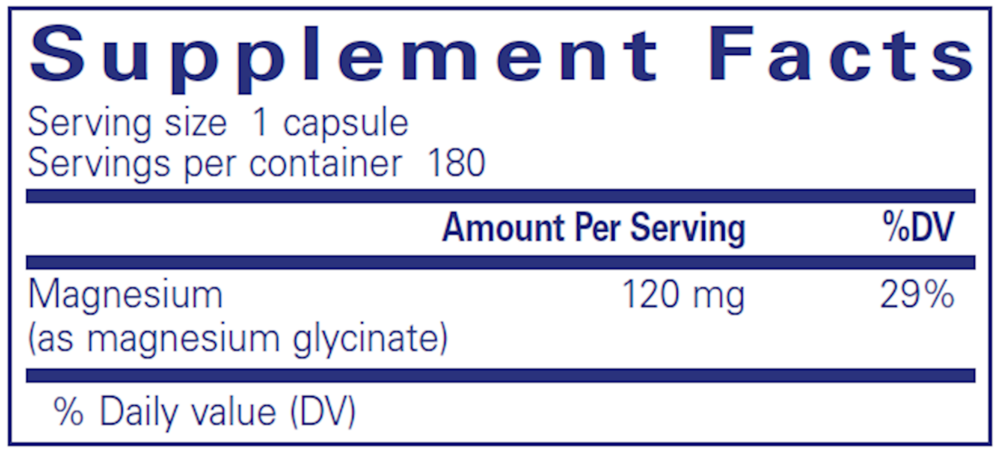

Pure Encapsulations
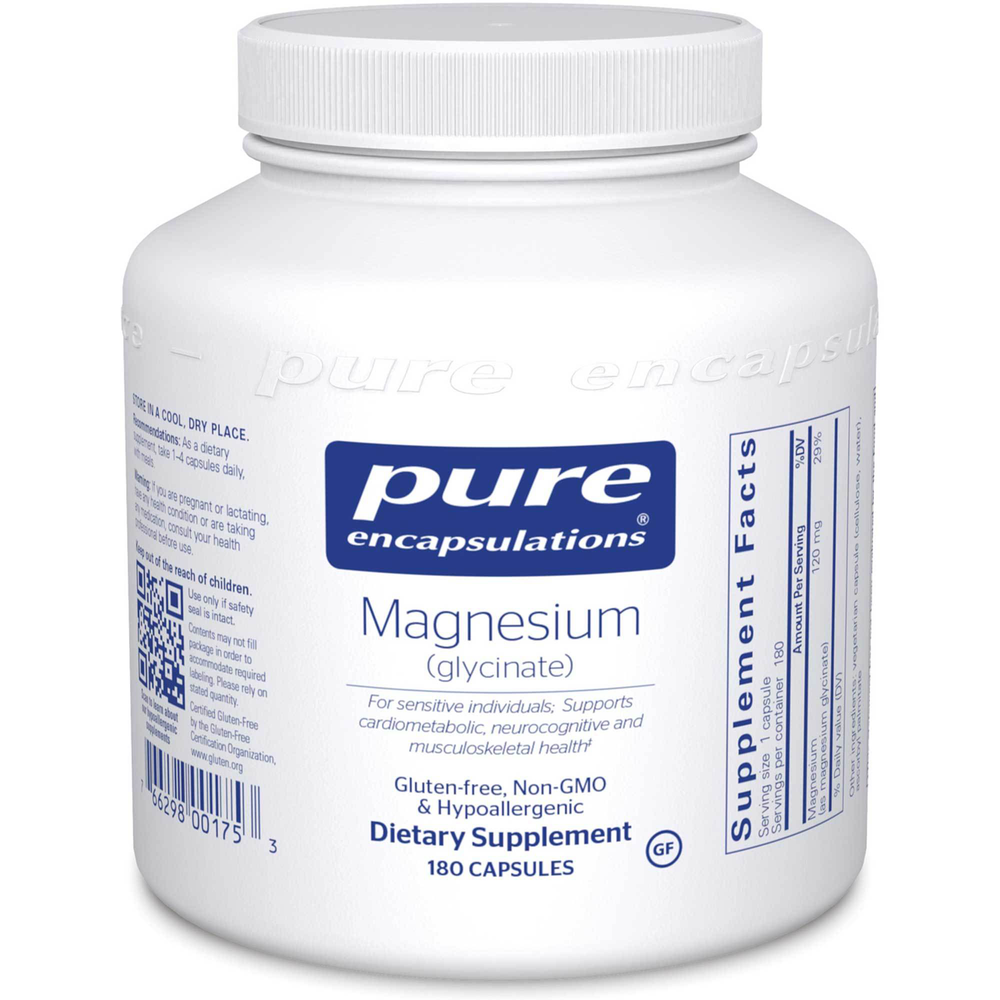
Magnesium Glycinate 120 mg by Pure Encapsulations
180 capsules · 180-day supply
Gentle Magnesium for Relaxation and Muscle Support$46.50retail
Add to cart for 20% off
Purchase option
20% below MSRP3rd-party tested for purity & potencyFree shipping $50+
Vegan·Vegetarian·Gluten Free
Pure Encapsulations Magnesium Glycinate overview
If you’re looking for a gentle, well-absorbed magnesium glycinate for sleep, muscle tension, or steady mood, this fits. It’s a practical pick if your diet is light on greens, nuts, and legumes, or if your Magnesium, RBC (a better gauge of tissue magnesium than serum) trends low. Athletes with frequent cramps, high-stress professionals with tight shoulders, and people who sleep lightly often feel the difference. The 120 mg per capsule is a maintenance-level dose; for clear deficiency, clinicians often start higher and step down once symptoms and labs stabilize.
Magnesium drives ATP production (your cells’ energy currency) and steadies nerve firing by calming NMDA receptors (the brain’s main excitatory switch). Glycinate is magnesium bound to glycine, an amino acid with a mild calming effect, which helps tolerance and nighttime use. Compared with oxide or citrate, this form is better absorbed and less laxative, so more of the 120 mg ends up in tissues. In practice, people notice looser muscles and smoother sleep onset within 1 to 2 weeks once daily intake is consistent.
Take 1 to 4 capsules daily with food, splitting doses if you use more than one capsule. Evening dosing is sensible if sleep is your target; spread morning and evening if daytime tension or headaches are the issue. If you’re repleting after a low Magnesium, RBC result, start at the higher end for 2 to 4 weeks, then taper to the lowest number that maintains benefits. Recheck Magnesium, RBC in 4 to 8 weeks to confirm you’ve landed in a good place.
Separate magnesium by at least 4 hours from levothyroxine, quinolone or tetracycline antibiotics, and bisphosphonates (it binds these drugs and blocks absorption). Loop and thiazide diuretics (water pills) can lower magnesium; proton pump inhibitors used long term often do too. It can modestly lower blood pressure, so monitor if you’re on antihypertensives. If you have significant kidney disease, or a history of high magnesium, use only with clinician guidance. Pregnancy and breastfeeding: generally considered appropriate at dietary doses, but confirm your total daily magnesium with your obstetric clinician.
Frequently asked questions
What is magnesium glycinate used for?
Primarily for better tolerance and absorption of magnesium to help with sleep quality, muscle tension, headaches, and steady mood. It’s less laxative than citrate or oxide, making it a good daily magnesium for people who get GI upset from other forms.
How much magnesium glycinate should I take?
Most adults land between 120 and 360 mg elemental magnesium daily (1–3 capsules here). Start low for a week, then increase until symptoms improve without GI side effects. If your Magnesium, RBC is low, a short higher phase is reasonable with clinician input.
When should I take magnesium glycinate for sleep?
Take it in the evening with a snack, 1 to 2 hours before bed. Many people notice easier sleep onset within 1 to 2 weeks of steady use. If daytime tension is a problem too, split the dose between morning and evening.
How long does magnesium glycinate take to work?
Muscle relaxation and calmer mood can show up within days, sleep shifts within 1 to 2 weeks, and headache prevention or cramp frequency often needs 4 to 8 weeks. Lab changes on Magnesium, RBC typically follow within a month or two.
Does magnesium glycinate cause diarrhea?
It’s less likely to cause loose stools than magnesium citrate or oxide because it’s better absorbed and not as osmotic in the gut. If you do get GI upset, reduce the dose, split it twice daily, and always take with food.
Can I take magnesium glycinate with antidepressants or sleep meds?
Generally yes, there’s no direct interaction with SSRIs or common sleep medicines. Because magnesium can be calming, avoid stacking high doses with other sedatives until you know your response. If you take levothyroxine, separate by 4 hours.
What’s the difference between magnesium glycinate and citrate?
Glycinate is chelated to glycine, improving absorption and GI tolerance, so it’s better for daily use, sleep, and muscle tension. Citrate is more osmotic in the gut, often used for constipation but more likely to cause loose stools.
Is magnesium glycinate safe for people with high blood pressure?
Yes, and it may lower blood pressure modestly. If you’re on blood pressure medication, track readings for the first few weeks and discuss adjustments with your clinician if you notice lightheadedness or consistently lower numbers.
How to take it & ingredients
Suggested use: As a dietary supplement, take 1–4 capsules daily with food.
Active ingredients
1 capsule per serving · 180 servings
Magnesium
Magnesium glycinate
Magnesium glycinate
120 mg
Other ingredients: Vegetarian capsule (cellulose, water), Ascorbyl palmitate
Certifications
Benefits
Warnings