 Instalab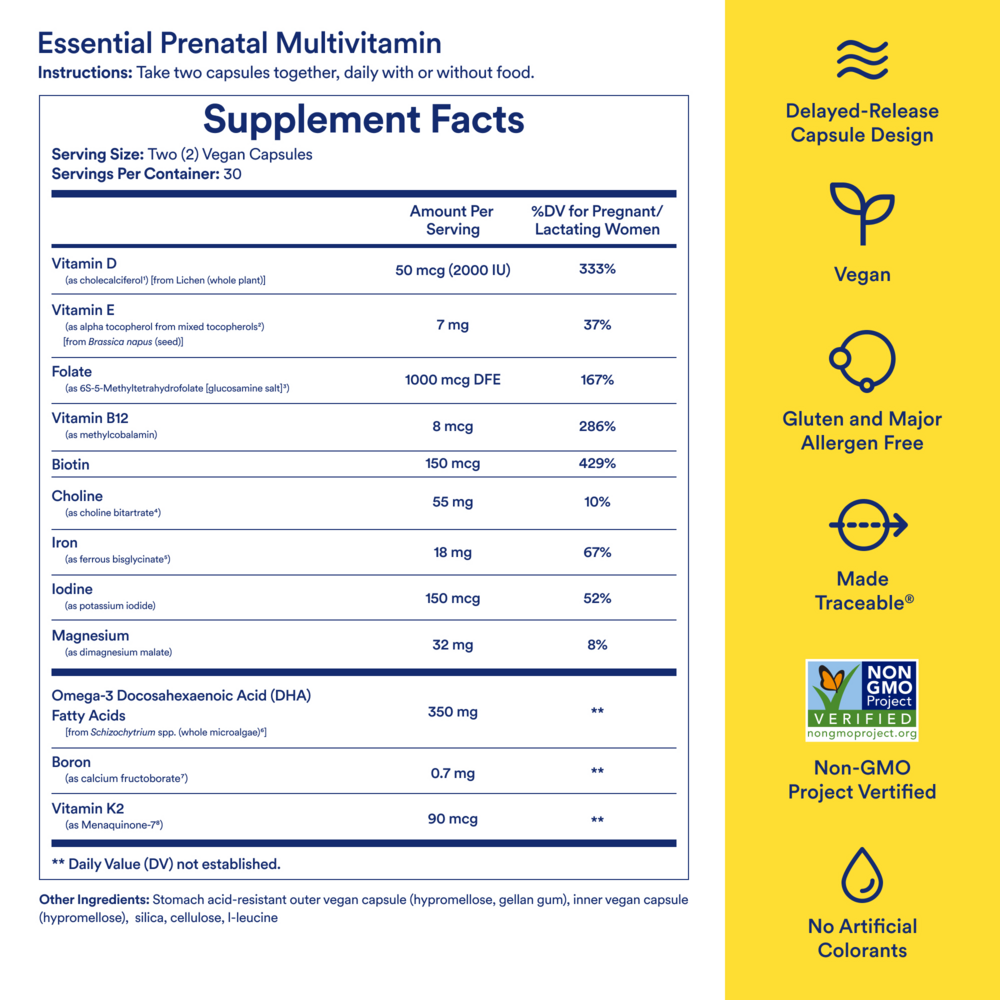

Ritual
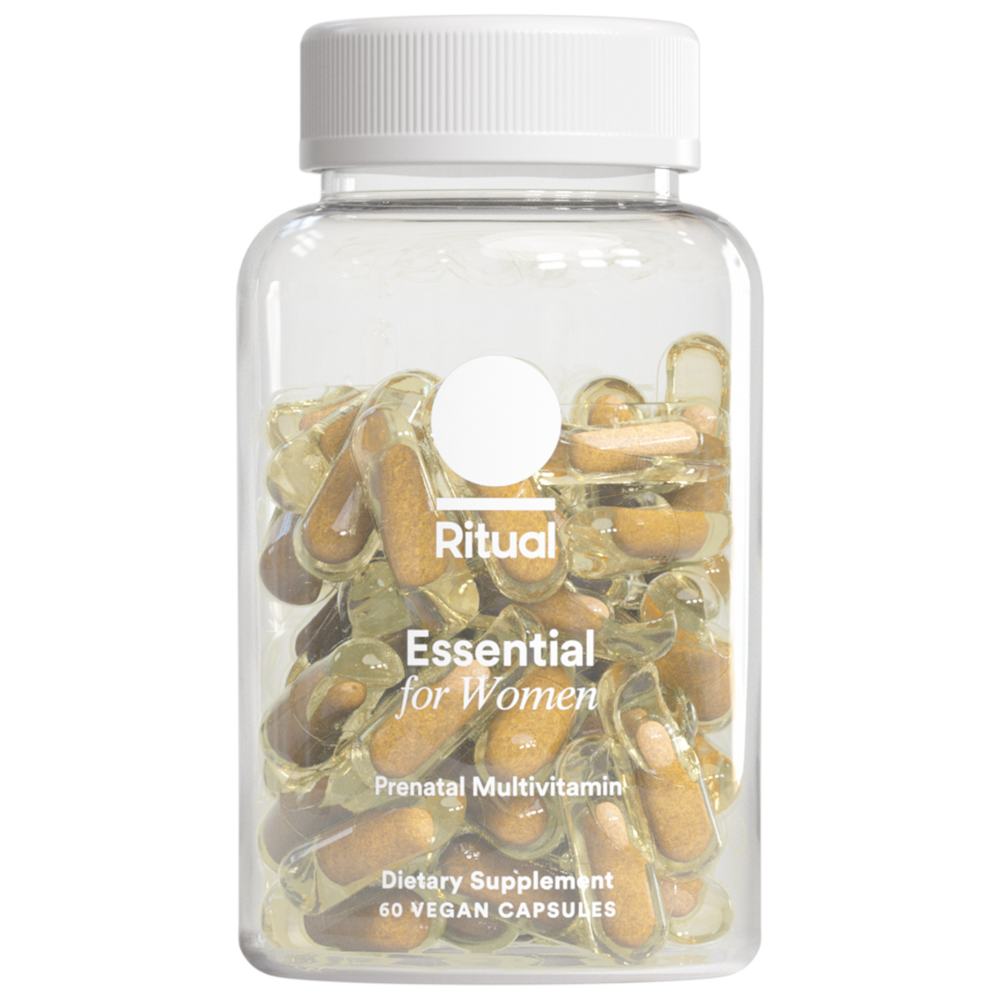
Essential for Women Prenatal Multivitamin - Citrus by Ritual
60 capsules
Comprehensive Prenatal Support for Optimal Maternal and Fetal Health$44.99retail
Add to cart for 20% off
Purchase option
20% below MSRP3rd-party tested for purity & potencyFree shipping $50+
Vegan·Gluten Free·Soy Free·Dairy Free·Peanut Free·Tree Nut Free·
Ritual Essential for Women Prenatal Multivitamin - Citrus overview
If you’re planning pregnancy or already pregnant and want a prenatal vitamin with DHA that covers the big gaps most diets miss, this fits. It’s practical for those who eat little seafood, avoid beef or organ meats, or have low Vitamin D, 25-Hydroxy on labs. The 18 mg gentle iron is useful if your Ferritin (your iron store marker) trends low, and the methylated folate helps if you don’t process folic acid well. Vegans and fish-avoiders get algae-based DHA without fish oil.
Folate as 5-MTHF (the ready-to-use form) feeds early neural tube development before you even know you’re pregnant. DHA from microalgae supports fetal brain and eye development, and it can raise your Omega-3 Index within 8 to 12 weeks. Iron bisglycinate is a chelated form that’s easier on the stomach while building red blood cells. Vitamin D3 (the skin-made form) helps calcium absorption and immune signaling, while iodine supports thyroid hormones that set fetal growth rate. Choline is present, but at a light maintenance level.
Take two capsules daily with food, ideally with your largest meal to steady iron and DHA absorption. If nausea is an issue, split the dose: one with breakfast, one with dinner. If your Vitamin D, 25-Hydroxy or Omega-3 Index is low, expect changes within 4 to 12 weeks. If your clinician wants higher choline or DHA, you can add standalone choline or an extra algae oil, but keep total vitamin A–containing products in check if you use other prenatals.
Skip iron-containing prenatals if you have hemochromatosis or consistently high Ferritin. Separate iron by 4 hours from levothyroxine (thyroid hormone) and from tetracycline or quinolone antibiotics, since iron blocks their absorption. Biotin can distort some lab tests (thyroid and troponin), so tell your lab if you supplement. The choline here (55 mg) is a maintenance dose; many pregnant patients need more from food or a separate choline bitartrate. If you have thyroid disease, confirm iodine intake with your clinician.
Frequently asked questions
When should I start taking a prenatal vitamin with DHA?
Start at least 1 to 3 months before trying to conceive. Neural tube development happens very early, often before a missed period. Starting earlier also lets Vitamin D and the Omega-3 Index improve before pregnancy.
Is 350 mg DHA enough during pregnancy?
For most, 300–400 mg DHA daily is a solid baseline. If you rarely eat seafood or your Omega-3 Index is low, your clinician may suggest more from algae oil to reach target blood levels within 8–12 weeks.
Does prenatal iron cause constipation?
Iron can, but bisglycinate tends to be gentler. Take with food, hydrate, and increase fiber. If constipation persists, talk to your clinician before reducing iron, especially if your Ferritin runs low.
What’s the difference between 5-MTHF and folic acid?
5-MTHF is the bioactive form your body uses directly. Folic acid needs conversion. Using 5-MTHF helps those with reduced folate metabolism and reliably raises folate status before and during pregnancy.
Can I take this prenatal with my thyroid medication?
Yes, but separate iron from levothyroxine by at least 4 hours. Iron binds thyroid hormone and blocks absorption. Keep your dosing schedule consistent and recheck TSH and free T4 as your clinician advises.
Do I still need extra choline in pregnancy?
Often yes. Diet plus this prenatal’s 55 mg may not reach common pregnancy targets. Eggs, lean meats, and a separate choline supplement can close the gap if your intake is low.
How long until labs reflect change from a prenatal?
Vitamin D, 25-Hydroxy and the Omega-3 Index typically improve within 4–12 weeks. Ferritin can take several months to rise if you start low, and it changes faster if you also address diet and blood losses.
Is Ritual’s algae-based DHA as good as fish oil?
Yes. Algae DHA is chemically identical and supports the same blood level changes. It’s a good choice for vegans, those avoiding fish, or anyone sensitive to fishy aftertaste.
How to take it & ingredients
Suggested use: Adults take two capsules daily, with food, or as directed by your healthcare professional.
Active ingredients
2 capsules per serving
Vitamin D
Cholecalciferol (from Lichen, whole plant)
Cholecalciferol (from Lichen, whole plant)
50 mcg, 2000 IU
Vitamin E
Alpha-tocopherol from mixed tocopherols (from Brassica napus seed)
Alpha-tocopherol from mixed tocopherols (from Brassica napus seed)
7 mg
Folate
6S-5-Methyltetrahydrofolate (glucosamine salt)
6S-5-Methyltetrahydrofolate (glucosamine salt)
1000 mcg DFE
Vitamin B12
Methylcobalamin
Methylcobalamin
8 mcg
Biotin
150 mcg
Choline
Choline Bitartrate
Choline Bitartrate
55 mg
Iron
Ferrous Bisglycinate
Ferrous Bisglycinate
18 mg
Iodine
Potassium Iodide
Potassium Iodide
150 mcg
Magnesium
Dimagnesium Malate
Dimagnesium Malate
32 mg
Omega-3 DHA
From Schizochytrium sp. (whole microalgae)
From Schizochytrium sp. (whole microalgae)
350 mg
Boron
Calcium Fructoborate
Calcium Fructoborate
0.7 mg
Vitamin K2
Menaquinone-7
Menaquinone-7
90 mcg
Other ingredients: Hypromellose (outer and inner vegan capsules), Gellan Gum, Silica, Cellulose, L-Leucine
Certifications
Benefits
Warnings