 Instalab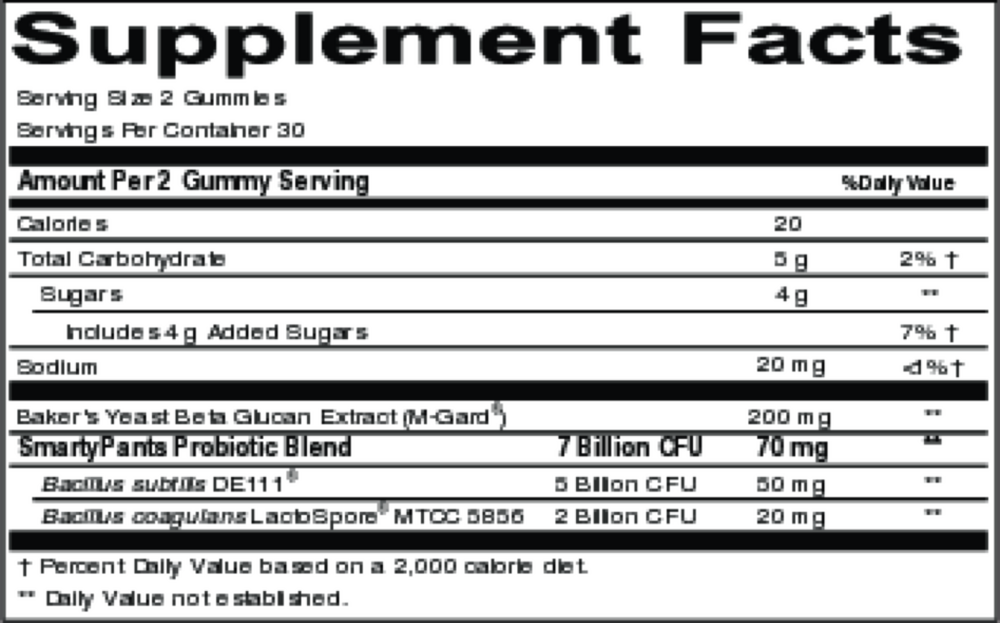

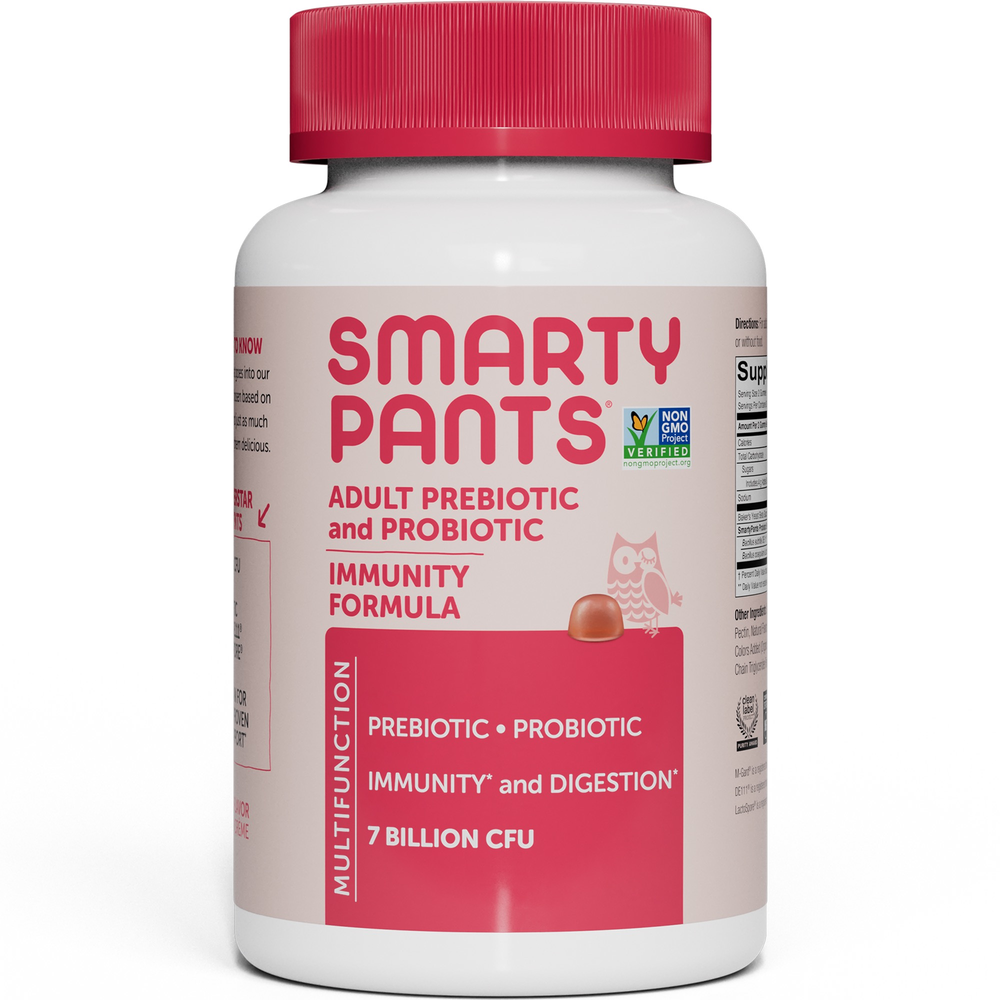
SmartyPants
Digestive Probiotic & Prebiotic Grape by SmartyPants
60 gummies · 30-day supply
Support Your Gut Health with Probiotics and Prebiotics in Tasty Gummies$36.99retail
Add to cart for 19% off
Purchase option
19% below MSRP3rd-party tested for purity & potencyFree shipping $50+
Gluten Free·Soy Free·Egg Free·Milk Free·Tree Nut Free·Fish Free·
SmartyPants Digestive Probiotic & Prebiotic Grape overview
If you want a simple daily probiotic gummies routine for regularity and bloat control, this fits. The 7 billion CFU spore-forming blend is practical for travel or busy weeks when yogurt and kimchi aren’t happening. It also suits people chasing fewer winter bugs, since the added yeast beta glucan has credible immune data. If you need intensive gut therapy after major antibiotics, a higher-dose multi‑strain capsule may be better short term.
Bacillus coagulans (LactoSpore) and Bacillus subtilis (DE111) are spore-forming probiotics that survive stomach acid, then “wake up” in the small intestine. There they crowd out gas-producing microbes and make short‑chain fatty acids that calm the gut lining. DE111 is FDA “Generally Recognized As Safe.” The M‑Gard yeast beta glucan feeds helpful bacteria and also primes innate immunity (the first‑responder white cells like neutrophils and macrophages), which explains the cold‑season data.
Adults take two gummies daily, with or without food. Consistency matters more than timing. New to probiotics or prone to gas? Start with one gummy daily for a week, then increase. Separate from oral antibiotics by at least two hours. Expect digestive changes within 1–2 weeks; immune effects from beta glucan are usually judged over a season (about 4–12 weeks). No refrigeration is needed because the strains are spore-formers.
Skip if you have a confirmed yeast allergy, are on immune‑suppressing drugs after an organ transplant, or are critically ill with a central line—probiotics are generally avoided there. If you have severe small intestinal bacterial overgrowth (SIBO, a condition where bacteria overgrow in the small intestine), any probiotic can worsen bloating; work with a clinician first. Pregnant or nursing: likely fine, but clear supplements with your OB.
Frequently asked questions
Do probiotic gummies actually help with bloating?
Often yes. Spore-forming Bacillus strains can reduce gas from imbalanced gut bacteria and improve stool form. Most people notice steadier digestion within 1–2 weeks. If bloating is severe or painful, get evaluated for SIBO or food intolerances rather than relying on a gummy alone.
How long do these probiotics take to work?
Digestive effects are typically felt within 1–2 weeks of daily use. Immune benefits from yeast beta glucan are best assessed over a full season (about 4–12 weeks). If nothing changes after a month, consider a different strain profile or a higher-dose multi‑strain capsule.
Do I need to refrigerate probiotic gummies?
No. These use spore-forming strains (Bacillus coagulans and Bacillus subtilis) that are heat-stable at room temperature. Keep the bottle sealed and away from moisture and direct heat for best potency through the shelf life.
Can I take this with antibiotics?
Yes, but separate by at least two hours to reduce kill-off in the gut. Continue for 1–2 weeks after finishing the antibiotic. If you’re on long antibiotic courses or have recurrent infections, consider adding a higher-dose probiotic under clinician guidance.
Is 7 billion CFU enough?
For maintenance and mild bloat, 7 billion CFU of well-studied Bacillus strains is reasonable. For post-antibiotic recovery or significant symptoms, many clinicians use higher CFU and more Lactobacillus/Bifidobacterium diversity short term, then step back to a maintenance gummy.
Does beta glucan really help immunity?
Yeast-derived beta glucan has human studies showing fewer or shorter upper respiratory infections in some groups. It primes innate immune cells (the rapid-response part of your defense). It won’t prevent every cold, but it’s a sensible add-on during high-exposure months.
Any side effects I should expect?
Mild gas or a temporary change in stool is common in the first week. Titrate up if that happens. Stop and seek care if you develop hives, wheezing, fever, or severe abdominal pain. People with yeast allergy should avoid beta glucan–containing products.
Is this probiotic gummy vegan and gluten-free?
The Bacillus strains are non-dairy and the product is typically gluten-free, but always check the current label for gelatin source and allergen statements. If you have strict dietary needs, verify certifications on the bottle before use.
How to take it & ingredients
Suggested use: Adults take two gummies daily with or without food.
Active ingredients
2 gummies per serving · 30 servings
Sodium
20 mg
Baker's Yeast Beta Glucan Extract
M-Gard
M-Gard
200 mg
▼
SmartyPants Probiotic Blend
7 billion CFU, 70 mg
Bacillus subtilis DE111
5 billion CFU, 50 mg
Bacillus coagulans LactoSpore MTCC 5856
2 billion CFU, 20 mg
Other ingredients: Organic cane sugar, Organic tapioca syrup, Pectin, Natural flavors, Citric acid, Corn starch, Sodium citrate, Organic black carrot juice concentrate, Medium chain triglycerides from coconut oil, Carnauba wax
Certifications
Benefits
Warnings