 Instalab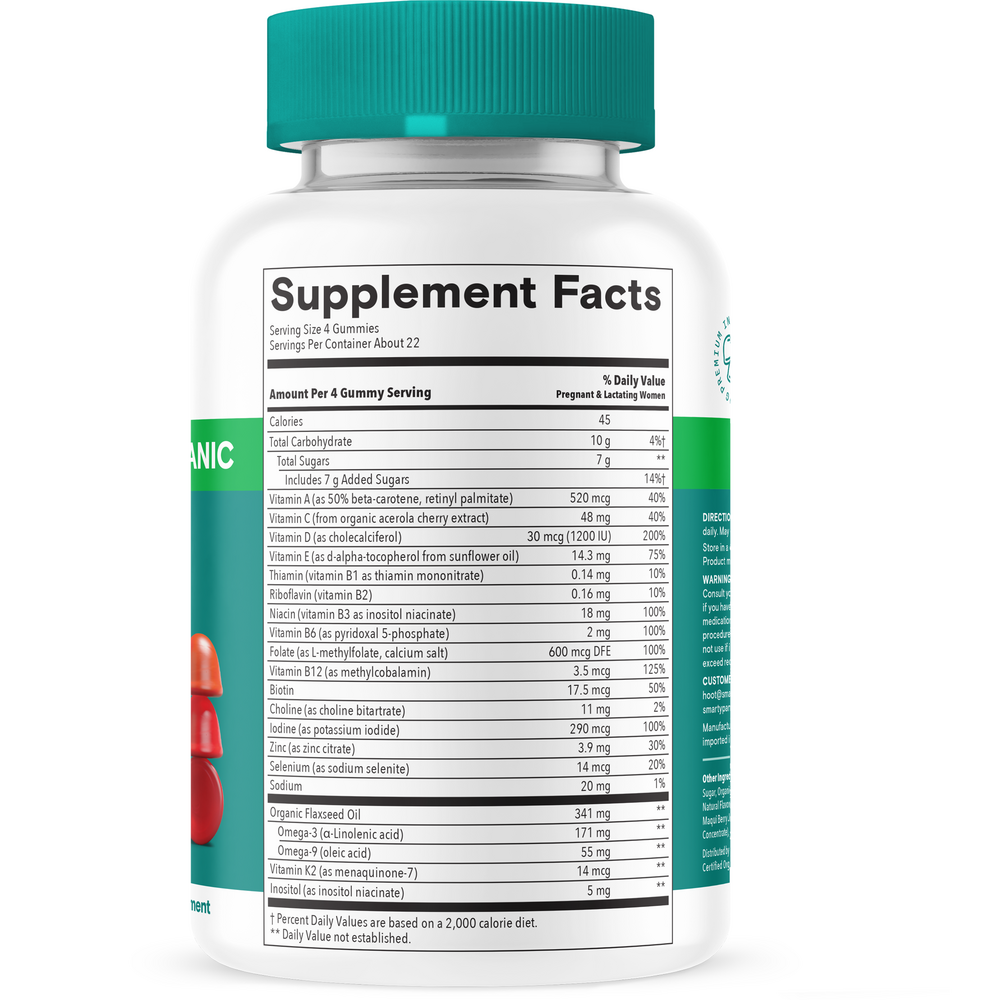


SmartyPants
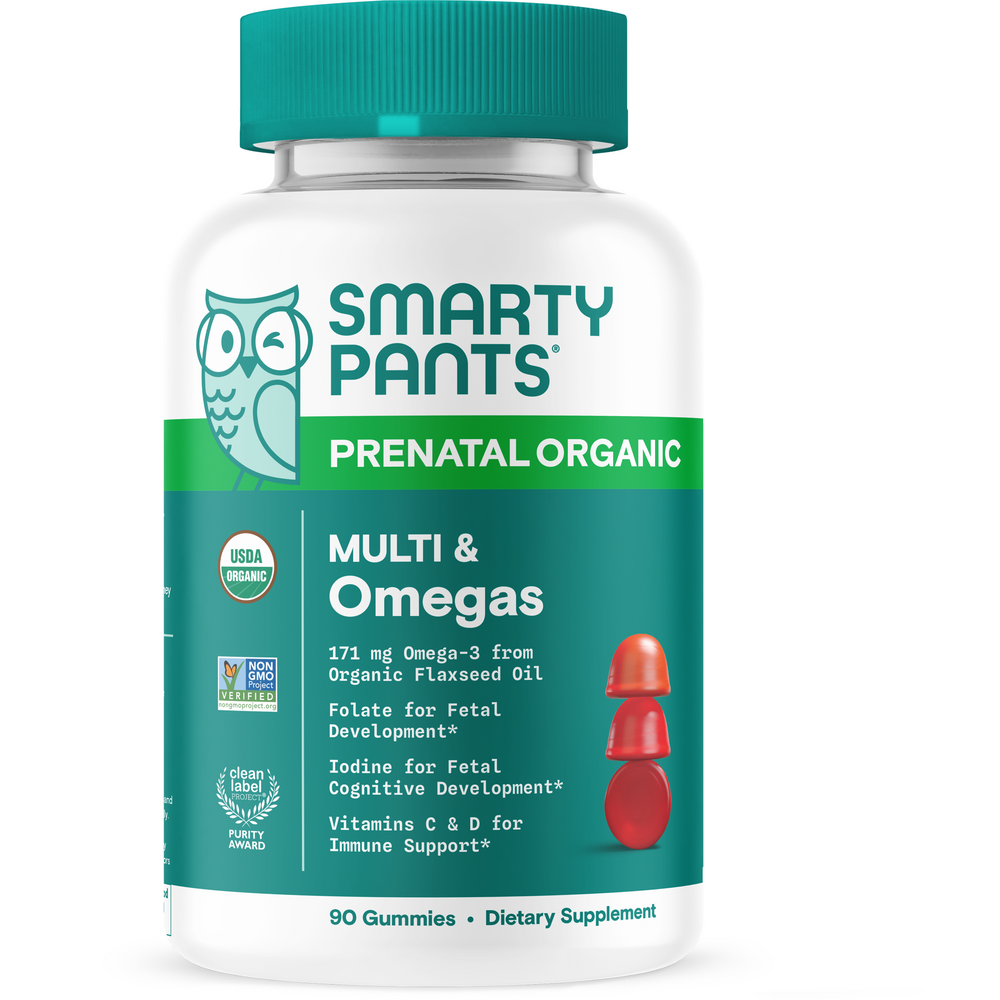
Prenatal Organic Multi & Omegas by SmartyPants
90 gummies
Comprehensive Nutrients and Omega Fatty Acids for Expecting Mothers$41.99retail
Add to cart for 19% off
Purchase option
19% below MSRP3rd-party tested for purity & potencyFree shipping $50+
Vegetarian·Gluten Free·Soy Free·Dairy Free·Egg Free·Milk Free·
SmartyPants Prenatal Organic Multi & Omegas overview
If you want prenatal vitamins with methylfolate in an easy-to-tolerate gummy, this fits. It works for first-trimester nausea when big capsules are a nonstarter, and for vegetarians who want an organic option. It does not include iron or DHA, so it pairs best with a separate iron plan if your Ferritin is low and an algae-based DHA if your Omega-3 Index is low or you rarely eat fish.
This prenatal uses L-methylfolate, the active folate your body uses directly, which is helpful if you have reduced MTHFR enzyme activity and for early neural tube formation. It supplies vitamin D3 (the form your skin makes) for bone and immune signaling and vitamin K2 MK-7 (the longer-acting K2) to help direct calcium. Omega-3 here is ALA from flax; conversion to DHA (the brain- and retina-building omega-3) is limited, so plan on a separate DHA source during pregnancy.
Take four gummies daily with food, ideally split twice daily to smooth absorption and reduce queasiness. Start before conception and continue through breastfeeding. Add 200–300 mg DHA from algae daily if your seafood intake is low. If your Vitamin D, 25-Hydroxy is low, the included D3 is a maintenance dose; repletion usually needs more under clinician guidance and then a step-down.
Choline is only 11 mg here, far below pregnancy needs; prioritize eggs or a separate choline supplement if your diet is light on them. There’s no iron, so if your CBC or Ferritin suggests deficiency, add iron separately and recheck within 4 to 12 weeks. Vitamin K2 can interfere with warfarin (a blood thinner), so avoid if you’re on it postpartum. With thyroid disease, discuss the 290 mcg iodine with your clinician.
Do gummies work as well as capsules? Yes for the listed nutrients, but many gummies skip iron and DHA, so you’ll need those elsewhere. Is ALA enough for omega-3? Not in pregnancy—conversion to DHA is poor, so add algae DHA. How fast do levels change? Folate and B12 improve within weeks; Vitamin D, 25-Hydroxy typically moves over 8–12 weeks.
Frequently asked questions
Do prenatal gummies need iron, or can I add it later?
Many prenatal gummies omit iron to reduce nausea. If your CBC or Ferritin is low, add an iron supplement now rather than waiting, and recheck labs in 4–12 weeks. Take iron away from coffee/tea to improve absorption.
Is methylfolate better than folic acid in a prenatal?
Methylfolate is the active form and bypasses common MTHFR enzyme variants, so it reliably raises folate status. Folic acid also works for many people, but methylfolate removes a conversion step and is a practical choice when you want certainty.
Does this provide enough omega-3 for pregnancy?
No. It contains ALA from flax, which the body only poorly converts to DHA. In pregnancy, add 200–300 mg DHA daily from algae or eat low‑mercury fish 2–3 times weekly, then consider checking your Omega-3 Index.
When should I start taking prenatal vitamins?
Start at least one month before trying to conceive and continue through breastfeeding. Early folate status matters most for neural tube formation, which happens before many people know they’re pregnant.
Can I take prenatal vitamins on an empty stomach?
You can, but taking with food improves absorption of fat-soluble vitamins (A, D, E, K) and reduces nausea. If sensitive, split the gummies between morning and evening meals.
Is vitamin K2 safe if I’m on blood thinners?
Avoid vitamin K2 if you use warfarin, as it counteracts the drug. Newer anticoagulants don’t interact the same way, but discuss any vitamin K supplement with your prescriber first.
Do I still need choline if I take this prenatal?
Yes. This formula has only 11 mg choline, which is minimal. Aim for choline-rich foods like eggs, or add a separate choline supplement, especially if you’re vegetarian or don’t eat eggs.
How to take it & ingredients
Suggested use: Adults take four gummies daily, with food, or as directed by your healthcare professional.
Active ingredients
4 gummies per serving
Vitamin A
Retinyl Palmitate
Retinyl Palmitate
520 mcg, 1300 IU
Vitamin C
Ascorbic Acid
Ascorbic Acid
48 mg
Vitamin D
Cholecalciferol
Cholecalciferol
30 mcg, 1200 IU
Vitamin E
D-Alpha-Tocopherol (from Sunflower Oil)
D-Alpha-Tocopherol (from Sunflower Oil)
14.3 mg, 12.87 IU
Vitamin K2
Menaquinone-7
Menaquinone-7
14 mcg
Thiamine
Thiamine Mononitrate (Vitamin B1)
Thiamine Mononitrate (Vitamin B1)
0.14 mg
Riboflavin
Vitamin B2
Vitamin B2
0.16 mg
Niacin
Inositol Niacinate
Inositol Niacinate
18 mg
Vitamin B6
Pyridoxine HCl
Pyridoxine HCl
2 mg
Folate
L-Methylfolate (Calcium Salt)
L-Methylfolate (Calcium Salt)
600 mcg DFE
Vitamin B12
Methylcobalamin
Methylcobalamin
3.5 mcg
Biotin
17.5 mcg
Choline
Choline Bitartrate
Choline Bitartrate
11 mg
Iodine
Potassium Iodide
Potassium Iodide
290 mcg
Zinc
Zinc Citrate
Zinc Citrate
3.9 mg
Selenium
Sodium Selenite
Sodium Selenite
14 mcg
Sodium
20 mg
Omega-3 (Alpha-Linolenic Acid)
171 mg
Omega-9 (Oleic Acid)
55 mg
Inositol
Inositol Niacinate
Inositol Niacinate
5 mg
Other ingredients: Organic Cane Sugar, Organic Tapioca Syrup, Organic Lemon Concentrate, Pectin, Organic Natural Flavors, Organic Black Carrot Concentrate, Organic Maqui Berry Concentrate, Sodium Citrate, Citric Acid, Organic Sunflower Oil, Corn Starch, Organic Carnauba Wax
Certifications
Benefits
Warnings