 Instalab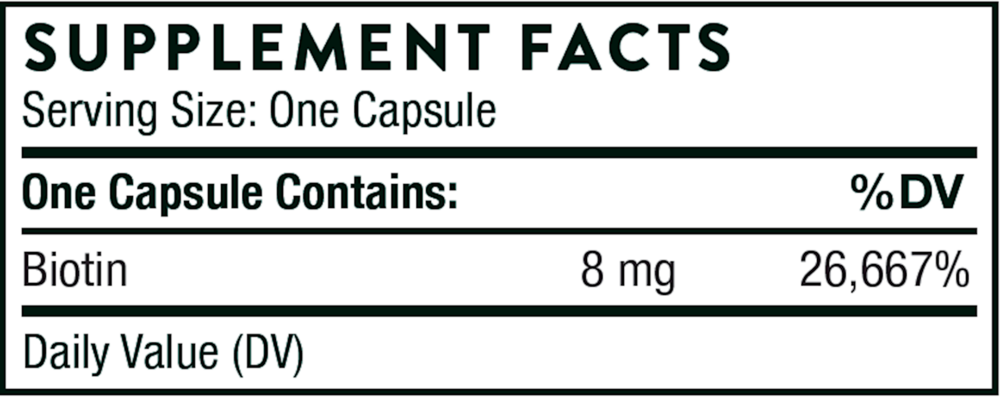


Thorne
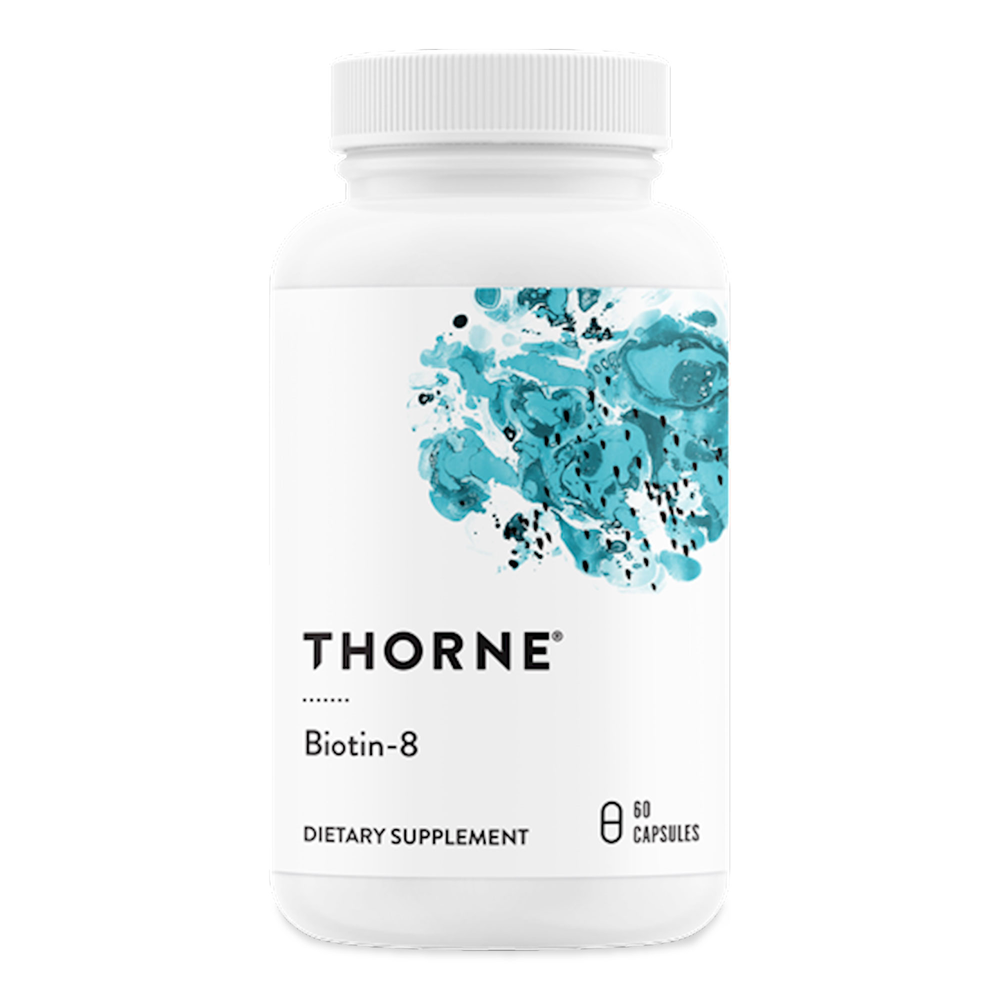
Biotin-8 by Thorne
60 capsules · 60-day supply
Supports Healthy Hair, Skin, and Nails with Essential Biotin$28.00
Purchase options
Practitioner-grade brand3rd-party testedFree shipping $50+
Gluten Free·Soy Free·Dairy Free·Milk Free
Thorne Biotin-8 overview
If you’re asking about biotin for hair and nails, this high-dose capsule fits people with brittle nails or confirmed low intake. It’s practical after bariatric surgery, with long-term anticonvulsant use (carbamazepine, phenobarbital, valproate), or if you’ve eaten raw egg whites regularly (avidin binds biotin). It’s also reasonable if your nails peel and split easily and other causes have been ruled out. For normal hair shedding without deficiency, biotin is often overhyped; address iron (Ferritin), thyroid (TSH), and Vitamin D, 25-Hydroxy first.
Biotin (vitamin B7) is a cofactor that turns on carboxylase enzymes, which help your cells use fats and carbohydrates for energy and build structural lipids. In nails and hair, it helps keratin infrastructure (the protein scaffold) function more reliably, which is why brittle nails often improve. Evidence for hair density is weaker than for nails, but nail firmness and thickness can improve within 2 to 4 months in responders. If nothing changes by 12 weeks, lack of deficiency is the usual reason.
Take one capsule daily, with or without food; some use two daily short term, then step down. This 8 mg dose is far above the daily requirement, which is why it’s used for brittle nails or suspected deficiency rather than routine maintenance. Expect nail changes within 8 to 12 weeks as the nail grows out. If you’re only after general upkeep, a lower microgram‑level biotin or a broad B‑complex is usually sufficient.
High‑dose biotin can skew many immunoassay lab tests. It can make thyroid results (TSH, Free T4), Troponin (the heart attack rule‑in test), PTH (parathyroid hormone), and some Vitamin D, 25‑Hydroxy assays look falsely high or low. Stop biotin 48 to 72 hours before planned bloodwork, and immediately tell urgent care or ER staff if you’ve taken it in the last few days. Anticonvulsants can lower biotin levels, which is one reason some patients supplement.
If you’re breaking out with new acne‑like bumps after starting high‑dose biotin, pause and retry at a lower dose. For unexplained hair loss, check Ferritin, TSH, and Vitamin D, 25‑Hydroxy rather than assuming biotin will fix it. Pregnancy and breastfeeding are generally compatible, but the lab interference still applies, so coordinate around prenatal tests. If you have a scheduled cardiac, thyroid, or endocrine workup soon, delay starting until after labs.
How long until nails improve? Plan on 2 to 4 months; nails grow slowly. Does it regrow hair? Not reliably unless you’re biotin‑deficient; rule out iron or thyroid issues first. Can I take it with a multivitamin? Yes—biotin doesn’t crowd out other B vitamins. Do I need it daily forever? No—once nails normalize, many step down to a lower dose or discontinue and monitor.
Frequently asked questions
Does biotin actually help brittle nails?
Often, yes. Small clinical studies show stronger, less split‑prone nails after 2–4 months of daily biotin in responders. If there’s no change by 12 weeks, true deficiency is unlikely and another cause should be considered.
What is the best biotin dose for hair growth?
There isn’t a proven dose for hair growth in people without deficiency. High doses like 8 mg are used for brittle nails or suspected deficiency. For hair loss, check Ferritin, TSH, and Vitamin D, 25‑Hydroxy before leaning on biotin.
How long does biotin take to work?
Nails change slowly, so allow 8–12 weeks to judge results; many see sturdier nails by 2–4 months. Hair cycles are longer, so any benefit there would take several months and usually requires true deficiency.
Can biotin affect thyroid or heart blood tests?
Yes. High‑dose biotin can distort immunoassays, making TSH, Free T4, and Troponin read falsely high or low. Stop biotin for 48–72 hours before labs and tell clinicians if you took it recently.
Is it safe to take biotin every day?
Biotin has a wide safety margin and is water‑soluble. Main concerns are acne‑like breakouts in some people and lab test interference. If you’re on anticonvulsants, your need may be higher—discuss dosing with your clinician.
Should I take biotin with food or on an empty stomach?
Either is fine. It’s well absorbed with or without food. If you notice mild nausea, take it with a meal. Consistency matters more than timing for nail benefits.
Can I take biotin with a B‑complex or multivitamin?
Yes. There’s no competition between biotin and other B vitamins. If you don’t have brittle nails or deficiency, a standard B‑complex may be a more balanced long‑term approach than high‑dose biotin.
How to take it & ingredients
Suggested use: Take 1 capsule one to two times daily or as recommended by your health professional.
Active ingredients
1 capsule per serving · 60 servings
Biotin
8 mg
Other ingredients: Calcium Laurate, Hypromellose Capsule, Microcrystalline Cellulose, Silicon Dioxide
Certifications
Benefits
Warnings