 Instalab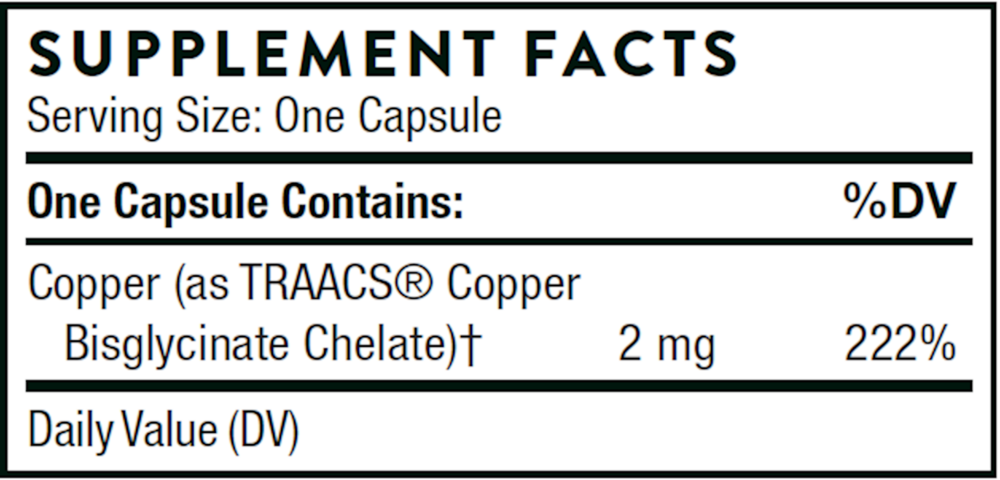

Thorne
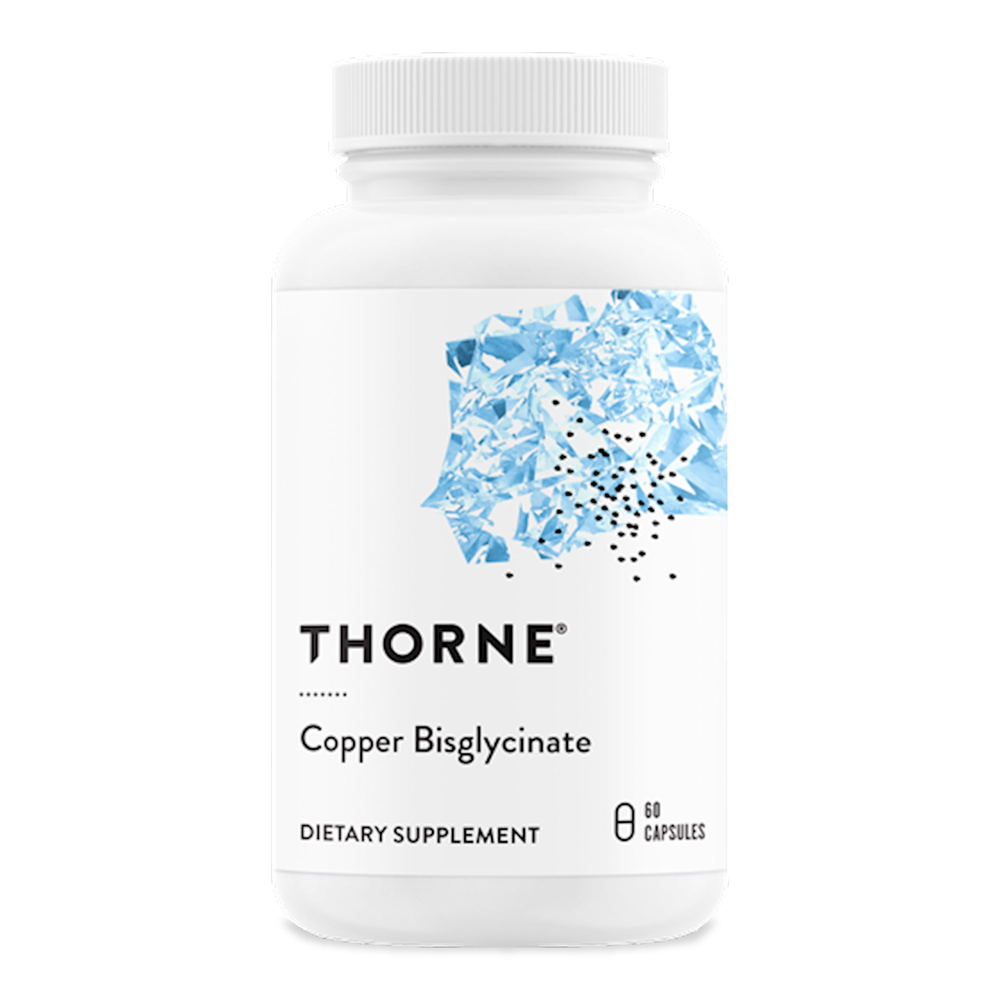
Copper Bisglycinate 2000 mcg by Thorne
60 capsules · 60-day supply
Bioavailable Copper for Energy Production and Antioxidant Support$19.00retail
Add to cart for 21% off
Purchase option
21% below MSRP3rd-party tested for purity & potencyFree shipping $50+
Gluten Free·Soy Free·Dairy Free·Milk Free
Thorne Copper Bisglycinate overview
If you’re searching for copper bisglycinate because your Serum Copper or Ceruloplasmin (the main copper-carrying protein) is low, this is the right lane. It’s useful after high zinc intake (zinc lozenges, denture creams, or >25–30 mg/day zinc supplements), after bariatric surgery, or with malabsorption like celiac or inflammatory bowel disease. Unexplained anemia and low white cells on a CBC can also stem from low copper. Vegans rarely need extra if labs are normal, and anyone with established deficiency will usually need a repletion plan, then step down.
Copper bisglycinate is copper chelated to the amino acid glycine, which tends to absorb well and is gentler on the stomach than copper oxide or sulfate. Copper is a cofactor for cytochrome c oxidase (a key enzyme for cellular energy), lysyl oxidase (collagen cross-linking for connective tissue), and superoxide dismutase (an antioxidant enzyme that neutralizes free radicals). It also enables ceruloplasmin’s ferroxidase activity, which helps move iron, so low copper can look like iron-deficiency anemia that doesn’t fully respond to iron.
Each capsule supplies 2 mg of copper. The suggested use is 1 capsule one to three times daily, typically with food if you’re prone to nausea. For maintenance when labs are low-normal, once daily is common; for documented deficiency, clinicians often use higher total daily amounts for a short period, then taper. Separate from zinc or iron by at least two hours so they don’t compete for absorption. Re-check Serum Copper and Ceruloplasmin within 4–8 weeks; blood counts often lag and normalize over 8–12 weeks.
Avoid copper supplements if you have Wilson’s disease (a genetic copper-overload condition) or unexplained elevated Serum Copper. Use caution with chronic liver disease unless your clinician is guiding therapy. Penicillamine and tetrathiomolybdate bind copper and will counteract it. If you take high-dose zinc long term, balance matters—either lower the zinc or add copper under supervision rather than guessing. Pregnancy and pediatrics: supplement only if labs are low and your clinician agrees.
Is copper bisglycinate better absorbed than copper sulfate? In practice it’s well tolerated and reliably absorbed, especially if standard salts upset your stomach. How fast will I feel a difference? Energy and skin changes are subtle; the real readout is labs—Serum Copper and Ceruloplasmin shift within weeks. Can copper upset my stomach? It can; taking with food and avoiding co-administration with zinc or iron usually fixes it.
Frequently asked questions
Who actually needs a copper supplement?
People with low Serum Copper or Ceruloplasmin, those on long-term high-dose zinc, after bariatric surgery, or with malabsorption (celiac, IBD). If your labs are normal and your diet includes nuts, seeds, legumes, and shellfish, routine copper isn’t needed.
How much copper bisglycinate should I take daily?
One capsule provides 2 mg. Many use 2 mg daily for maintenance when levels are low-normal. For established deficiency, clinicians often use higher daily totals short term, then step down. Always recheck labs within 4–8 weeks to guide dosing.
Can I take copper with zinc or iron?
Yes, but separate doses by at least two hours. Zinc and iron compete with copper for absorption, and high zinc over time can drive copper low. If you need ongoing high-dose zinc, add copper only with lab monitoring.
How long does copper take to work?
Serum Copper and Ceruloplasmin often improve within 4–8 weeks. If you had anemia or low white blood cells from copper deficiency, the complete blood count usually lags and normalizes over 8–12 weeks with consistent intake.
What are the side effects of copper supplements?
The most common issue is nausea or GI upset, which improves when taken with food. Rarely, taking more than you need can raise copper levels. That’s why periodic Serum Copper and Ceruloplasmin checks are important.
Is copper bisglycinate safe in pregnancy?
Only under clinician guidance. Copper is essential in pregnancy, but extra supplementation should be based on labs. If Serum Copper or Ceruloplasmin is low, your obstetric clinician can set a dose and follow levels.
Does copper interact with medications?
Penicillamine and tetrathiomolybdate bind copper and reduce its effect. Separate copper by a few hours from antibiotics like tetracyclines and quinolones. Always review your med list with your clinician before starting copper.
How do I know if I’m getting too much copper?
Symptoms are nonspecific (nausea, abdominal pain), so rely on labs. If Serum Copper or Ceruloplasmin climbs above your clinician’s target, reduce or stop. People with Wilson’s disease or unexplained high copper should avoid supplements.
How to take it & ingredients
Suggested use: Take 1 capsule one to three times daily or as recommended by your health professional.
Active ingredients
1 capsule per serving · 60 servings
Copper
TRAACS® Copper Bisglycinate Chelate
TRAACS® Copper Bisglycinate Chelate
2000 mcg
Other ingredients: Hypromellose Capsule, Leucine, Microcrystalline Cellulose
Certifications
Benefits
Warnings