 Instalab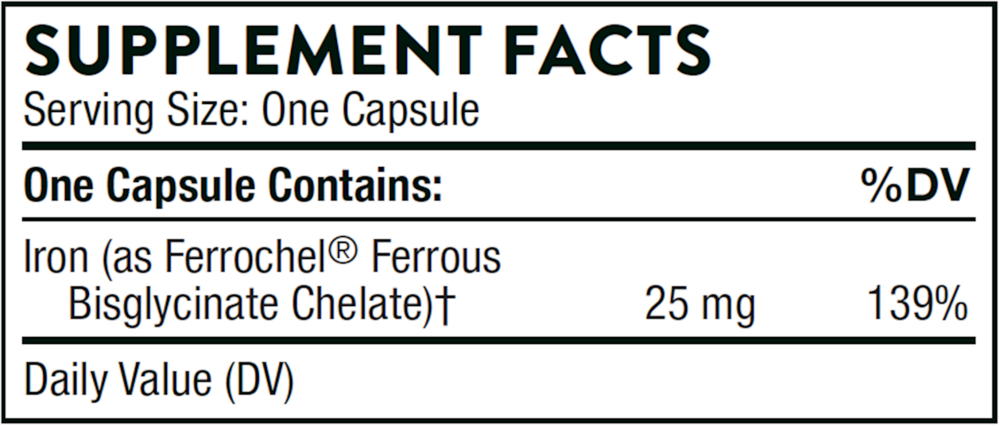




Thorne
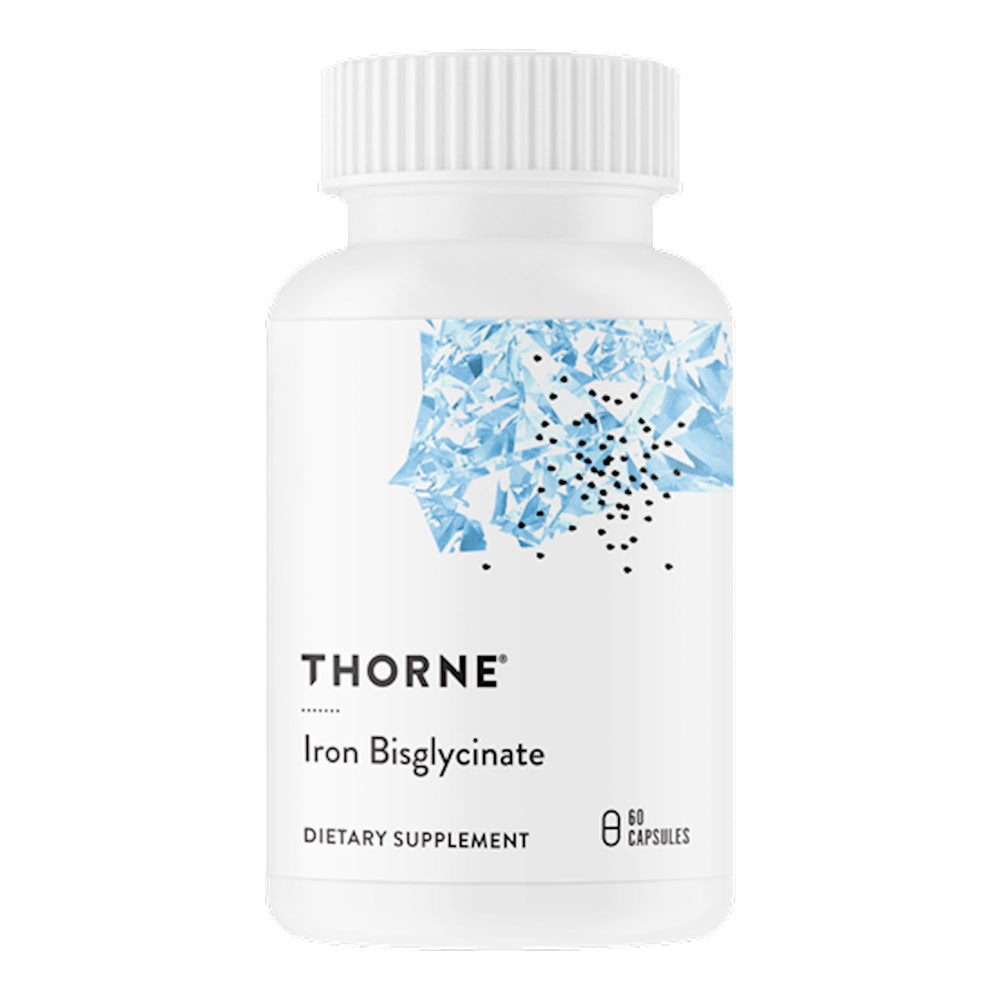
Iron Bisglycinate 25 mg by Thorne
60 capsules · 60-day supply
Gentle Iron Support for Optimal Energy and Blood Health$16.00retail
Add to cart for 19% off
Purchase option
19% below MSRP3rd-party tested for purity & potencyFree shipping $50+
Gluten Free·Soy Free·Dairy Free·Milk Free
Thorne Iron Bisglycinate overview
Choose iron bisglycinate if your Ferritin (the iron storage protein) is low or your CBC hemoglobin (the oxygen‑carrying protein on a blood count) runs low‑normal with fatigue. It fits menstruating adults with heavy periods, frequent blood donors, endurance athletes, vegans, and those after bariatric surgery. If you take acid‑reducing meds, absorption is often better with this form. For established deficiency, expect 4 to 12 weeks before Ferritin climbs; severe anemia usually needs higher or prescription iron under clinician care.
Ferrous bisglycinate is iron bound to two glycine molecules, which helps it pass through the gut more efficiently and with fewer free iron reactions that irritate the stomach. Compared with ferrous sulfate, it’s typically gentler and less constipating at the same elemental iron dose. Better absorption means more iron delivered to the bone marrow to build red blood cells, which can normalize Transferrin saturation (how full your iron carrier is) and raise Ferritin over time.
Take one capsule daily, ideally on an empty stomach with vitamin C or orange juice to improve absorption. If it upsets your stomach, take with a small meal that is low in calcium. Keep coffee, tea, dairy, calcium supplements, and high‑dose magnesium at least two hours away. Recheck Ferritin and a CBC after 6 to 8 weeks to gauge response. If your levels are very low, your clinician may recommend a higher total daily iron dose temporarily.
Separate iron 2 to 4 hours from levothyroxine, tetracycline or quinolone antibiotics, and oral bisphosphonates, since iron blocks their absorption. Black stools and mild constipation are common and not dangerous; severe abdominal pain is not typical. Skip iron if your Ferritin is high, you have hemochromatosis (a genetic iron overload), chronic liver iron overload, or repeated transfusions. Pregnancy requires individualized dosing—use iron only under clinician guidance. Thorne’s NSF Certified for Sport® status suits tested athletes.
Frequently asked questions
How long does iron bisglycinate take to raise ferritin?
Most people with low stores see Ferritin rise within 4–12 weeks. The lower your baseline, the longer it takes. Recheck a CBC and Ferritin after 6–8 weeks, and continue 1–3 months after symptoms improve to rebuild storage, unless your clinician advises otherwise.
Is iron bisglycinate easier on the stomach than ferrous sulfate?
Yes. The bisglycinate chelate is typically better tolerated with less nausea and constipation at equivalent elemental iron. If you still get GI upset, take it with a small meal and hydrate, or split dosing if your clinician increases the daily amount.
Can I take iron with coffee or calcium?
Avoid taking iron with coffee, tea, dairy, or calcium supplements, which reduce absorption. Keep them at least two hours apart. Vitamin C or orange juice taken with iron can improve uptake, especially if your diet is low in heme iron from meat.
Does iron interact with thyroid medication?
Yes. Iron binds levothyroxine in the gut and lowers its absorption. Take levothyroxine first thing in the morning on an empty stomach and leave a 4‑hour gap before iron, or take iron later in the day as your clinician recommends.
Who should not take iron supplements?
Skip iron if your Ferritin is high, you have hemochromatosis or other iron‑overload conditions, or you receive frequent transfusions. Infections and inflammatory flares can transiently elevate Ferritin, so confirm a true deficiency before supplementing.
Do I need labs before starting iron bisglycinate?
It’s best to check Ferritin, a CBC, and often Iron, TIBC, and Transferrin saturation before starting. These confirm deficiency and help set dose and duration. If labs are normal, routine iron isn’t helpful and can be harmful over time.
Can iron cause constipation or dark stools?
Dark stools are common and harmless. Mild constipation or nausea can occur, though iron bisglycinate is gentler than many forms. Extra fluids, fiber, magnesium (away from iron), or taking with a small meal usually solves it. Severe pain warrants medical advice.
How to take it & ingredients
Suggested use: Take 1 capsule daily or as recommended by your health professional.
Active ingredients
1 capsule per serving · 60 servings
Iron
Ferrochel® Ferrous Bisglycinate Chelate
Ferrochel® Ferrous Bisglycinate Chelate
25 mg
Other ingredients: Hypromellose Capsule, Leucine, Microcrystalline Cellulose, Silicon Dioxide
Certifications
Benefits
Warnings