
 Instalab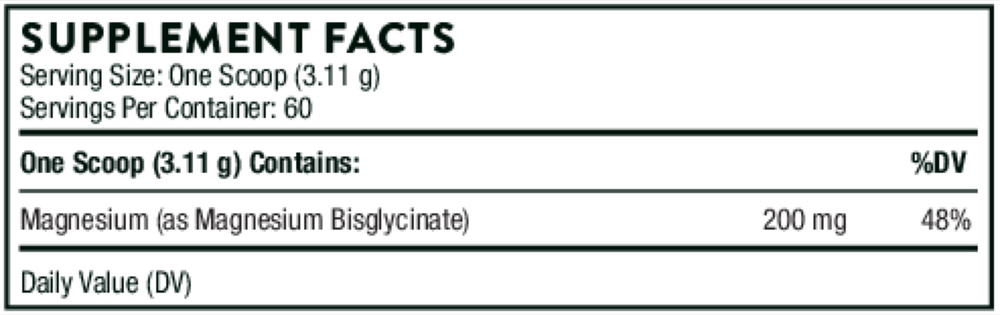


Thorne
Magnesium Bisglycinate 200 mg by Thorne
187 grams · 60-day supply
Supports Relaxation, Muscle Function, and Overall Well-Being$52.00retail
Add to cart for 19% off
Purchase option
19% below MSRP3rd-party tested for purity & potencyFree shipping $50+
Gluten Free·Soy Free·Dairy Free·Milk Free·Corn Free·Organic
Thorne Magnesium Bisglycinate overview
Magnesium glycinate is a fit if your Magnesium, RBC or Serum Magnesium is low or low‑normal and you have sleep trouble, muscle tightness, migraines, or high training loads. It also helps if you take a proton‑pump inhibitor for reflux, a diuretic for blood pressure, or drink alcohol regularly, all of which deplete magnesium. Vegans with low nut/seed intake and people under chronic stress often land here too. If constipation is your main issue, citrate is better; glycinate is for absorption and calm, not laxation.
This form binds magnesium to glycine, an amino acid that is calming at GABA receptors (the brain’s main braking system). The chelate shields magnesium from gut acids, improving uptake versus oxide and reducing loose stools. Once absorbed, magnesium stabilizes ATP (the body’s energy currency), relaxes muscle by balancing calcium entry into cells, and tempers the stress response. Better levels often show up as steadier sleep and fewer tension cramps.
Each scoop provides 200 mg elemental magnesium. Mix with water once daily for maintenance, or twice daily if your level is low and your clinician agrees. Evening is popular for sleep; split morning and night for muscle symptoms. Take with a small snack if you have a sensitive stomach. Repletion usually takes 2 to 4 weeks; sleep and cramp benefits often appear within 3 to 14 days. Recheck Magnesium, RBC after 4 to 8 weeks.
Separate magnesium glycinate by 4 hours from levothyroxine, tetracycline or fluoroquinolone antibiotics, and bisphosphonates, since minerals bind these drugs and block absorption. Use extra caution with significant kidney disease, where magnesium can accumulate. If you’re on high‑dose calcium or iron, take them at a different time of day. For ongoing reflux on proton‑pump inhibitors, this is a smart add, but still confirm low levels with Magnesium, RBC.
Frequently asked questions
What is magnesium glycinate best for?
It’s best for raising magnesium when you want calm and gut tolerance. People use it for sleep quality, tension cramps, migraines, and stress. If you need a laxative effect, magnesium citrate or oxide works better than glycinate.
How long does magnesium glycinate take to work?
Sleep and muscle relaxation changes often show in 3–14 days. Lab repletion (Magnesium, RBC) usually takes 2–4 weeks of daily use. If nothing changes by a month, check dose, adherence, and other causes like low potassium or low vitamin D.
Does magnesium glycinate cause diarrhea?
It’s one of the gentlest forms and is less likely to cause diarrhea than citrate or oxide. If you’re sensitive, take it with food or split the dose. Persistent loose stools suggest the dose is too high or you need a different form.
Can I take magnesium glycinate with vitamin D?
Yes. Vitamin D increases calcium use, and magnesium is a cofactor in vitamin D activation. Many clinicians pair them. If you also take high‑dose calcium, separate the timing to improve absorption of both.
What time of day should I take magnesium glycinate?
Evening works well if you’re aiming for better sleep. For muscle symptoms, split morning and evening. Consistency matters more than timing; pick a time you won’t miss.
Is magnesium glycinate safe in pregnancy?
Magnesium is an essential mineral and is commonly used in pregnancy, but dosing should be reviewed with your obstetric clinician. Avoid if you have significant kidney disease or are on medications that your clinician says conflict.
Which is better: magnesium glycinate or citrate?
For absorption and calm with minimal GI upset, glycinate wins. For constipation relief, citrate is better. For budget but poor absorption, oxide is common. If your goal is raising Magnesium, RBC, glycinate is a strong first pick.
Do I need labs before taking magnesium glycinate?
Not strictly, but it helps. Magnesium, RBC reflects tissue status better than Serum Magnesium. If symptoms or risks are present, start supplementation and recheck in 4–8 weeks to confirm you’ve moved the needle.
How to take it & ingredients
Suggested use: Mix 1 scoop with at least 8 ounces of water one to two times daily or as recommended by your health professional.
Active ingredients
1 scoop = 3.11 grams per serving · 60 servings
Magnesium
As TRAACS® Magnesium Bisglycinate Chelate Taste Free
As TRAACS® Magnesium Bisglycinate Chelate Taste Free
200 mg
Other ingredients: Citric Acid, Monk Fruit concentrate (fruit) (Siraitia grosvenorii)
Certifications
Benefits
Warnings