 Instalab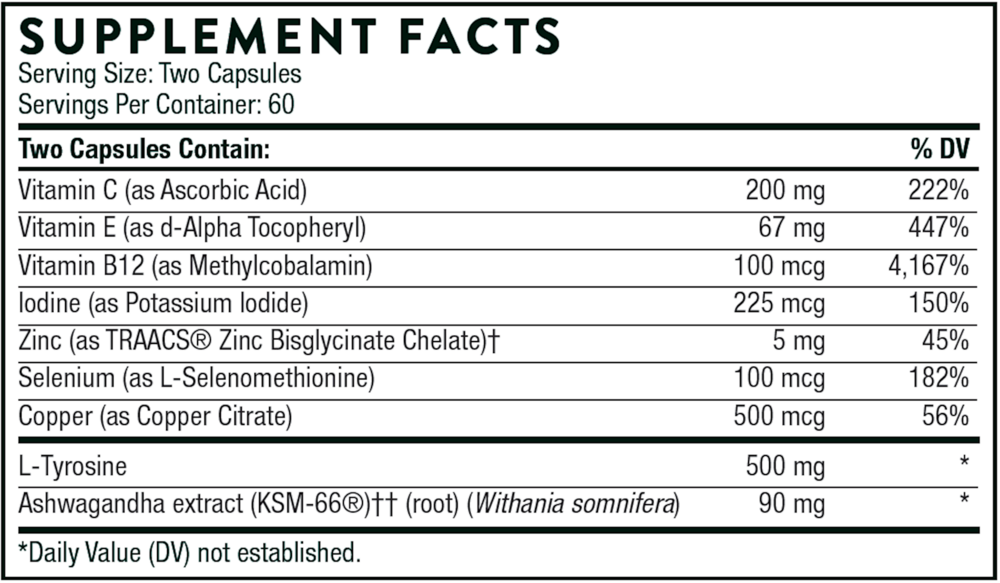
Thorne
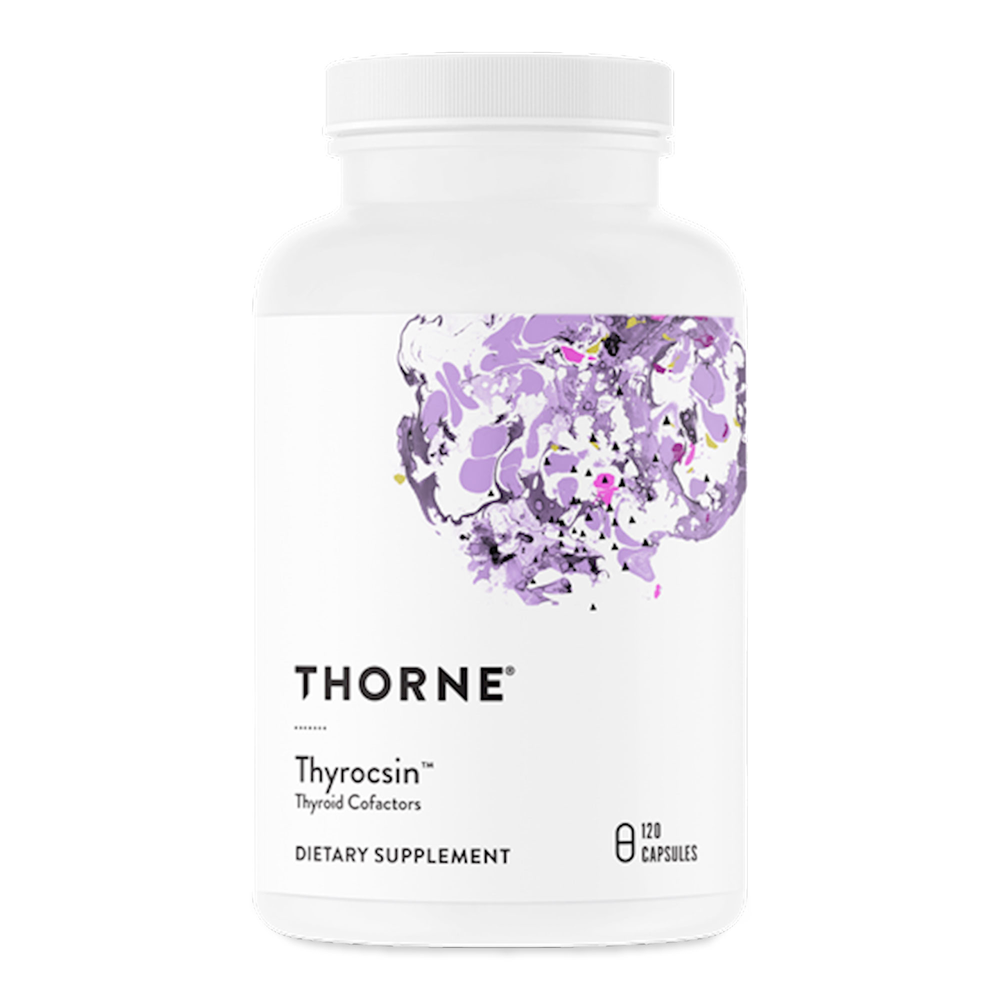
Thyrocsin by Thorne
120 capsules · 60-day supply
Comprehensive Support for Thyroid Function and Energy Production$40.00retail
Add to cart for 20% off
Purchase option
20% below MSRP3rd-party tested for purity & potencyFree shipping $50+
Gluten Free·Soy Free·Dairy Free·Milk Free
Thorne Thyrocsin overview
If your TSH, Free T4, or Free T3 are borderline and you’re not on thyroid medication, a thyroid support supplement can help cover common nutrient gaps. It fits dairy-free or low-salt eaters who skip iodized salt, vegans with low iodine and selenium intake, and those with low-normal Zinc or Vitamin B12 on labs. If your TSH is clearly high or symptoms are severe, see a clinician first; nutrients won’t replace prescription hormone.
Iodine and L-tyrosine are the raw materials your thyroid uses to build T4 and T3. Selenium (as selenomethionine) supports deiodinase enzymes, which convert T4 into the active hormone T3. Zinc helps thyroid hormone signaling at the cellular level, while copper participates in hormone synthesis. Ashwagandha can ease stress signaling and has small trials showing modest T3/T4 increases. Vitamins C and E act as antioxidants that protect thyroid tissue from oxidative stress.
The suggested use is two capsules twice daily. Take with food to reduce nausea from zinc. If you use levothyroxine or liothyronine, separate this by at least four hours to avoid absorption issues. Recheck TSH, Free T4, Free T3, and Thyroid Peroxidase Antibodies (TPOAb, the common Hashimoto’s antibody) after 6–12 weeks to gauge effect. If labs improve, many step down to a once-daily maintenance schedule.
Skip added iodine if you have hyperthyroidism, a history of thyroiditis flare with iodine, or multinodular goiter unless your endocrinologist approves. If you’re on antithyroid drugs (methimazole, propylthiouracil), avoid this. With Hashimoto’s, extra iodine can aggravate antibodies in some people; the selenium here helps, but monitor TPOAb. Wilson’s disease or copper overload is a reason to avoid copper-containing blends. Pregnancy: avoid ashwagandha; use a prenatal with iodine instead.
Frequently asked questions
Can this replace levothyroxine?
No. Nutrients can optimize thyroid hormone building and conversion but don’t replace missing hormone. If you already take thyroid medication, use this only as an add‑on and retest labs in 6–12 weeks.
How long until I notice a difference?
Give it 6–12 weeks. That’s the window when TSH, Free T4, and Free T3 changes, if they occur, usually show up. Energy and temperature tolerance often track with those lab shifts.
Is ashwagandha safe for thyroid issues?
In small studies, ashwagandha slightly increased T3/T4 and improved mild, subclinical hypothyroid labs. Avoid it if you’re hyperthyroid, on antithyroid meds, or pregnant. Stop if you feel jittery or overheated.
Can I take this with my thyroid pill?
Yes, but separate by at least 4 hours. Minerals can bind levothyroxine and reduce absorption. Keep your thyroid pill on an empty stomach, then take this later with food.
Will selenium lower thyroid antibodies?
Selenium can modestly reduce Thyroid Peroxidase Antibodies (TPOAb) in some Hashimoto’s patients over 3–6 months. It’s not universal, so monitor TPOAb and symptoms to see if you’re a responder.
Who should be cautious with iodine?
People with hyperthyroidism, prior iodine-induced flares, or multinodular goiter should avoid extra iodine unless directed by a specialist. If you already use iodized salt and seafood regularly, more isn’t better.
Any common side effects?
Mild nausea (usually from zinc) and digestive upset are the most common, helped by taking with food. Rarely, warmth, palpitations, or anxiety signal too much thyroid activity—stop and check labs.
How to take it & ingredients
Suggested use: Take two capsules two times daily or as recommended by your health professional.
Active ingredients
2 capsules per serving · 60 servings
Ashwagandha Extract
Withania somnifera
Withania somnifera
90 mg
Copper
Citrate
Citrate
500 mcg
Iodine
Potassium Iodide
Potassium Iodide
225 mcg
L-Tyrosine
500 mg
Selenium
Selenomethionine
Selenomethionine
100 mcg
Vitamin B12
Methylcobalamin
Methylcobalamin
100 mcg
Vitamin C
Ascorbic Acid
Ascorbic Acid
200 mg
Vitamin E
D-Alpha-Tocopheryl
D-Alpha-Tocopheryl
67 mg
Zinc
Bisglycinate Chelate
Bisglycinate Chelate
5 mg
Other ingredients: Hypromellose Capsule, Leucine, Silicon Dioxide
Certifications
Benefits
Warnings