 Instalab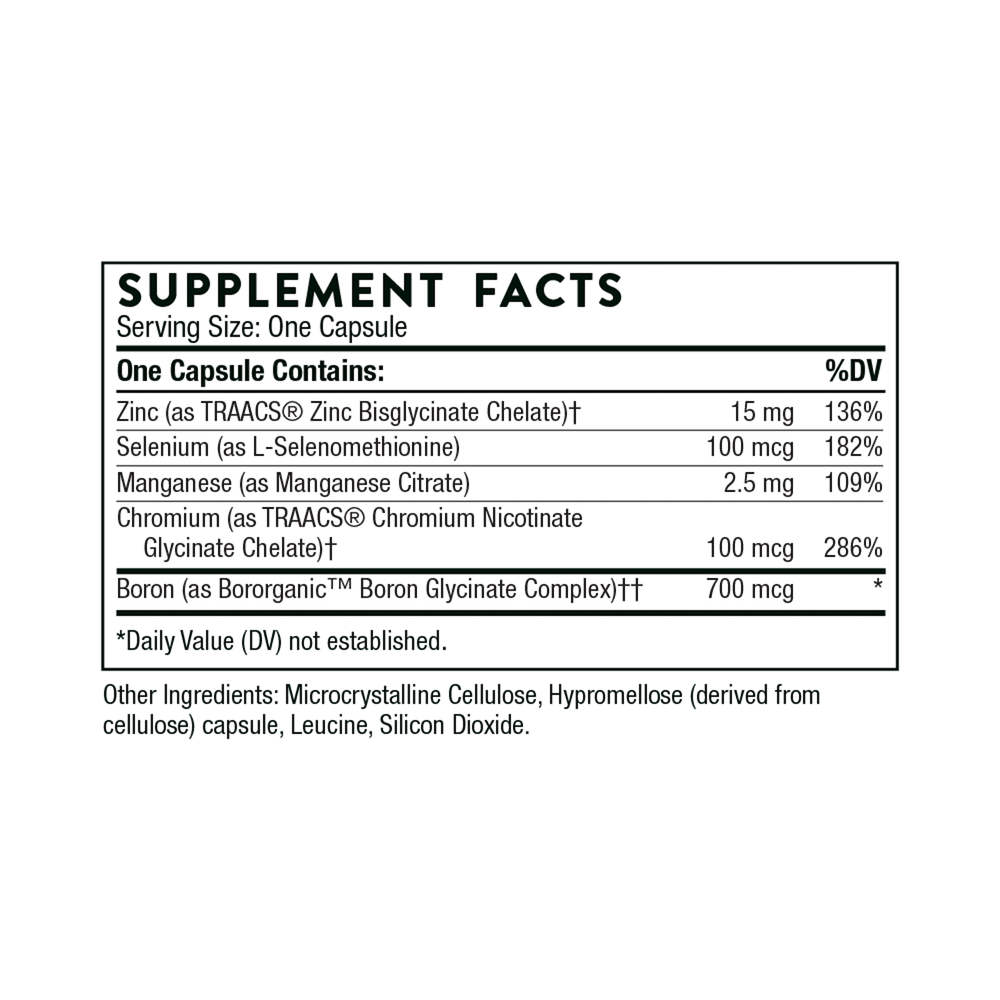


Thorne
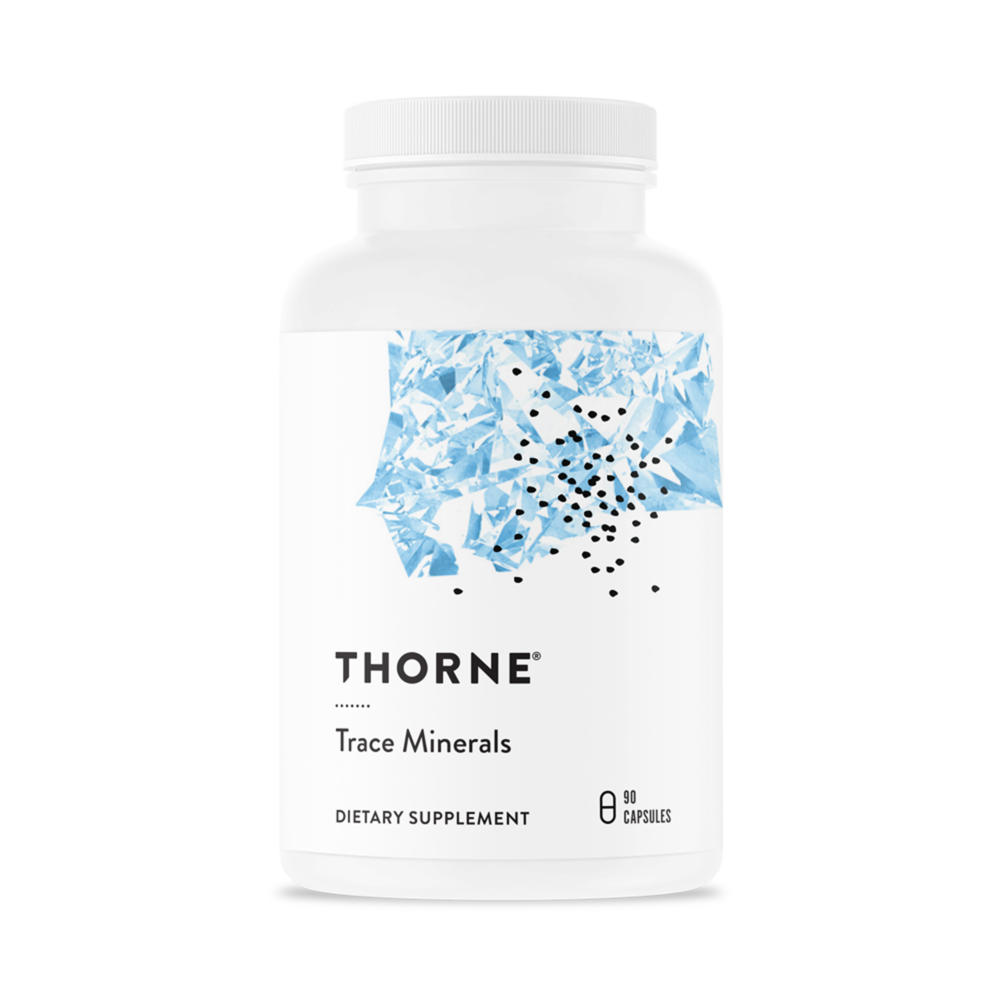
Trace Minerals by Thorne
90 capsules · 90-day supply
Essential Trace Minerals for Optimal Health and Well-Being$24.00retail
Add to cart for 21% off
Purchase option
21% below MSRP3rd-party tested for purity & potencyFree shipping $50+
Gluten Free·Soy Free·Dairy Free·Milk Free
Thorne Trace Minerals overview
A trace minerals supplement fits people who eat little seafood, follow high‑phytate diets (lots of unfortified whole grains/legumes that block zinc), or train hard with heavy sweating. It’s also useful after bariatric surgery or if your Zinc or Selenium is low on testing. If fasting glucose or A1c runs high-normal, chromium here is a gentle nudge. This is maintenance-level; if you have established deficiency, you’ll likely need targeted dosing short term, then step down.
These are chelated forms (bisglycinates and citrate), which bind minerals to amino acids for better absorption and fewer stomach issues. Zinc supports immune cell function and skin repair, and a steady 15 mg avoids the copper depletion seen with high-dose zinc. Selenium as selenomethionine builds selenoproteins like glutathione peroxidase (an antioxidant enzyme). Manganese feeds mitochondrial superoxide dismutase (a key free‑radical quencher). Chromium helps insulin signaling for smoother glucose handling. Boron influences how your body uses vitamin D and sex hormones, which matters for bone.
Take 1 capsule with a meal, up to three times daily as directed. Food reduces the queasy feeling zinc can cause on an empty stomach. If using more than once daily, split across meals. Separate by a few hours from iron or calcium supplements and from coffee or tea, which can hinder absorption. Recheck labs like Zinc, Selenium, fasting glucose, and Alkaline Phosphatase within 8–12 weeks to gauge effect.
Minerals bind medications. Separate from levothyroxine by at least 4 hours. Avoid taking near tetracycline or quinolone antibiotics; space by several hours. If you use diabetes drugs, chromium can modestly lower glucose, so watch for lows and monitor fasting glucose. Long-term high-dose zinc elsewhere can lower copper; if you stack products, consider checking Copper and Ceruloplasmin. In chronic kidney or advanced liver disease, review any mineral stack with your clinician.
Frequently asked questions
What do trace minerals actually do?
They act as enzyme helpers. Zinc supports immunity and skin repair, selenium and manganese power antioxidant enzymes, chromium helps insulin work better, and boron influences bone through vitamin D and hormone handling.
How long until I notice effects from trace minerals?
Blood markers usually shift within 4–12 weeks. Symptom changes, like fewer winter infections or steadier energy with meals, follow lab correction. Recheck Zinc, Selenium, fasting glucose, and Alkaline Phosphatase after a few months.
Can I take this with a multivitamin?
Yes, but check total zinc and selenium so you don’t overshoot. This capsule is moderate; if your multi is already robust, you may not need daily stacking. Periodic labs help decide whether to continue.
Does zinc in this upset your stomach?
Zinc can cause nausea on an empty stomach. Take the capsule with a meal and avoid coffee or tea at the same time. The bisglycinate form is gentler than zinc oxide or sulfate for most people.
Will chromium lower my blood sugar too much?
Chromium can make insulin work a bit better, but the effect is modest. If you’re on diabetes medication, monitor fasting glucose and watch for symptoms of low blood sugar, then adjust with your clinician.
Is selenium safe if I have thyroid issues?
At moderate doses, selenium supports thyroid enzyme activity and can lower thyroid antibody levels in some people. Very high intakes are not advisable. Stay within recommended use and monitor thyroid labs with your clinician.
Do I need extra copper with this?
Not at this zinc dose alone. Copper becomes a concern when taking higher-dose zinc from other products for months. If you’re stacking zinc, consider checking Copper and Ceruloplasmin.
How should I time this with antibiotics or thyroid meds?
Separate minerals from tetracycline or quinolone antibiotics and from levothyroxine by several hours to avoid reduced drug absorption and variable dosing.
How to take it & ingredients
Suggested use: Take 1 capsule one to three times daily or as recommended by your health professional.
Active ingredients
1 capsule per serving · 90 servings
Zinc
TRAACS Zinc Bisglycinate Chelate
TRAACS Zinc Bisglycinate Chelate
15 mg
Selenium
L Selenomethionine
L Selenomethionine
100 mcg
Manganese
Manganese Citrate
Manganese Citrate
2.5 mg
Chromium
TRAACS Chromium Nicotinate Glycinate Chelate
TRAACS Chromium Nicotinate Glycinate Chelate
100 mcg
Boron
Bororganic Boron Glycinate Complex
Bororganic Boron Glycinate Complex
700 mcg
Other ingredients: Microcrystalline Cellulose, Hypromellose capsule, Leucine, Silicon Dioxide
Certifications
Benefits
Warnings