 Instalab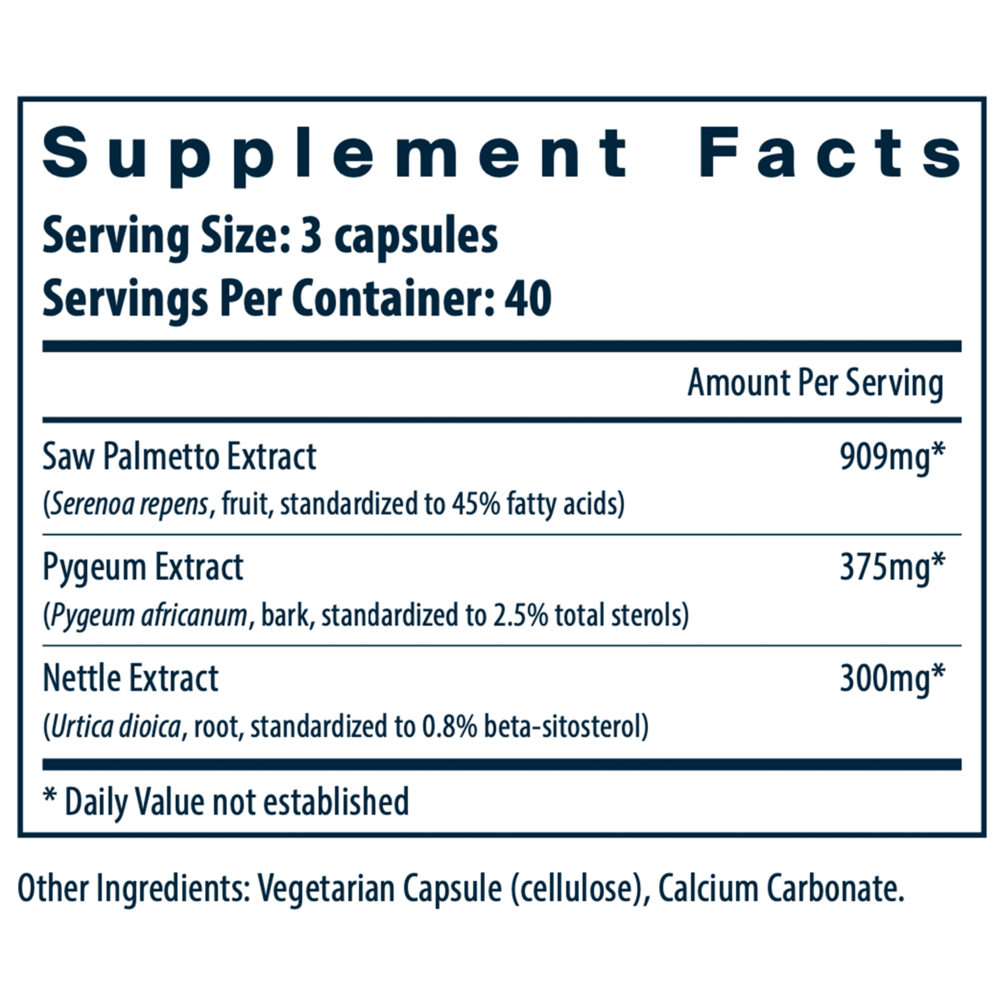
Vital Nutrients
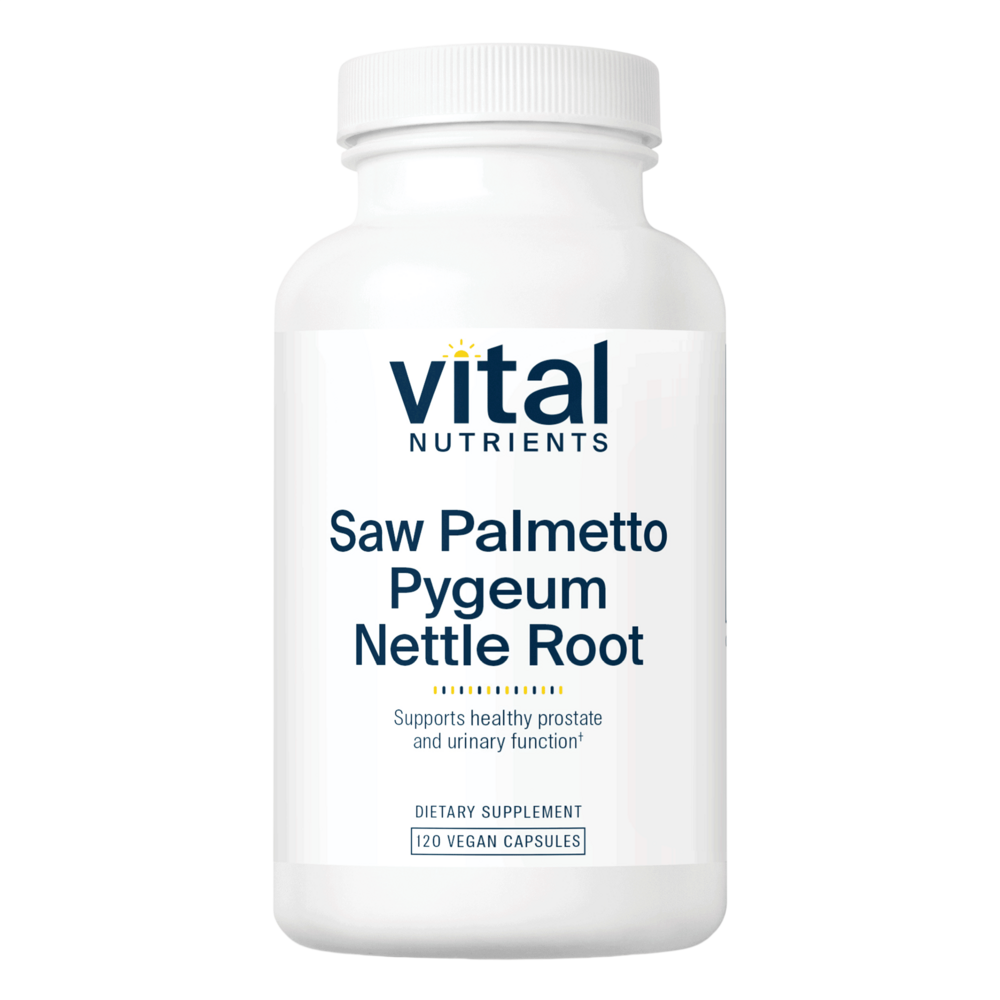
Saw Palmetto Pygeum Nettle Root by Vital Nutrients
120 capsules · 40-day supply
Comprehensive Support for Prostate Health and Urinary Function$73.99
Purchase options
Practitioner-grade brand3rd-party testedFree shipping $50+
Vegan·Vegetarian·Gluten Free·Soy Free·Dairy Free·Egg Free·
Vital Nutrients Saw Palmetto Pygeum Nettle Root overview
Men in their 40s to 70s with mild urinary symptoms from an enlarged prostate who want a non-drug trial are the right fit for saw palmetto for enlarged prostate, especially when paired with pygeum and nettle root. Think nighttime trips to the bathroom, slow stream, or urgency. Check PSA (prostate-specific antigen, a screening marker) and a urinalysis first to rule out infection or red flags. Expect modest relief, not a cure, and loop in your clinician if symptoms are moderate to severe.
Saw palmetto delivers fatty acids that weakly block 5‑alpha‑reductase (the enzyme that turns testosterone into DHT, a more potent form that stiffens prostate tissue). Pygeum provides plant sterols that calm inflammatory signaling in the prostate and may ease swelling around the bladder outlet. Nettle root contains beta‑sitosterol, which has been linked to better urinary flow in trials. Together, these herbs tend to nudge symptom scores down a few points without meaningfully shrinking prostate size.
Take three capsules daily with food at the same time each day. Many split the dose, breakfast and dinner, to keep levels steady. Give it 4 to 8 weeks for urinary frequency and stream to change, and up to 12 weeks for full effect. If nothing improves by then, reconsider the plan with your clinician. Drug options work faster, but this blend can be a reasonable first step for mild symptoms.
Skip self-treatment if you have pain with urination, blood in urine, fever, retention, or unexplained weight loss. Tell your doctor before starting if you take blood thinners like warfarin, apixaban, or clopidogrel, as saw palmetto has rare bleeding reports. Hold the blend 1 to 2 weeks before surgery or a prostate biopsy. If you’re already on finasteride/dutasteride or tamsulosin, discuss layering herbs to avoid confusion about benefits and side effects.
Frequently asked questions
How long does saw palmetto take to work for BPH symptoms?
Most responders notice small changes in 4–8 weeks, with full assessment at 12 weeks. If urinary frequency, urgency, or stream haven’t budged by then, it’s reasonable to stop and consider medication or further evaluation.
Will saw palmetto, pygeum, and nettle root shrink my prostate?
They usually don’t shrink prostate size meaningfully. Benefits are mainly symptom-level: modest improvements in flow and fewer nighttime trips. If your goal is gland shrinkage, 5‑alpha‑reductase drugs do that more reliably.
Can I take saw palmetto with finasteride or tamsulosin?
You can, but discuss it with your clinician. Effects can be additive with finasteride/dutasteride, and tamsulosin already improves symptoms quickly. Combine only if you’re tracking response and side effects clearly.
Does saw palmetto affect PSA blood test results?
It can slightly lower PSA in some users. Get a baseline PSA before you start and tell your clinician you’re taking it so they interpret follow-up results appropriately.
What side effects should I watch for?
Most people tolerate these herbs well. Possible effects include stomach upset, headache, or dizziness. Rarely, saw palmetto has been linked to bleeding. Stop and seek care for blood in urine, severe pain, or retention.
Is this better than taking beta-sitosterol alone?
Beta-sitosterol (from nettle or standalone) has some of the stronger data for flow and symptom scores. This combo adds saw palmetto and pygeum for a broader approach. If you want a single-constituent trial, beta-sitosterol alone is reasonable.
Can women take saw palmetto, pygeum, or nettle root?
These are studied for male lower urinary tract symptoms, not for women. Anyone pregnant, trying to conceive, or breastfeeding should avoid them due to limited safety data.
How to take it & ingredients
Suggested use: Take 3 vegan capsules daily, with food, or as recommended by your healthcare professional.
Active ingredients
3 capsules per serving · 40 servings
Saw Palmetto Extract
Serenoa repens, fruit, standardized to 45% fatty acids
Serenoa repens, fruit, standardized to 45% fatty acids
909 mg
Pygeum Extract
Pygeum africanum, bark, standardized to 2.5% total sterols
Pygeum africanum, bark, standardized to 2.5% total sterols
375 mg
Nettle Extract
Urtica dioica, root, standardized to 0.8% beta-sitosterol
Urtica dioica, root, standardized to 0.8% beta-sitosterol
300 mg
Other ingredients: Vegetable Cellulose Capsule, Calcium Carbonate
Certifications
Benefits
Warnings
Customers also considered
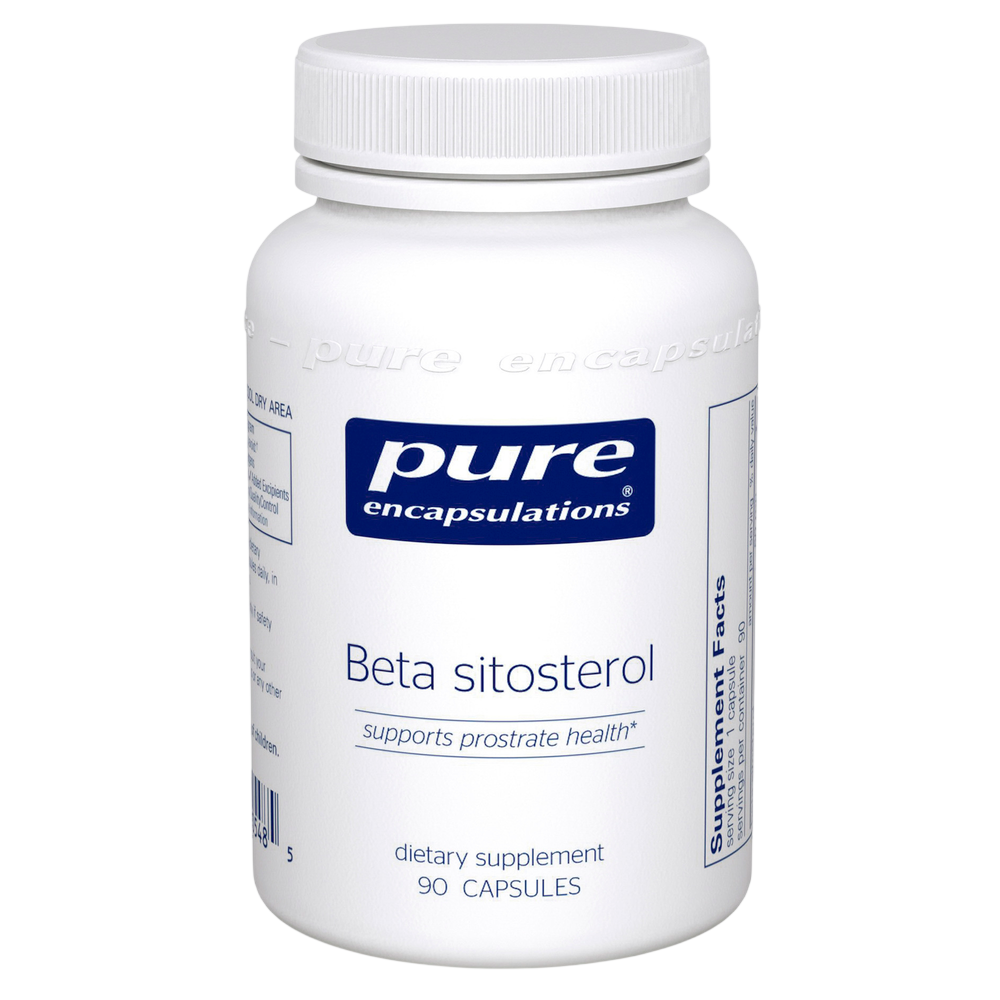
Beta-Sitosterol
Pure Encapsulations
90 capsules
$21.50$16.99 with Subscribe & Save

Prostate 2.4
Theralogix
180 capsules
$122.99$97.99 with Subscribe & Save
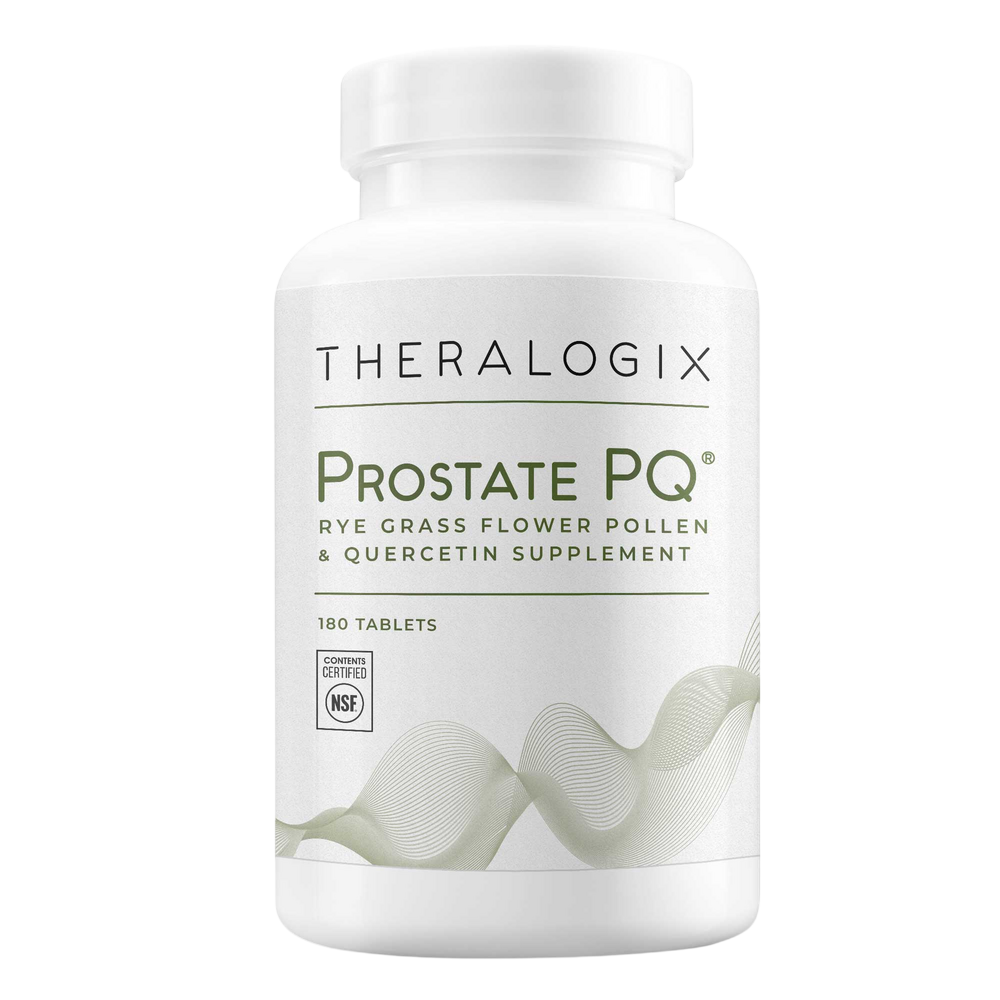
Prostate PQ Rye Grass Flower Pollen & Quercetin Supplement
Theralogix
180 tablets
$130.99$104.99 with Subscribe & Save
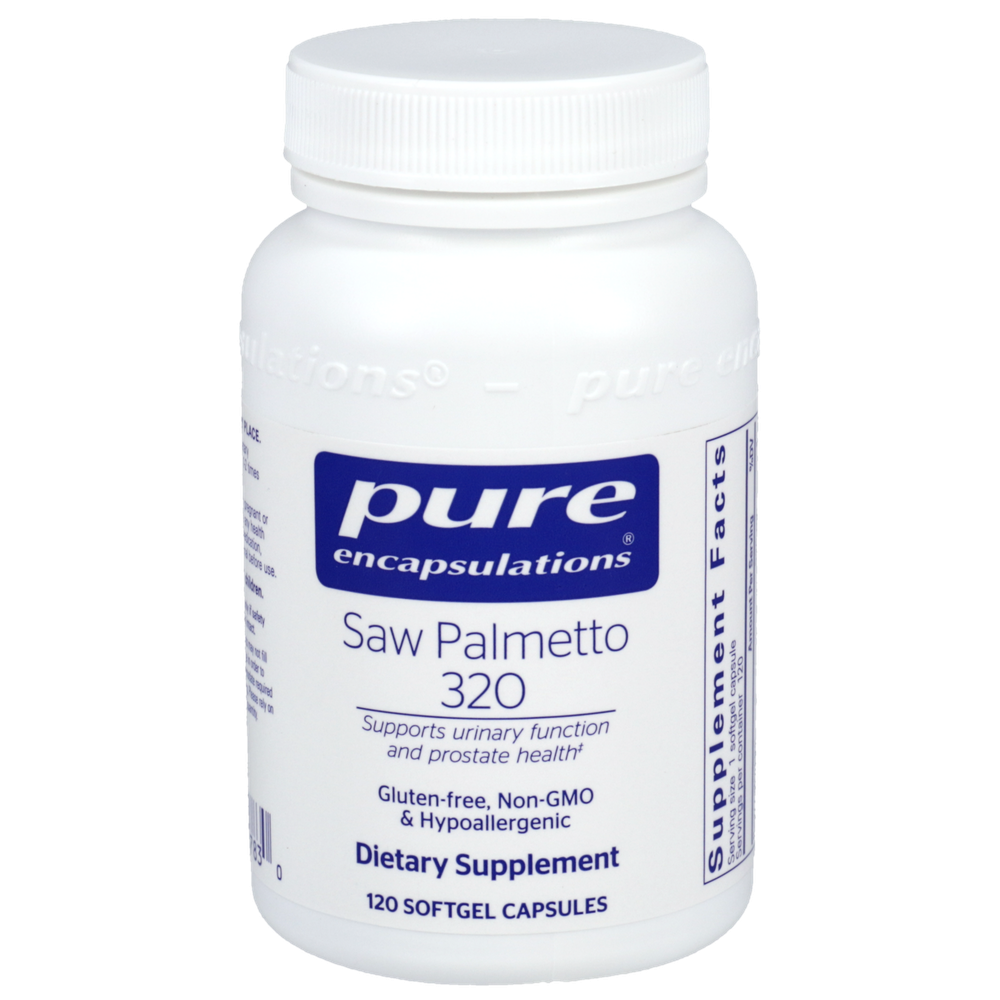
Saw Palmetto 320
Pure Encapsulations
120 softgels
$89.50$71.99 with Subscribe & Save